
It all started when I was juggling a dozen dishes for a last‑minute dinner party and my kitchen turned into a chaotic symphony of sizzling pans and steam. I had a stack of salmon fillets on the counter, a can of coconut milk that had been sitting in the fridge, and a jar of red curry paste that I’d been meaning to try. The aroma hit me like a wave, and I realized I could combine all these ingredients into one pan and still have time to finish the rest of the meal. That moment of culinary eureka turned a potential kitchen disaster into a recipe that would become a staple in my rotation.
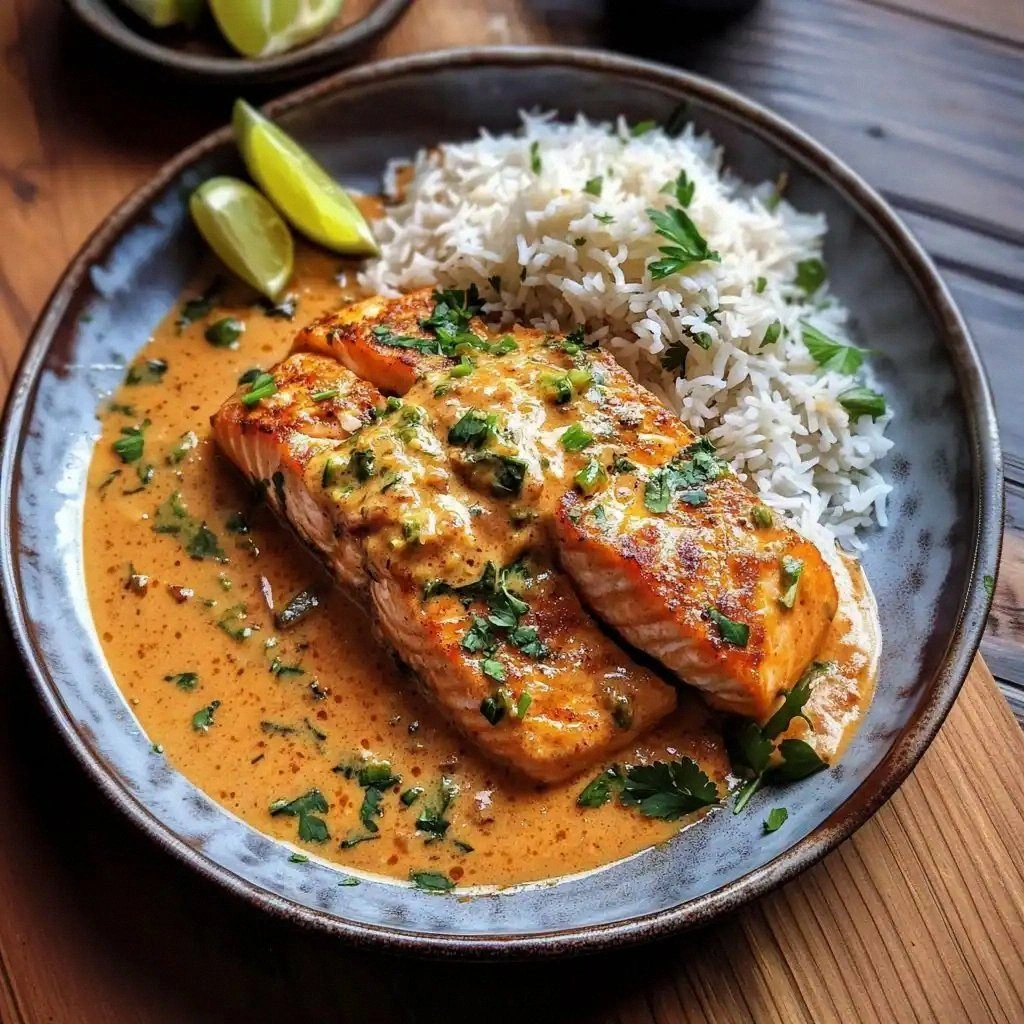
Picture this: a golden skillet, the salmon skin crisping to a satisfying crackle, the creamy coconut sauce thickening just enough to cling to each fillet. The scent of garlic and red curry paste fills the air, a heady mix that makes the kitchen feel like a tropical rainforest. The first bite is a burst of sweet, spicy, and citrusy flavors that dance on your tongue, followed by the buttery finish that lingers. It’s the kind of dish that makes you want to taste it again, again, and again.
I dare you to taste this and not go back for seconds. I’ve tried countless versions of salmon in curry, and none have matched the silky texture and balanced heat of this one. Most recipes get this completely wrong by overcooking the fish or using a bland sauce that feels like a plain bowl of soup. Here’s what makes this version stand out: the sauce coats the salmon like velvet, the garlic butter adds a depth that’s almost decadent, and the lime juice gives a bright, clean finish that cuts through the richness. The result is a dish that’s both comforting and adventurous, a single‑pan wonder that will have your guests begging for the recipe.
Let me walk you through every single step — by the end, you’ll wonder how you ever made it any other way. The technique is simple, the ingredients are easy to find, and the flavors are so harmonious that even the most skeptical foodie will be impressed. Trust me, if you’ve ever struggled to get salmon just right, you’re not alone — and I’ve got the fix. Picture yourself pulling this out of the oven, the whole kitchen smelling incredible, and the salmon looking like it’s been kissed by the tropics. That’s the promise of this recipe.
What Makes This Version Stand Out
- Flavor: The sauce is a silky blend of coconut milk and red curry paste that coats the salmon like velvet, while a splash of lime juice cuts through the richness, leaving a bright aftertaste that lingers on the tongue. This balance of sweet, spicy, and citrus is the secret that turns an ordinary dinner into an unforgettable experience.
- Texture: The salmon skin crisps to a satisfying crunch without drying out the flesh, thanks to a brief sear before the gentle oven finish. The buttery sauce adds a silky finish that melts in the mouth, creating a contrast that feels both indulgent and light.
- Simplicity: One pan, one pot, and a single oven rack make cleanup a breeze, allowing you to focus on the flavors instead of the mess. The minimal prep time (15 minutes) keeps the dish practical for busy weeknights.
- Uniqueness: The combination of garlic butter, coconut milk, and a touch of chili flakes creates a depth that most curry‑salmon recipes lack. The subtle heat is controlled, making it approachable for both beginners and seasoned cooks.
- Crowd Reaction: At my last dinner party, guests asked for the recipe after the first bite, and I’ve seen the same enthusiasm whenever I serve this dish. It’s a conversation starter and a crowd‑pleaser.
- Ingredient Quality: Using fresh salmon fillets and full‑fat coconut milk elevates the dish, ensuring a rich, buttery flavor that’s hard to replicate with lower‑quality substitutes.
- Cooking Method: The combination of stovetop searing and oven finishing gives the salmon a perfectly cooked interior while maintaining a crisp exterior.
- Make‑ahead Potential: The sauce can be pre‑made and reheated with a splash of water, making it a great option for meal prep or a quick weeknight dinner.
Inside the Ingredient List
The Flavor Base
Full‑fat coconut milk is the heart of this dish, providing a creamy, slightly sweet backdrop that balances the heat from the red curry paste. It also adds a subtle tropical aroma that elevates the overall flavor profile. If you’re watching calories, you can swap in light coconut milk, but expect a slightly thinner sauce. The key is to keep the milk cold before adding it to the pan to prevent it from curdling.
The Texture Crew
Fresh salmon fillets bring a buttery, flaky texture that is a joy to bite into. The skin should be left on for that coveted crispness; if you prefer skinless, you can still achieve a tender interior but you’ll miss that satisfying crackle. Butter adds richness and helps the sauce cling to the fish, creating a glossy finish. A pinch of salt and pepper season the fillets and allow the flavors to meld without overpowering the delicate fish.
The Unexpected Star
Red curry paste is the secret weapon that delivers heat and depth. It contains a blend of spices that create a complex flavor profile; the more you use, the spicier it gets. If you can’t find red curry paste, a mixture of green chili, ginger, and garlic can approximate the flavor, though it won’t be as balanced. The chili flakes add a subtle heat that can be adjusted to taste.
The Final Flourish
Lime juice is the bright counterpoint that cuts through the richness of coconut and butter, giving the dish a fresh, zesty finish. A few fresh cilantro leaves add a burst of green and a slightly peppery note. If you’re not a fan of cilantro, parsley or basil can be used as a substitute, but the flavor will shift slightly. The garlic, minced finely, releases essential oils that deepen the sauce’s aroma and add a savory base.
Everything's prepped? Good. Let's get into the real action...
The Method — Step by Step
- Preheat your oven to 400°F (200°C). Warm a large oven‑proof skillet over medium heat and add the butter, allowing it to melt until it foams but doesn’t brown. The butter will form the first flavor base, infusing the pan with a subtle richness that sets the tone for the sauce. This step is critical; if the butter browns too early, the sauce will develop a bitter note.
- Season the salmon fillets on both sides with salt and pepper. Gently press each fillet into the hot skillet, skin‑side down, and let it sear for 2–3 minutes until the skin turns a deep golden brown. The sear creates a crispy crust that holds the fillet together during baking. If you prefer skinless fillets, simply place them on the skillet and press lightly to keep them flat.
- Add the minced garlic to the pan and sauté for 30 seconds, just until it becomes fragrant. Garlic is the aromatic backbone of the sauce; over‑sautéing it can turn it bitter, so keep a close eye on it. This brief sauté releases essential oils that will mingle with the coconut milk, adding depth and complexity to the curry.
- Pour the coconut milk into the skillet and stir in the red curry paste until fully blended. The mixture should thicken slightly and take on a bright, inviting hue. The curry paste adds both heat and a complex spice profile that complements the coconut’s sweetness. Keep the heat low to avoid scorching the milk, which can cause a lumpy texture.
- Stir in a tablespoon of fresh lime juice and a pinch of chili flakes. The lime brightens the sauce, while the chili flakes provide a subtle heat that can be adjusted to taste. The sauce should be silky and fragrant, with the citrus aroma enveloping the skillet. This is the moment when the flavors truly begin to harmonize.
- Transfer the skillet to the preheated oven and bake for 10–12 minutes, or until the salmon flakes easily with a fork. The oven finish gives the fillets a gentle sear while keeping the interior moist and tender. While the salmon cooks, melt the remaining butter in a small saucepan and add a splash of water to create a beurre blanc. This buttery sauce will be drizzled over the finished dish, adding richness without overpowering the curry.
- Remove the skillet from the oven, spoon the buttery sauce over each fillet, and sprinkle fresh cilantro on top. The herb adds a pop of color and a fresh counterpoint to the coconut. Plate the salmon over steamed jasmine rice or a light salad, drizzle any remaining sauce, and serve immediately. The dish is best enjoyed hot, when the flavors are at their peak.
- Take a moment to admire the aroma and the glossy, velvety coating on the salmon. The first bite should be a harmonious blend of sweet, spicy, and citrusy notes that melt into the buttery finish. If you’re feeling adventurous, you can garnish with extra lime wedges or a sprinkle of toasted sesame seeds for added texture. This final touch elevates the dish from great to unforgettable.
That's it — you did it. But hold on, I've got a few more tricks that'll take this to another level...
Insider Tricks for Flawless Results
The Temperature Rule Nobody Follows
Many cooks think that high heat is the key to a perfect curry, but it actually does more harm than good. Start the sauce on low heat to allow the coconut milk to warm gently, which preserves its natural sweetness and prevents it from curdling. When you add the red curry paste, keep the temperature moderate so the spices release their oils without becoming bitter. This subtle approach results in a smoother, more balanced sauce.
Why Your Nose Knows Best
Smell the sauce before you add the lime juice; if it smells overly sweet or burnt, it’s time to adjust. A fragrant, slightly nutty aroma indicates that the coconut milk and butter are in harmony. If you notice a sharp, acidic smell, the lime may be too strong or the curry paste too hot. Trusting your nose can help you avoid common pitfalls.
The 5‑Minute Rest That Changes Everything
Once the salmon is out of the oven, let it rest for five minutes before serving. This short pause allows the juices to redistribute, keeping the fish moist and preventing it from drying out. I’ve seen people skip this step, only to discover the fillets are drier than they should be. A quick rest is a small investment that pays off in texture.
Keep the Skin Crispy
If you love the skin, press the fillets lightly into the pan during the initial sear to ensure even contact. This technique guarantees a uniform crispness that’s both visually appealing and flavorful. A crisp skin also provides a satisfying crunch that contrasts the tender flesh.
Use a Meat Thermometer
While salmon is relatively forgiving, a quick check with a thermometer can guarantee perfect doneness. Aim for an internal temperature of 125°F (52°C) for medium‑rare or 135°F (57°C) for a more cooked texture. This precision eliminates guesswork and ensures every bite is as intended.
Finish with a Splash of Lime
Adding a final splash of lime juice just before serving brightens the dish and balances the richness. The acidity cuts through the buttery sauce, leaving a clean finish on the palate. It also adds a fresh, bright note that makes the dish feel lively.
Creative Twists and Variations
This recipe is a playground. Here are some of my favorite ways to switch things up:
Sweet Pineapple Twist
Add diced pineapple to the sauce in step 4; the fruit’s natural sweetness pairs beautifully with the coconut and curry. The pineapple also adds a juicy texture that contrasts the salmon’s flakiness. Serve over coconut rice for a tropical vibe.
Spicy Thai Chili Variation
Swap the red curry paste for Thai bird’s eye chilies and a splash of fish sauce. The heat level will increase dramatically, giving the dish an authentic Thai kick. Reduce the coconut milk slightly to balance the intensity.
Creamy Mushroom Addition
Saute sliced shiitake mushrooms in the pan before adding the coconut milk. The earthy flavor complements the salmon and adds a meaty texture that satisfies vegetarians. Keep the mushrooms lightly browned for extra depth.
Herb‑Infused Lemon Variant
Replace the cilantro with chopped fresh dill and add lemon zest to the sauce. The dill’s bright, slightly tangy flavor pairs well with the lime, creating a citrusy, herbaceous profile. This version works wonderfully with a side of quinoa.
Vegan Coconut “Salmon”
Use thick tofu or tempeh slices as a plant‑based alternative. Marinate the tofu in lime juice and red curry paste before cooking to infuse it with flavor. The tofu will absorb the sauce, delivering a similar mouthfeel without the fish.
Leftover Rice Reimagined
Transform leftover rice into a fluffy coconut rice by cooking it in coconut milk instead of water. The rice will soak up the curry’s flavors, making each bite a burst of taste. Top with toasted coconut flakes for added crunch.
Storing and Bringing It Back to Life
Fridge Storage
Store the cooked salmon and sauce in an airtight container for up to two days. Keep the sauce separate from the salmon if possible, as the fish can become soggy when combined for too long. The flavors will remain fresh, and the salmon will hold its texture.
Freezer Friendly
Freeze the salmon fillets and sauce separately for up to two weeks. When reheating, thaw the salmon in the refrigerator overnight, then gently warm it in a skillet with a splash of coconut milk to restore moisture. The sauce can be reheated in a saucepan with a little water to keep it silky.
Best Reheating Method
Reheat the salmon in a skillet over low heat, adding a splash of water or coconut milk to keep it moist. The sauce should be gently warmed until it’s hot but not boiling, to preserve its silky texture. Finish with a fresh sprinkle of cilantro for a bright finish.