Love this? Pin it for later! 📌
Tender Slow-Roasted Pork Loin with Citrus-Glazed Root Vegetables
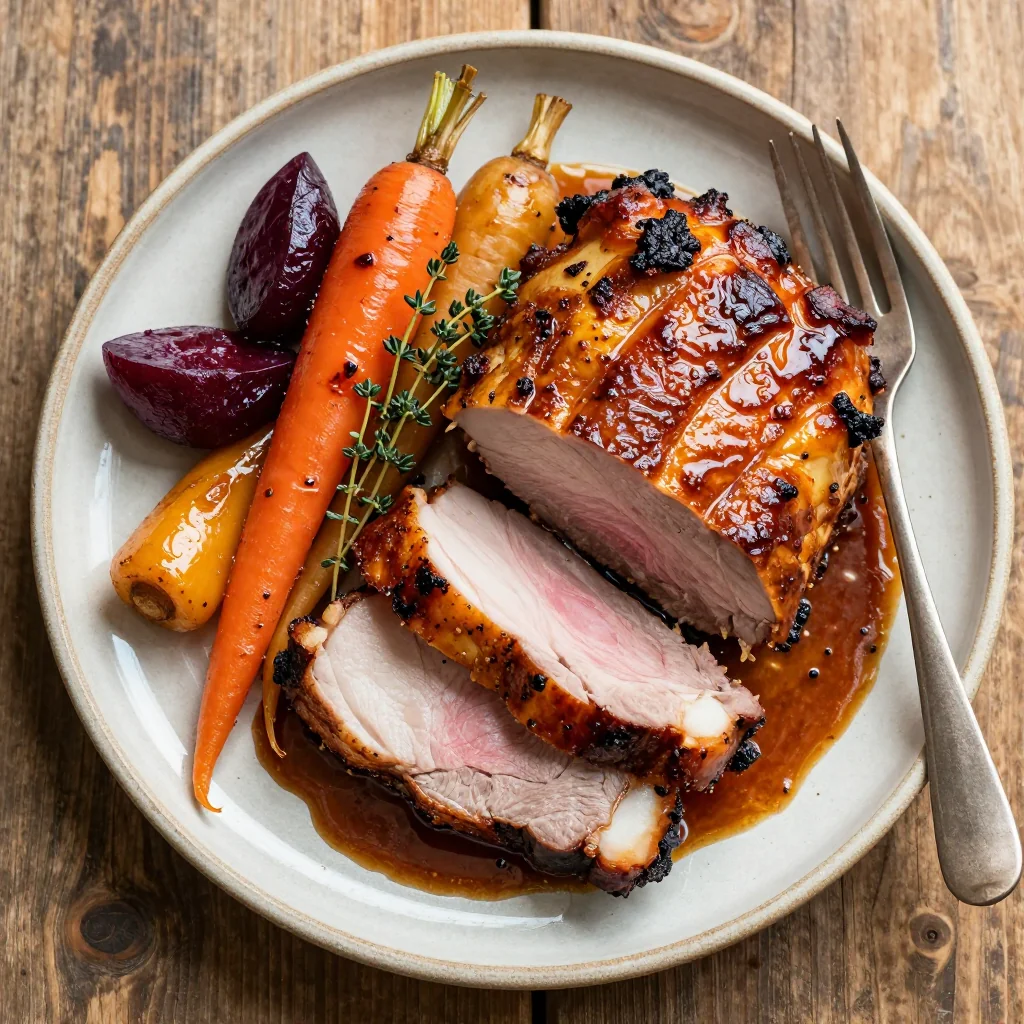
There’s a moment—about three hours in—when the pork’s internal temperature hits 195 °F and the citrus glaze on the carrots and parsnips starts to bubble into a glossy, amber lacquer. That moment is the reason I roast pork loin on quiet Sundays when the windows fog up from the oven’s warmth and the house smells like a Provençal market. My grandmother called it “Sunday’s apology for Monday,” a gentle, slow reward before the week’s chaos. I call it the dinner that converted my steak-only dad into a card-carrying pork evangelist.
This recipe is pure low-and-slow comfort: a center-cut pork loin rubbed with fennel, rosemary, and a whisper of brown sugar, then roasted until the collagen melts into silk. While the meat luxuriates, wedges of parsnip, carrot, and beet tumble in a bright, tangy glaze of orange, lemon, and a touch of honey. The result is fork-tender slices of pork stained with citrus perfume and caramel-sweet vegetables that taste like candy from the earth. It’s elegant enough for a dinner party, rustic enough for a family supper, and—best of all—hands-off enough that you can binge a Netflix episode (or three) while the oven does the heavy lifting.
Why This Recipe Works
- Low-and-slow magic: A 275 °F oven gently renders fat and breaks down connective tissue so the loin stays juicy, never stringy.
- Reverse-sear finish: A final blast at 500 °F creates a crackling herb crust without overcooking the center.
- Citrus triple-threat: Zest, juice, and a splash of vermouth glaze the vegetables with layered brightness that balances the pork’s richness.
- One-pan clean-up: Meat and vegetables share the same roasting pan, leaving you with fewer dishes and more couch time.
- Make-ahead friendly: The pork can be seasoned 24 hours ahead; flavor actually improves overnight.
- Impressive presentation: A jewel-toned medley of roasted roots turns an everyday roast into a centerpiece worthy of Instagram.
Ingredients You'll Need
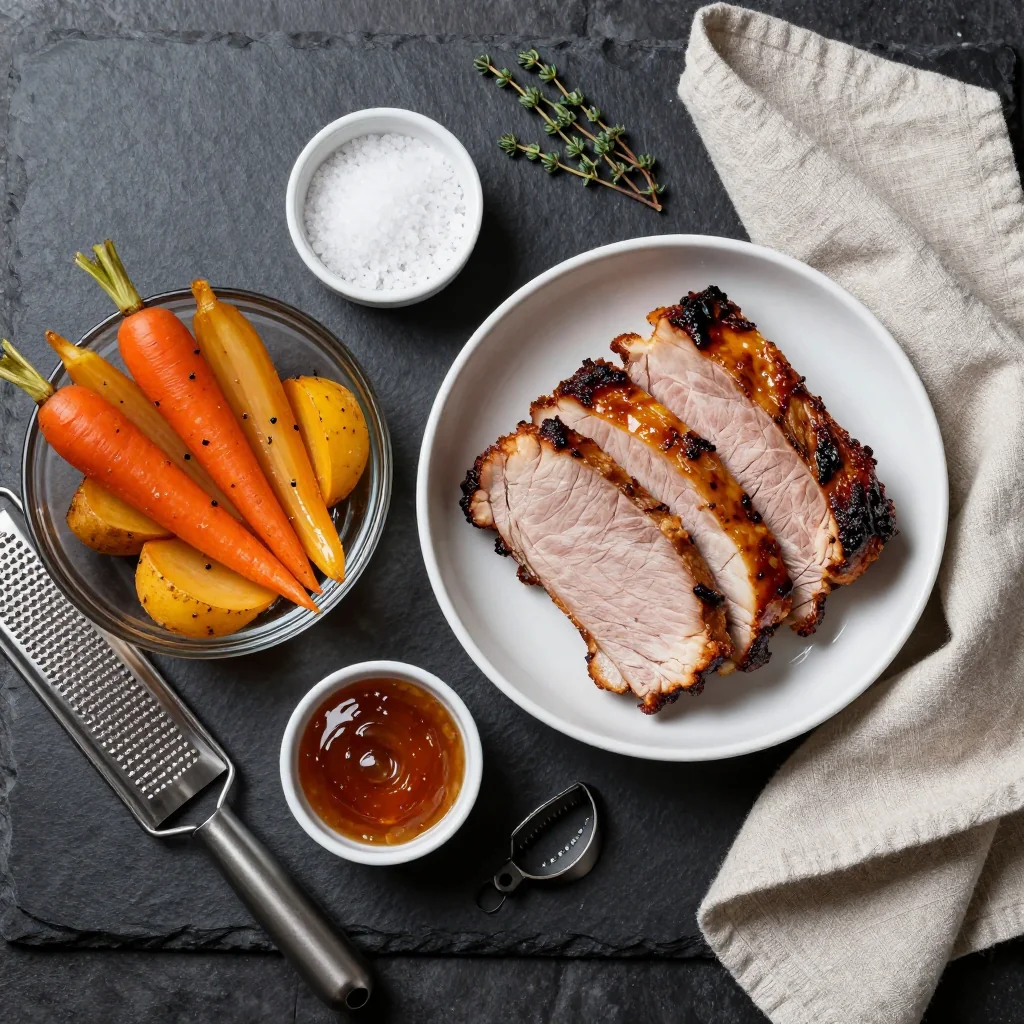
Great ingredients are half the battle. Here’s what to look for—and what to swap if your pantry (or budget) demands.
Pork loin: Ask for a 3–4 lb center-cut, boneless roast with a thin fat cap. The cap self-bastes the meat; don’t trim it all off. If you can only find a smaller 2-pounder, reduce the salt by 25 % and start checking internal temperature at the 90-minute mark. Avoid pre-brined “enhanced” pork—it turns mushy during long roasting.
Fennel seeds: Toast whole seeds in a dry skillet for 60 seconds until fragrant, then grind for a citrusy, anise note that flatters pork. No fennel? Caraway is a respectable understudy.
Rosemary: Fresh sprigs infuse the roasting fat with piney perfume. Dried works in the rub (use half), but skip the garnish.
Brown sugar: Just a teaspoon promotes caramelization without overt sweetness. Coconut sugar is a 1:1 swap with a faint molasses vibe.
Citrus trio: One large orange, one lemon, one lime. Organic if possible—zest goes into the glaze. Bottled juice tastes flat here.
Root vegetables: Carrots and parsnips roast to candy-like ends; beets add magenta pop. Swap in golden beets for less staining, or rutabaga for peppery depth. Cut into 2-inch batons so they stay proud through the long cook.
White vermouth: Its botanicals echo the herbs and the wine’s residual sugar helps glaze. Dry white wine + ½ tsp sugar works in a pinch.
Honey: A tablespoon amplifies browning. Maple syrup lends autumn vibes; agave is neutral if you’re vegan-adjacent.
How to Make Tender Slow-Roasted Pork Loin with Citrus-Glazed Root Vegetables
Dry-brine the pork (up to 24 h ahead)
Pat the loin dry. Combine 1 Tbsp kosher salt, 1 tsp freshly ground black pepper, 2 tsp fennel seeds (ground), 1 tsp chopped fresh rosemary, and 1 tsp brown sugar. Rub all over, pressing into every crevice. Place on a wire rack set inside a rimmed baking sheet, uncovered, in the fridge overnight. The air-dry step seasons deeply and yields a lacquer-crisp crust.
Bring to room temperature
Remove pork from fridge 60–90 minutes before roasting. Cold meat cooks unevenly and will bulge in the center.
Heat the oven low and slow
Position rack in lower third; preheat to 275 °F (135 °C). Slide a remote probe thermometer into the thickest part of the loin, angled toward the center but not touching fat. This gadget is your insurance against overcooking.
Season the vegetables
In a large bowl, toss 4 medium carrots (peeled, cut into 2-inch batons), 3 parsnips (peeled, woody core removed), and 2 medium beets (peeled, quartered) with 2 Tbsp olive oil, ½ tsp salt, ¼ tsp pepper, and 1 tsp fresh thyme leaves. Reserve the citrus glaze until later so sugars don’t scorch.
Roast together
Scatter vegetables around the pork in a single layer, leaving a 1-inch buffer so air circulates. Slide the pan into the oven. Roast approximately 2 hours 45 minutes, or until the internal temperature registers 140 °F. Stir vegetables once halfway through.
Glaze and continue
Whisk together zest of 1 orange + 1 lemon + 1 lime, ¼ cup orange juice, 2 Tbsp vermouth, 1 Tbsp honey, and 1 Tbsp olive oil. Brush half of the mixture over pork and vegetables. Return to oven until pork hits 145 °F (about 15 more minutes). Reserve remaining glaze.
Reverse-sear for crackle
Remove pork to a board, tent loosely with foil. Increase oven to 500 °F. Toss vegetables in remaining glaze; return to oven 8–10 minutes until edges char. Meanwhile, if your pork fat cap isn’t bronzed, slide the loin under the broiler 2–3 minutes. Watch like a hawk.
Rest, slice, serve
Rest pork 15 minutes—juices redistribute and temperature will rise to 150 °F for textbook blushing centers. Slice into ½-inch medallions, spoon over any resting juices, and scatter citrus-glazed vegetables alongside. Finish with fresh herbs and a final whisper of citrus zest.
Expert Tips
Probe placement matters
Insert the thermometer from the side, not the top, so the sensor sits in the thickest section without touching bone or fat pocket.
Baste sparingly
Opening the oven drops temperature up to 50 °F; baste quickly and shut the door to keep the cruise-control environment.
Overnight = insurance
A 12-hour dry-brine seasons to the core and dries the surface for faster Maillard browning.
Color contrast
Use rainbow carrots and golden beets for a sunset palette that photographs like a dream.
Slice on the bias
A 45° angle increases surface area, delivering more crust per bite and fanning beautifully on the platter.
Save the pan sauce
Deglaze the hot pan with ½ cup stock + splash of citrus juice; whisk up the sticky fond for an impromptu gravy.
Variations to Try
- Smoky Southwest: Swap fennel for 1 tsp chipotle powder and ½ tsp cumin. Add sweet potato cubes to the veg mix and finish with lime zest and cilantro.
- Asian-lean: Replace vermouth with sake, add 1 Tbsp soy sauce to glaze, and scatter sesame seeds and scallions over the sliced pork.
- Apple-cider mash-up: Sub apple cider for orange juice and tuck halved shallots and apple wedges among the vegetables.
- Keto/low-carb: Skip carrots and honey; use turnips and daikon radish and replace honey with allulose. Net carbs drop to ~6 g per serving.
Storage Tips
Refrigerate: Cool slices and vegetables within 2 hours. Store separately in airtight containers up to 4 days. Keep any pan juices to reheat—drizzling prevents dryness.
Freeze: Wrap pork slices tightly in parchment, then foil; freeze up to 3 months. Vegetables become softer after thawing but flavor remains stellar. Thaw overnight in fridge, then reheat gently in a covered skillet with a splash of stock at 300 °F until just warmed through.
Make-ahead: Roast the pork a day ahead; stop before the reverse-sear step. Refrigerate whole, then reheat at 250 °F until internal temp reaches 140 °F. Finish the sear and vegetable glaze just before serving—restaurant-level timing made easy.
Frequently Asked Questions
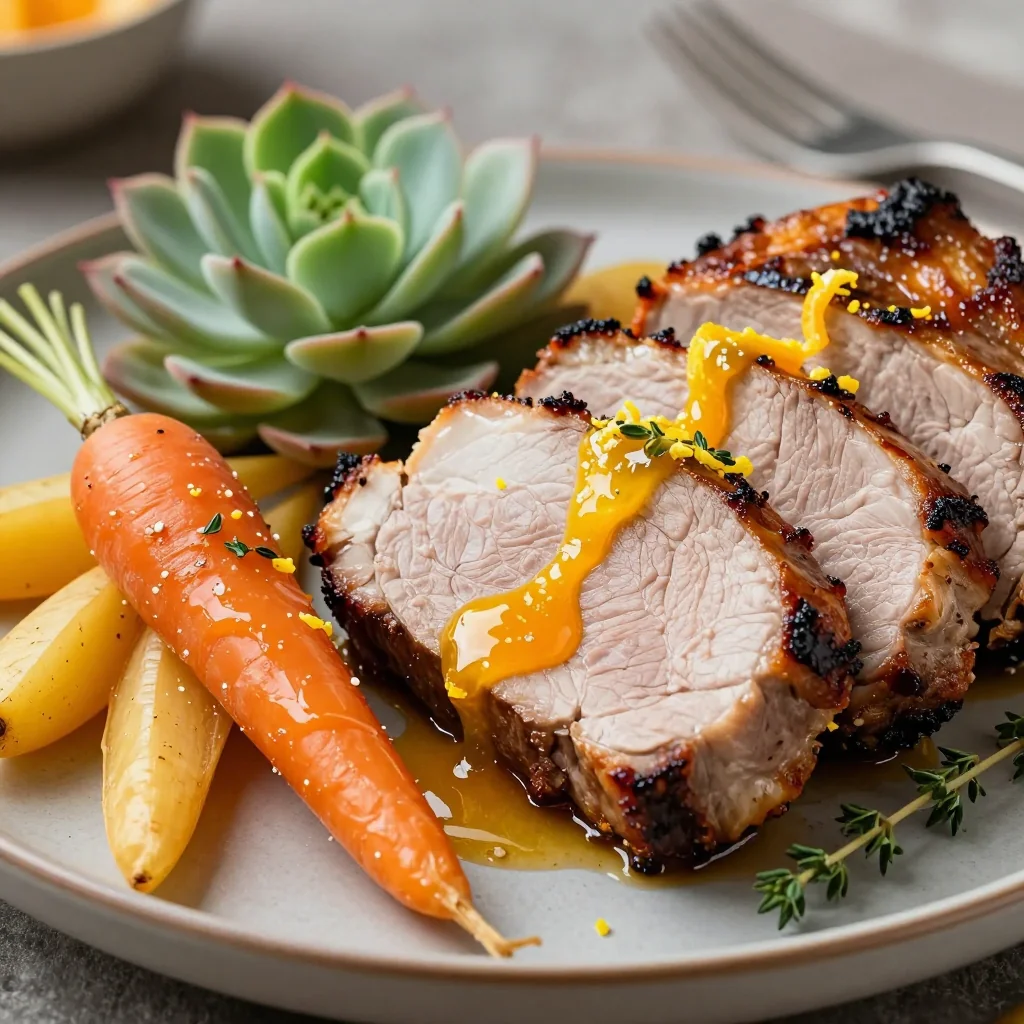
Tender Slow-Roasted Pork Loin with Citrus-Glazed Root Vegetables
Ingredients
Instructions
- Dry-brine: Mix salt, pepper, ground fennel, rosemary, and sugar. Rub over pork; refrigerate uncovered up to 24 h.
- Roast low: Preheat 275 °F. Probe thermometer into thickest part. Surround with oiled, seasoned vegetables. Roast ~2 h 45 min to 140 °F internal.
- Glaze: Whisk citrus zest, juice, vermouth, and honey. Brush half over pork and veg; roast 15 min more to 145 °F.
- Reverse-sear: Rest pork, tent with foil. Crank oven to 500 °F. Toss veg with remaining glaze; char 8–10 min. Broil pork 2–3 min if needed for crackle.
- Rest & serve: Rest pork 15 min, slice ½-inch thick, spoon over juices. Serve with jewel-toned vegetables.
Recipe Notes
Leftovers reheat beautifully in a covered skillet with a splash of stock at 300 °F for 10 minutes. Do not microwave—high heat toughens the pork.