Love this? Pin it for later! 📌
Budget-Friendly Garlicky Roasted Winter Squash and Potatoes for Dinner
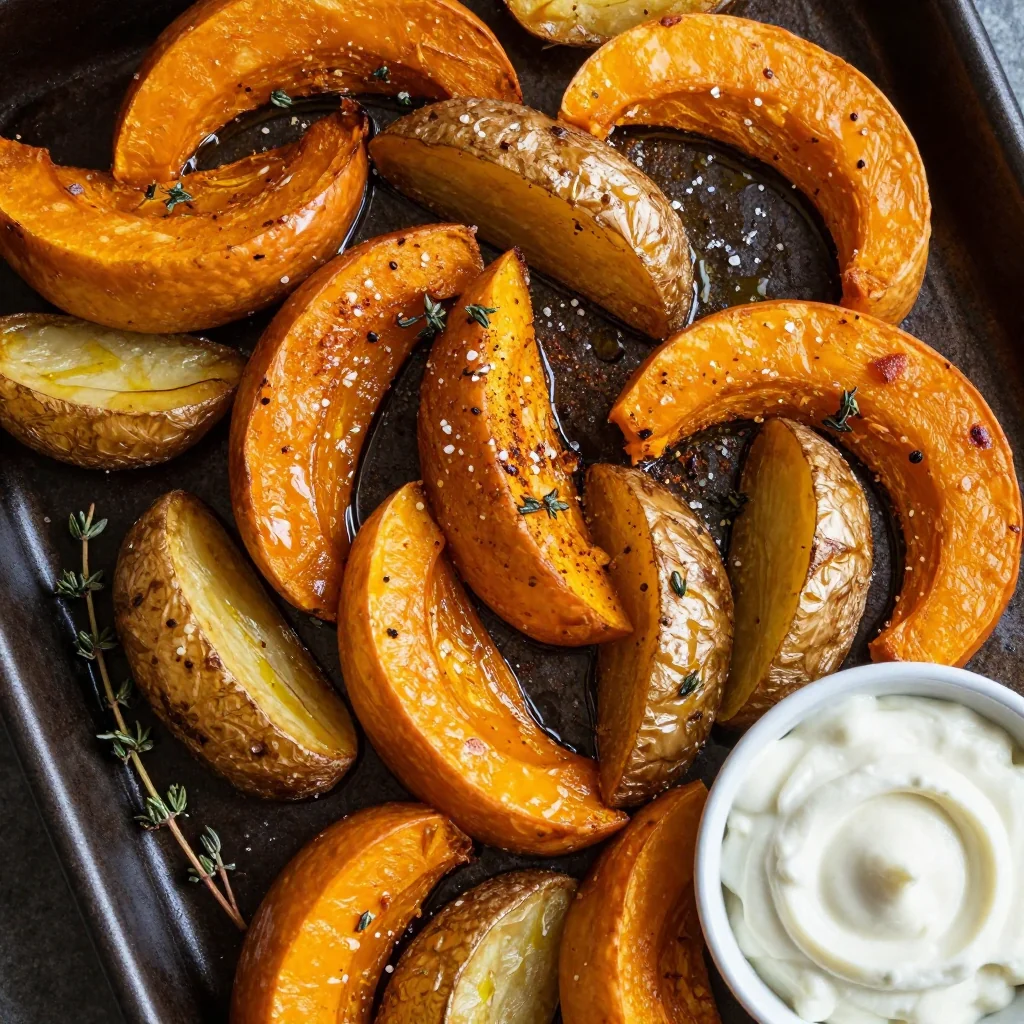
There’s a certain magic that happens when winter squash meets crispy-edged potatoes in a screaming-hot oven. The squash caramelizes into candy-like bites, the potatoes turn golden and pillowy inside, and the whole kitchen smells like a rustic trattoria where olive oil and garlic reign supreme. I developed this recipe on a frigid Tuesday when my grocery budget was down to the last twenty dollars and the farmers’ market was practically giving away knobby butternut squash and baby potatoes. One sheet pan, five pantry staples, and forty minutes later, my family was fighting over the crunchy garlic chips at the bottom of the tray. We’ve served this at everything from casual Sunday suppers to a last-minute Friends-giving when the turkey took longer than planned. If you can peel a squash and smash a clove of garlic, you’re already 90 % of the way to dinner—no fancy gadgets, no hard-to-pronounce ingredients, just honest food that tastes like it cost far more than it actually did.
Why This Recipe Works
- One-pan wonder: Toss everything on a single rimmed sheet and the oven does the heavy lifting—minimal dishes, maximum flavor.
- Garlic two ways: Crushed cloves roast into mellow, buttery nuggets while a last-minute grate of raw garlic adds bright punch.
- Cost per serving ≈ $1.25: Winter squash and potatoes are pantry heroes that stay cheap year-round.
- Crispy-creamy contrast: A high-heat roast and strategic flip guarantee soft centers with lacy, caramelized edges.
- Meal-prep friendly: Roast on Sunday, reheat in a skillet all week without turning mushy.
- Vegan, gluten-free, nut-free: Feeds a table of mixed dietary needs without feeling like “special diet” food.
Ingredients You'll Need
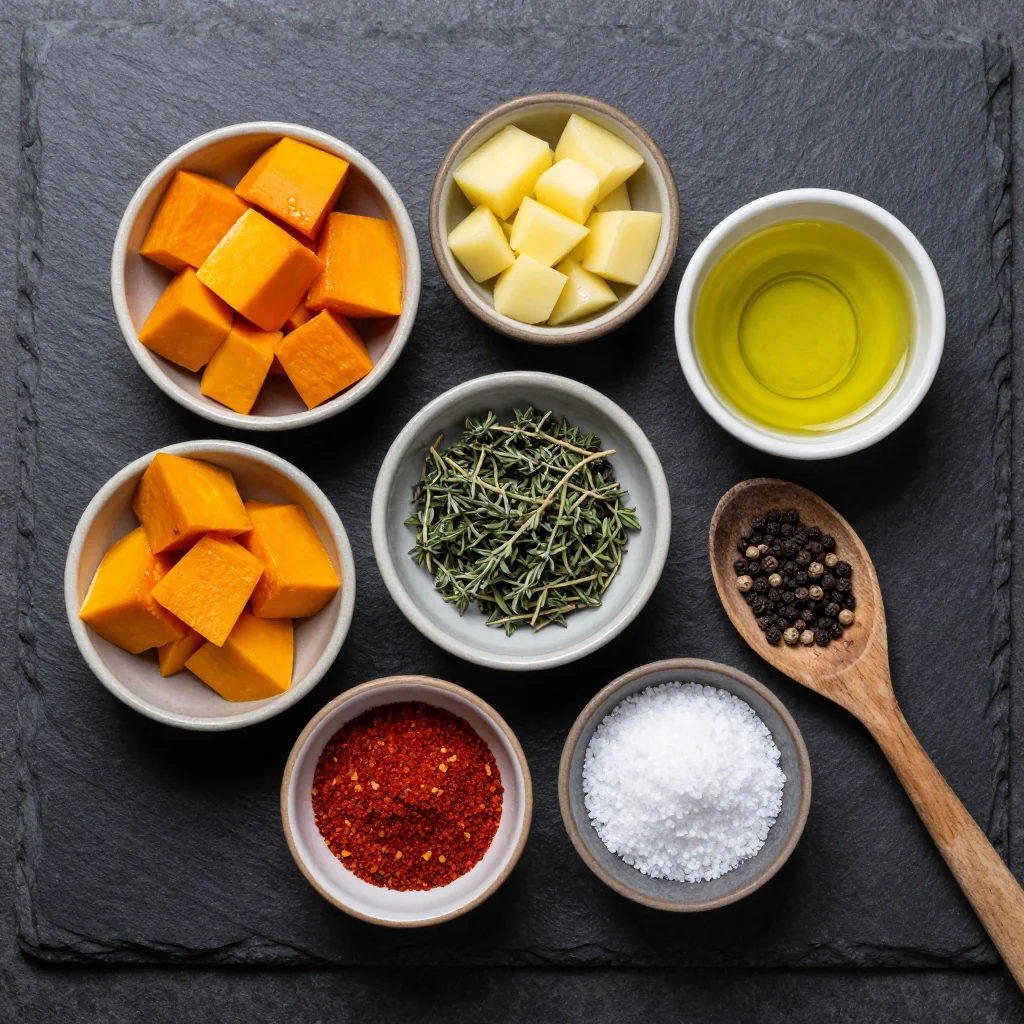
Before we talk numbers, let’s talk produce. Look for squash with matte, unblemished skin—shiny patches signal it was picked underripe and won’t develop that deep, nutty sweetness. Any winter variety works: butternut is classic and easy to peel, kabocha has edible skin and a fluffy chestnut texture, and delicata’s thin stripes roast into edible caramel ribbons. For potatoes, grab the smallest, fingerling-sized ones you can afford; they cook faster and their skin-to-flesh ratio means more crunch. If only russets are on sale, cut them into 1-inch chunks and start them in the oven for 10 minutes before adding squash so everything finishes together.
Olive oil doesn’t need to be estate-bottled, but do reach for “extra-virgin” for the fruity notes that bloom under high heat. Buy garlic firm and heavy, no green sprouts—those indicate age and bitterness. If your grocery store sells peeled cloves in bulk bins, they’re often cheaper per pound and save prep time. The herb you choose is negotiable: rosemary gives pine-like perfume, thyme is delicate, and oregano leans pizza-night cozy. Whatever you pick, double the quantity for garnish; the crispy leaves that fall onto the pan are cook’s treat.
Finally, three micro-ingredients turn ordinary roasted veg into dinner-worthy fare: a pinch of smoked paprika for subtle campfire vibe, a whisper of maple syrup to accelerate browning, and a squeeze of lemon added while the tray is still hot to wake up every other flavor. If maple feels too brunchy, swap in half a teaspoon of brown sugar; both feed the Maillard reaction that produces those mahogany edges.
How to Make Budget-Friendly Garlicky Roasted Winter Squash and Potatoes for Dinner
Heat the oven and prep the pan
Place a rimmed sheet pan—yes, the one you usually reserve for cookies—on the middle rack and preheat to 425 °F (220 °C). A screaming-hot pan jump-starts caramelization so vegetables don’t steam. If your oven runs cool, slip a second pan underneath to create extra insulation.
Peel and cube the squash
Halve the squash neck from the bulb, stand each piece on its flat side, and shave off the skin with downward strokes. Scoop seeds with an ice-cream scoop—its sharp edge scrapes cleanly. Cut into 1-inch cubes; uniformity ensures even roasting. Save seeds, toss with oil and salt, and slide them onto a corner of the pan for a crunchy salad topper later.
Halve the potatoes
Tiny potatoes need only one swift cut; larger ones get quartered. Aim for roughly the same size as your squash so they finish together. Drop them into a bowl of cold water for 5 minutes to leach excess starch—this step sounds fussy but guarantees glassy-crisp edges.
Make the garlic oil
In a small saucepan, combine ¼ cup olive oil, 6 smashed garlic cloves, 1 tsp smoked paprika, and ½ tsp maple syrup. Warm over low just until the garlic begins to whisper tiny bubbles—about 3 minutes. You’re infusing, not frying; burnt garlic turns acrid.
Toss and season
Drain potatoes and pat very dry. In a large bowl, combine squash, potatoes, 2 tsp kosher salt, 1 tsp freshly ground black pepper, and the warm garlic oil. Use your hands—tools bruise the squash. Every cube should glisten; if the mixture feels dry, drizzle another tablespoon of oil.
Roast undisturbed
Carefully slide the hot pan from the oven, scatter vegetables in a single layer, and return to the oven. Do not flip for 20 minutes. The initial sear builds a crust that prevents sticking later.
Flip and add herbs
Using a thin metal spatula, turn each piece. Scatter 4 sprigs of rosemary or thyme on top. Roast another 15–20 minutes until potatoes are creamy inside and squash develops dark, almost burnt edges.
Finish with brightness
Zest half a lemon directly over the hot pan, then squeeze the juice. The zest perfumes, the juice cuts richness. Taste a potato—if it needs more salt, season now while surfaces are hot and absorbent.
Serve family-style
Slide everything onto a warmed platter, scraping up the mahogany bits. Garnish with extra fresh herbs and, if you’re feeling indulgent, a snowy shower of grated Parmesan that melts on contact.
Expert Tips
Preheat the pan longer than you think
An extra 5 minutes in the oven means vegetables sizzle on contact, preventing the dreaded stick-and-tear when you flip later.
Don’t crowd the canvas
If doubling, use two pans rather than piling higher. Overcrowding steams instead of roasts, and you’ll miss those caramelized edges.
Roast at night, reheat in the morning
Roasted veg taste even better the next day. Store in a shallow container so they cool quickly, then reheat in a dry skillet for lunchtime grain bowls.
Save the peels
Butternut peels go straight into a freezer bag for vegetable scrap broth. Zero waste, maximum flavor later.
Speed-peel safely
Microwave the whole squash for 45 seconds; the skin softens slightly and your peeler glides through without slipping.
Add color contrast
Toss in a handful of halved Brussels sprouts during the last 15 minutes for emerald pops that make the orange squash glow.
Variations to Try
- Moroccan twist: Swap paprika for 1 tsp each cumin and coriander, finish with a handful of dried cranberries and toasted almonds.
- Smoky heat: Add ½ tsp chipotle powder and a drizzle of honey; serve with lime-doused cilantro.
- Creamy indulgence: During the last 5 minutes, dot with 4 oz goat cheese and broil until bronzed.
- Protein boost: Nestle 4 Italian turkey sausages among the veg; they’ll roast in the same time and baste everything with spicy drippings.
- Asian profile: Replace olive oil with sesame oil, season with soy sauce and a teaspoon of grated ginger; finish with scallions and sesame seeds.
Storage Tips
Cool completely, then refrigerate in an airtight container up to 5 days. For best texture, reheat in a 400 °F oven or a skillet with a splash of oil rather than the microwave, which steams and softens the crust. Freeze portions on a parchment-lined tray until solid, then transfer to a zip-top bag; they’ll keep 3 months. Thaw overnight in the fridge and reheat directly on a hot pan—no need to fully defrost. If you plan to meal-prep, under-roast by 5 minutes so later reheating doesn’t push them into mush.
Frequently Asked Questions
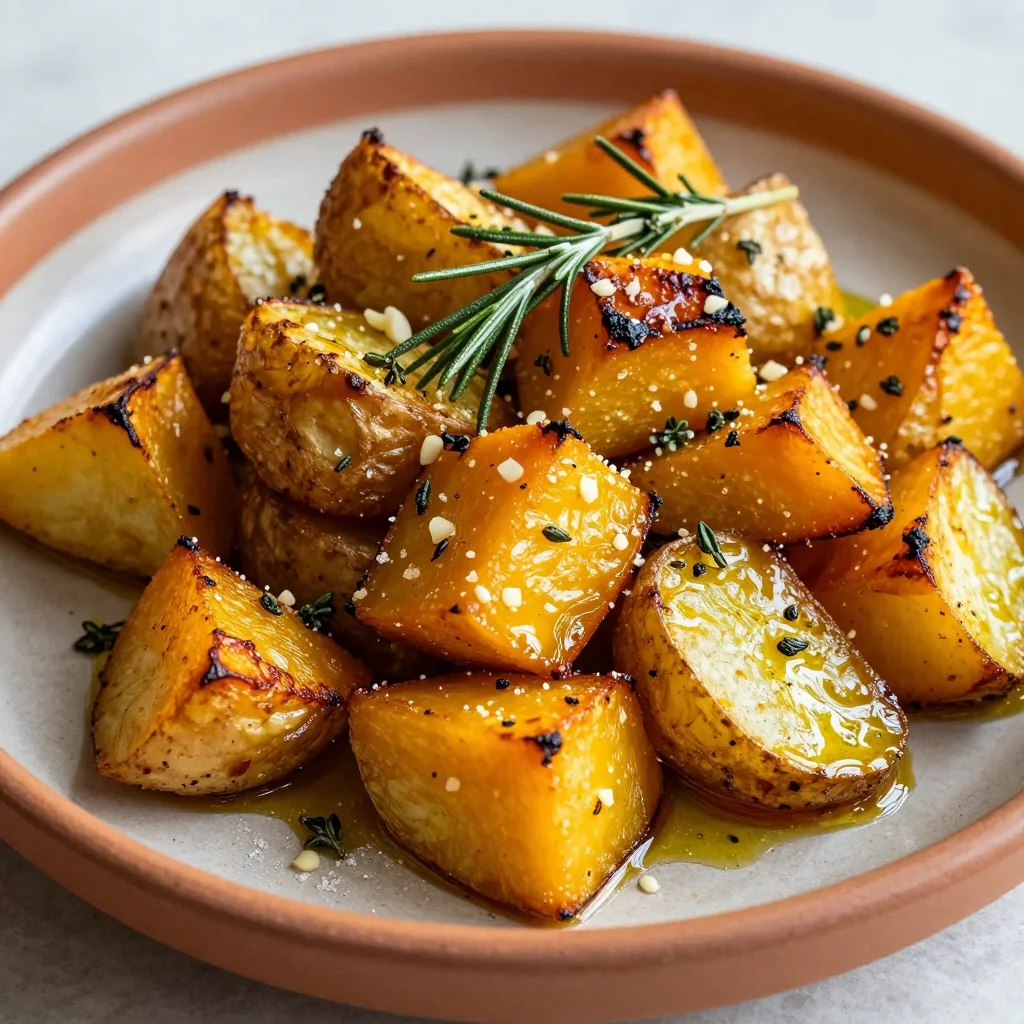
budgetfriendly garlicky roasted winter squash and potatoes for dinner
Ingredients
Instructions
- Preheat: Place rimmed sheet pan in oven and heat to 425 °F (220 °C).
- Infuse oil: In small saucepan combine olive oil, smashed garlic, paprika, and maple syrup; warm 3 min until fragrant.
- Season veg: Toss squash and potatoes with infused oil, salt, and pepper until evenly coated.
- Roast: Spread on hot pan; roast 20 min without moving.
- Flip & herb: Turn vegetables, scatter herb sprigs, roast 15-20 min more until deeply browned.
- Finish: Zest lemon over pan, squeeze juice, toss, adjust salt, and serve hot.
Recipe Notes
For extra crispy edges, broil 2 min at the end. Store leftovers refrigerated up to 5 days; reheat in a dry skillet for best texture.