Love this? Pin it for later! 📌
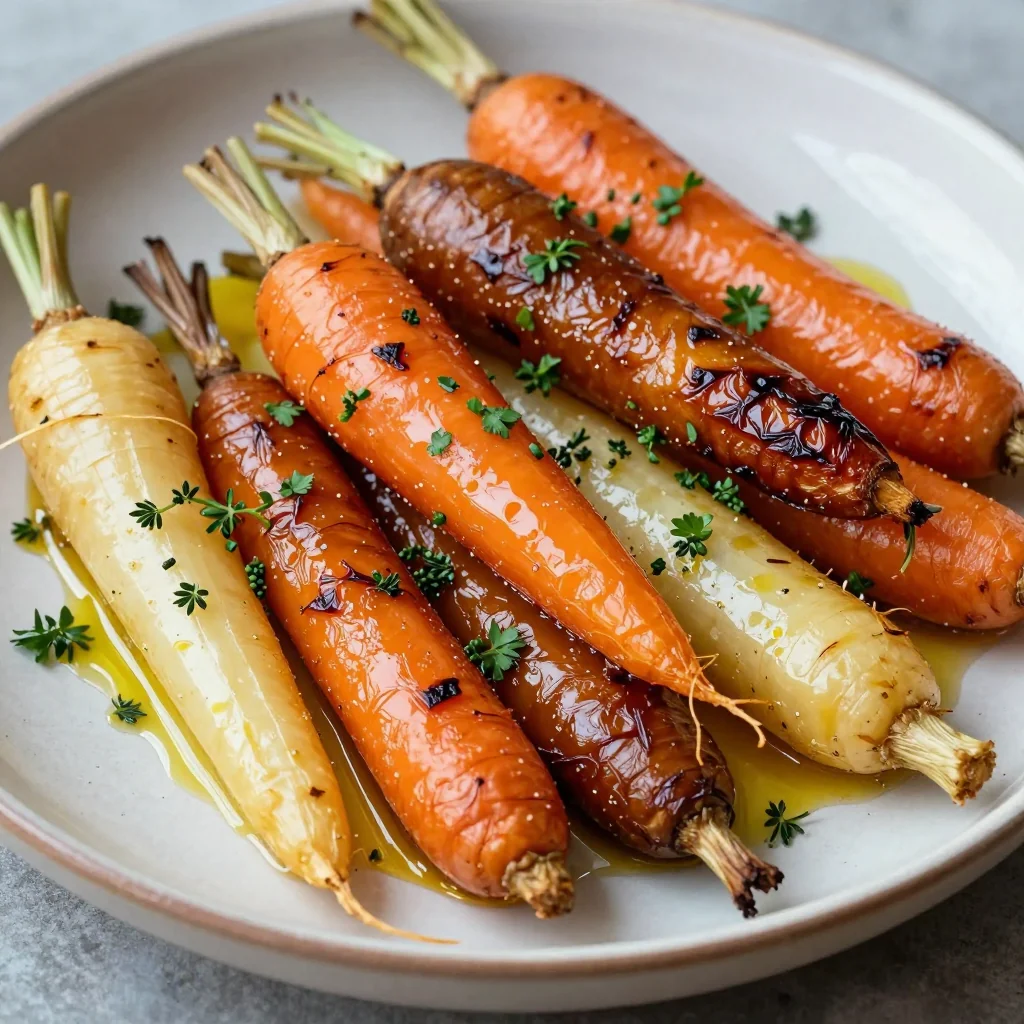
There’s a certain kind of magic that happens when the January wind rattles the kitchen windowpanes and the sky goes dark at four-thirty. I tug my thickest wool socks higher, switch on the oven light, and reach for the two vegetables that feel like edible sunshine in the dead of winter: carrots and parsnips. Ten years ago, when we first moved into our drafty Victorian, I started batch-roasting trays of these roots every Sunday night. The house would warm by degrees, the cloves of garlic would caramelize into sticky-sweet nuggets, and the earthy-sweet perfume would creep up the staircase and coax my teenagers out of their rooms. We’d stand around the island, burning our tongues on just-roasted coins of carrot, talking about the week ahead. Today the ritual is still going strong—only now I make enough to fill three sheet pans so we have a fridge stocked with golden, garlicky vegetables to fold into grain bowls, tuck under crispy-skinned chicken, or simply reheat and devour while we watch the snow pile up outside. If you’ve never considered batch cooking vegetables as a main dish, prepare to rethink everything. These garlic roasted carrots and parsnips are unapologetically hearty, budget-friendly, and—thanks to a secret whisper of miso—bursting with umami that satisfies like meat without trying to be meat.
Why This Recipe Works
- High-heat roasting: Concentrates natural sugars, turning edges candy-crisp while centers stay velvety.
- Batch size: Triple-layer on two sheet pans; the vegetables roast, not steam, so you get caramelized char on every piece.
- Miso-garlic glaze: Adds salty depth and helps everything bronze faster—no extra oil needed.
- Main-dish worthy: Serve over lemony tahini yogurt and sprinkle with toasted seeds for 18 g plant protein per bowl.
- Freezer-friendly: Cool, portion, freeze flat; reheat straight from frozen at 425 °F for 12 min—taste just-roasted.
- Zero waste: Save peels for vegetable stock; roast carrot tops into crunchy garnish.
Ingredients You'll Need
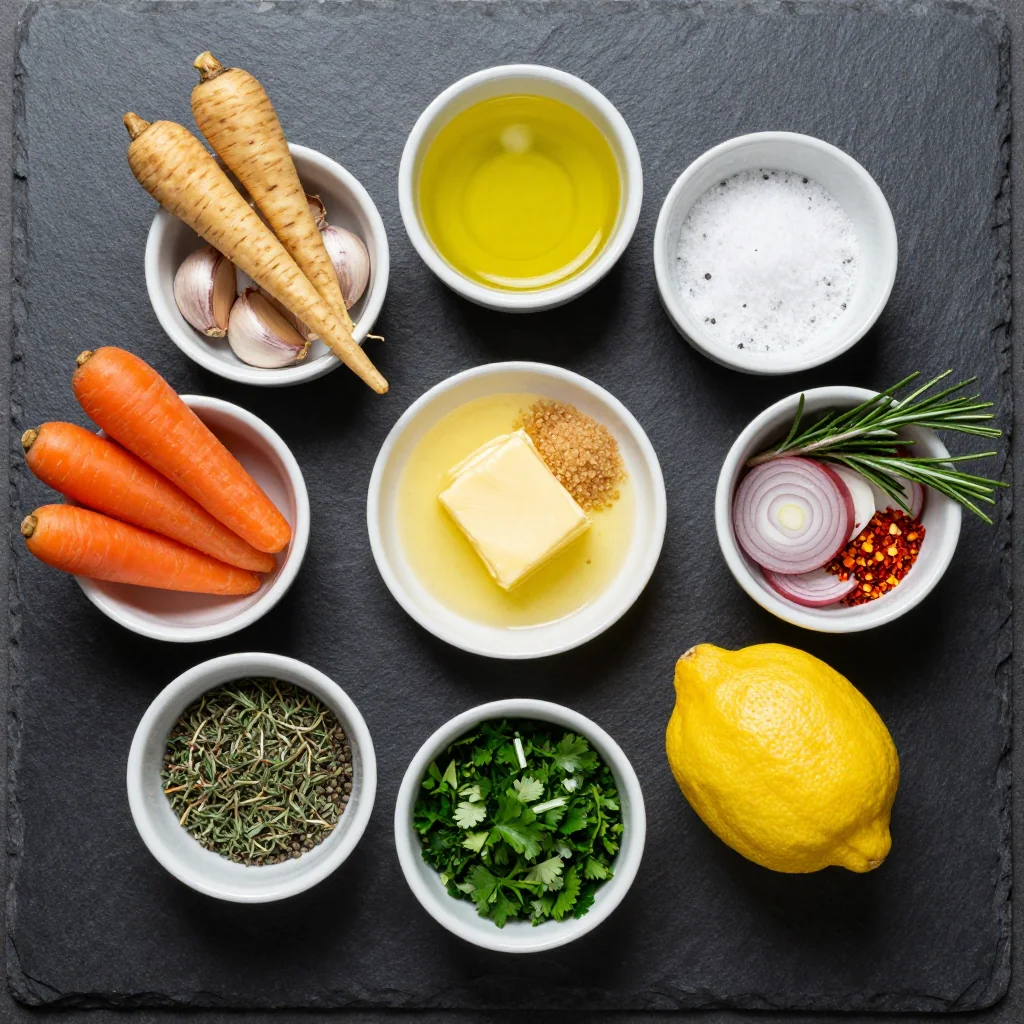
Carrots and parsnips are winter’s dynamic duo, but not all roots are created equal. Look for carrots that still feel moist—if the tops are attached they should be perky, not wilted. I grab a mix of orange and rainbow carrots because the lycopene-rich red and anthocyanin-packed purple varieties stay jewel-bright after roasting. For parsnips, choose small to medium specimens; the core of larger ones can turn woody. A gentle bend test: if the parsnip snaps cleanly, it’s fresh. If it bends like a yoga instructor, leave it behind.
Garlic is the quiet hero here. I use an entire head, separating the cloves but leaving skins on. The skins act like tiny parchment pockets, steaming the garlic into mellow, spreadable paste you can squeeze onto crusty bread or mash into yogurt. For the glaze you’ll need white miso—mild, slightly sweet, and packed with glutamates that turbo-charge browning. Tamari deepens the savory notes, maple syrup balances parsnip’s earthy edge, and a squeeze of citrus at the end wakes everything up.
Oil-wise, I reach for a neutral sunflower or grapeseed so the vegetables’ flavors shine. If you want a smoky whisper, swap 1 Tbsp for toasted sesame oil. Finally, finishing salt: Maldon flakes provide delicate crunch, but any coarse sea salt works. Optional but transformational garnishes include toasted pumpkin seeds for nuttiness, pomegranate arils for juicy pop, and fresh dill fronds that flutter like tiny green flags announcing spring is—eventually—on its way.
How to Make Batch Cook Garlic Roasted Carrots and Parsnips for Cold Winter Nights
Prep your pans and oven
Position racks in upper-middle and lower-middle slots; preheat to 450 °F (230 °C). Line two rimmed sheet pans with parchment. Lining isn’t lazy—it guarantees those sticky miso bits lift right off, saving you from chiseling pans later.
Wash, peel, and cut
Scrub 2 lb carrots and 2 lb parsnips. Peel if skins are thick (optional). Slice on the bias into ½-inch coins so every piece has two cut surfaces for browning. Uniformity matters: coins cook evenly, preventing half-mush, half-crunch.
Whisk the miso glaze
In a small bowl combine 2 Tbsp white miso, 2 Tbsp maple syrup, 1 Tbsp tamari, 1 Tbsp rice vinegar, 1 tsp toasted sesame oil, and 3 Tbsp warm water. Whisk until silky; this ensures miso dissolves completely and coats vegetables evenly.
Toss and separate
Place vegetables in a large bowl; drizzle with 3 Tbsp neutral oil and the miso glaze. Toss with clean hands, massaging coating into every cranny. Divide between pans in a single layer; overcrowding is the enemy of caramelization.
Add garlic & aromatics
Scatter 12 unpeeled garlic cloves and 6 sprigs fresh thyme over vegetables. Garlic skins protect against bitter burning; thyme perfumes the oil. No need to stir—the steam escaping the vegetables keeps herbs from incinerating.
Roast, flip, rotate
Slide both pans into oven. After 15 min, swap racks and flip vegetables with a thin metal spatula. Roast 12–15 min more until edges blister and a faint char appears. Total time is 27–30 min; parsnips should pierce easily with a fork.
Finish bright
Zest 1 lemon directly over hot vegetables; squeeze half the lemon for juice. Toss to deglaze the pan, lifting browned bits. Taste; add flaky salt or another drizzle of maple if you like sweet-salty contrast.
Portion for the week
Cool 10 min, then divide into glass containers. Save garlic cloves—squeeze out the molten paste for salad dressings or smear on toast. Store up to 5 days refrigerated or 3 months frozen.
Expert Tips
Preheat the baking sheet
Sliding vegetables onto a screaming-hot pan jump-starts caramelization. Put the empty pan in the oven while it heats; when you hear a sizzle on contact, you know you’re on the road to flavor town.
Double the glaze
Make a second batch of miso glaze to drizzle over just before serving. A fresh hit of glossy sauce reintroduces moisture and amps up that craveable umami-sweet lacquer.
Mix your colors
Purple carrots stay vibrant if you toss them in glaze separately and roast on a different pan edge. Acid in the vinegar helps anthocyanins hold their jewel tone instead of bleeding into brown.
Save the tops
Carrot tops make a feisty pesto: blanch, squeeze dry, blend with olive oil, parm, and lemon. Freeze in ice cube trays; drop a cube into soup for instant spring-in-winter brightness.
Speed-peel garlic
Place cloves in a lidded container and shake vigorously for 15 seconds. Skins loosen and slip right off—no nail-breaking frustration required.
Check oven hot spots
If one corner browns faster, rotate pan 180° halfway through instead of just swapping racks. A cheap oven thermometer helps you identify hot zones so you can guard against bitter edges.
Variations to Try
-
Spicy Harissa: Swap maple for 1 Tbsp harissa paste and 1 Tbsp honey. Dust with toasted cumin seeds before serving for North-African warmth.
-
Apple Cider Glaze: Replace rice vinegar with reduced apple cider and add a pinch of smoked paprika; pair with roasted pork or tempeh.
-
Asian Twist: Use tamari, 1 tsp gochujang, and finish with sesame seeds and scallions. Toss soba noodles into the roasted veg for a 15-minute dinner.
-
Herby Citrus: Substitute orange juice for lemon, add rosemary and sage, and fold in canned chickpeas the last 5 min of roasting for complete protein.
-
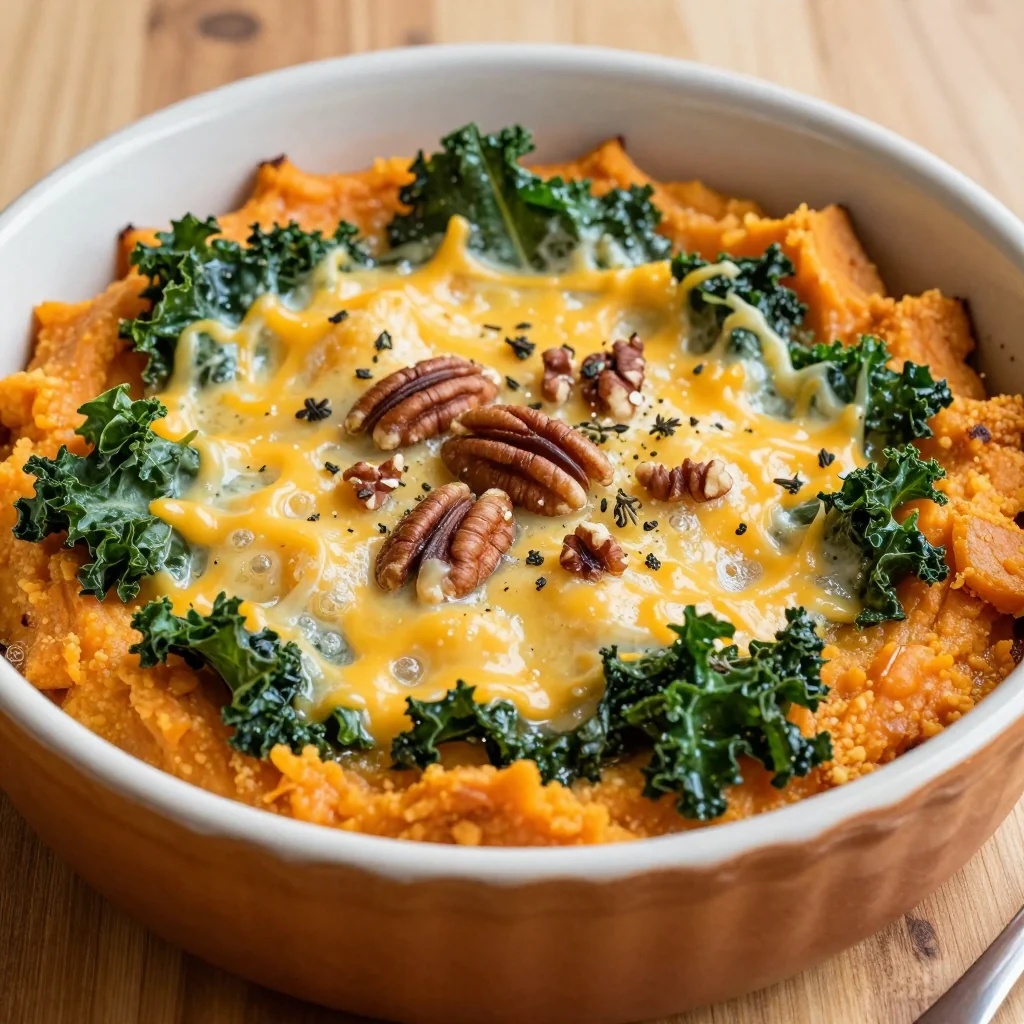
Root Mash: Over-roast intentionally, then blitz half the vegetables with a splash of stock and Greek yogurt for a two-texture side: silky mash topped with whole roasted coins.
Storage Tips
These roasted vegetables are meal-prep gold. Once completely cool, pack into airtight glass containers in 2-cup portions—roughly a hearty main-dish serving. They’ll keep 5 days refrigerated without turning soggy because the high-heat roast drives off excess moisture. For longer storage, spread cooled vegetables on a parchment-lined baking sheet, freeze 1 hour, then transfer to zip-top bags; the individual quick-freeze prevents clumping. Label with the date; they’re best within 3 months but safe indefinitely. Reheat from frozen on a sheet pan at 425 °F for 10–12 min, or microwave 2–3 min covered with a damp paper towel if you’re in a rush (though the oven restores crisp edges). If you plan to use them in soups or stews, chop while still frozen; they’ll thaw within minutes of hitting hot broth. Garlic paste can be frozen in 1-teaspoon dollops; drop into salad dressings or mashed potatoes for instant depth.
Frequently Asked Questions
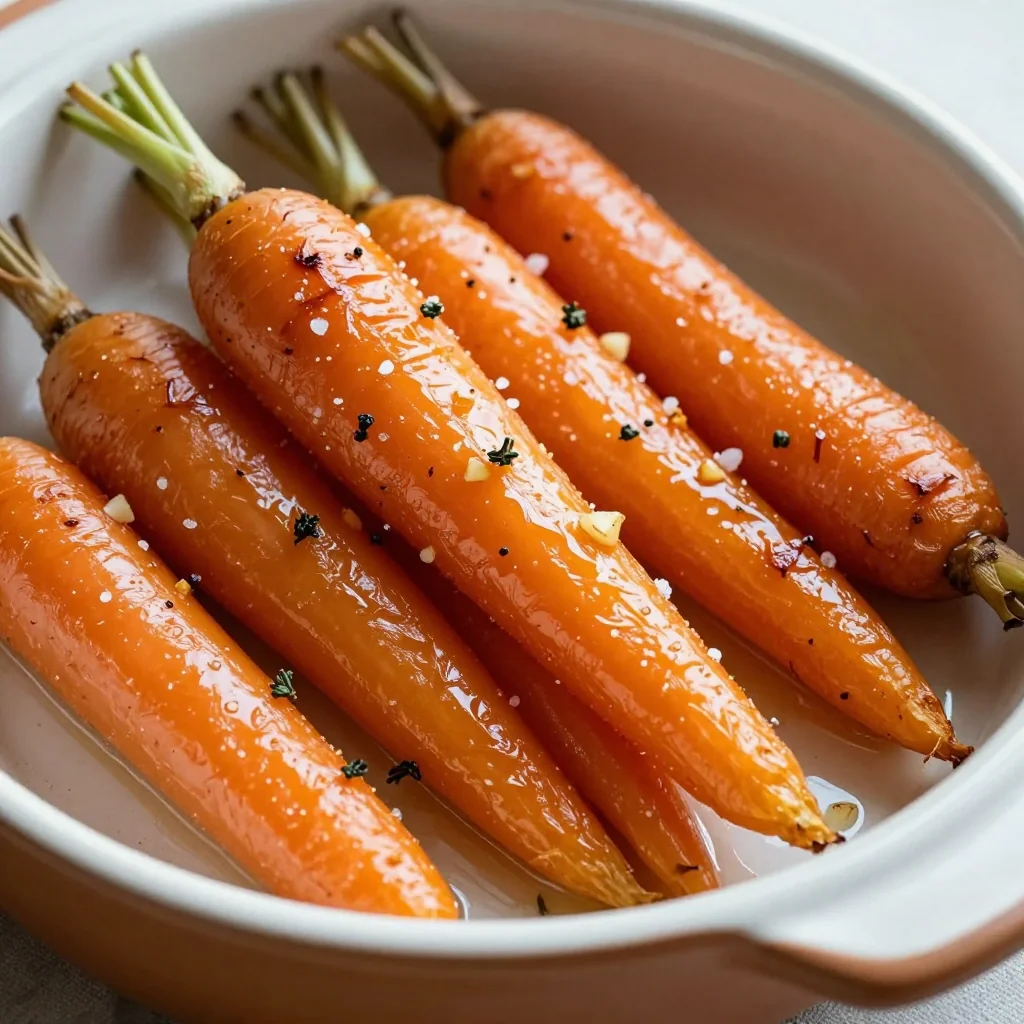
batch cook garlic roasted carrots and parsnips for cold winter nights
Ingredients
Instructions
- Preheat: Set oven to 450 °F. Line two rimmed sheet pans with parchment.
- Make glaze: Whisk miso, maple, tamari, rice vinegar, sesame oil, and 3 Tbsp warm water until smooth.
- Toss: In a large bowl coat vegetables with oil, then glaze. Divide between pans; scatter garlic and thyme.
- Roast: Bake 15 min, swap racks, flip, bake 12–15 min more until caramelized.
- Finish: Sprinkle lemon zest and juice, season with flaky salt. Serve hot or cool for meal prep.
Recipe Notes
For main-dish bowls, serve 2 cups roasted veg over ½ cup lemon-tahini yogurt and ¼ cup toasted pumpkin seeds. Add a scoop of warm farro for extra heft.