Love this? Pin it for later! 📌
Why This Recipe Works
- Stone-ground grits simmered in half milk, half stock for the creamiest texture without heavy cream.
- Cornmeal + rice-flour dredge yields shatter-crisp catfish that stays golden, not greasy.
- Smoked gouda adds depth without overpowering the delicate fish.
- Tomato-pepper jam can be made three days ahead, letting flavors meld and freeing up stove space.
- Cast-iron searing plus oven finish means every fillet is ready at the same moment.
- Scalable for 4 to 24 guests; hold grits in a slow cooker on “warm” without scorching.
- MLK-Day meaningful: catfish and corn are both crops historically farmed by Black Southerners, making this a delicious edible history lesson.
Ingredients You'll Need
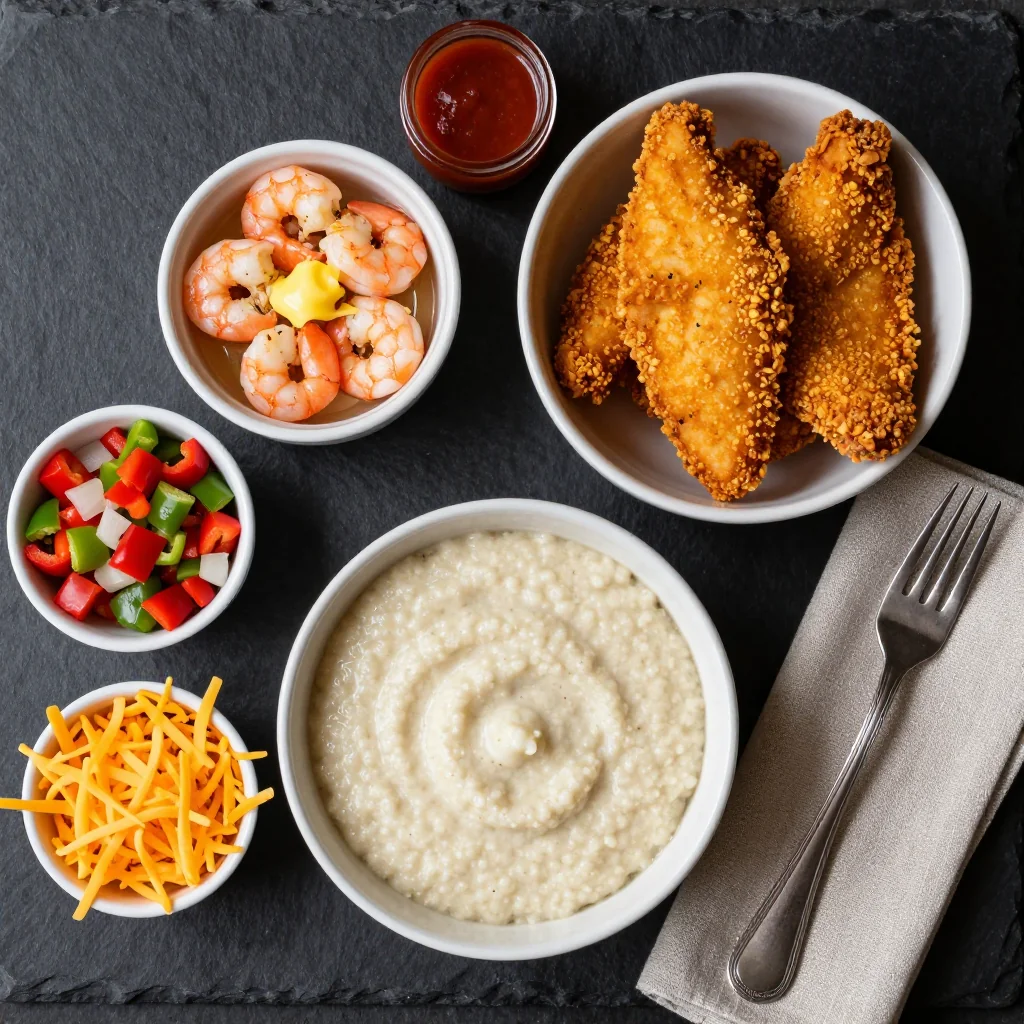
Great catfish and grits starts at the market. Look for U.S. farm-raised catfish—it's sustainably raised, milder than wild channel cats, and available fresh or flash-frozen in thin “shoe” fillets that cook quickly. For grits, ignore anything labeled “quick” or “instant”; you want stone-ground whole kernels that still have the germ. White or yellow both work, but white is traditional on the Georgia coast. Smoked gouda should be young and creamy, not the rock-hard aged stuff from Holland; if you can only find aged, swap in smoked mozzarella. The tomato-pepper jam balances sweetness and heat—use ripe plum tomatoes in winter or peak summer heirlooms; canned San Marzanos work in a pinch. Rice flour in the dredge guarantees gluten-free guests can partake, but all-purpose works if that’s what you have. Lastly, don’t skip the lemon: a whisper of acid just before serving is the difference between good and transcendent.
How to Make Southern Catfish and Grits for MLK Day Brunch
Start the tomato-pepper jam
In a heavy saucepan combine 1 lb diced plum tomatoes, ½ cup finely diced red bell pepper, ¼ cup apple-cider vinegar, 3 Tbsp light brown sugar, 1 tsp kosher salt, ½ tsp cracked black pepper, and a pinch of crushed red-pepper flakes. Bring to a boil, then reduce to a lively simmer for 25–30 minutes, stirring occasionally, until glossy and thick enough to mound on a spoon. Cool completely; refrigerate up to 5 days. Return to room temp before serving.
Soak the grits
Combine 1 cup stone-ground grits with 3 cups cold water in a bowl; swirl gently and let stand 5 minutes so chaff rises to the top. Pour off the floating husks and excess water. This soaking step shortens cooking time and yields silkier texture.
Simmer the grits
Drain the soaked grits and transfer to a heavy 3-qt saucepan with 2 cups whole milk, 2 cups low-sodium chicken stock, and 1 bay leaf. Bring to a gentle boil, whisking constantly. Reduce heat to the lowest setting, partially cover, and cook 35–40 minutes, whisking every 8–10 minutes, until thick and tender. If they threaten to scorch, splash in a little hot water.
Cheese & season
Remove bay leaf. Stir in 1 cup shredded smoked gouda, 2 Tbsp unsalted butter, ½ tsp kosher salt, and a few grinds of white pepper. Keep warm over a double boiler or in a slow cooker on “warm” with a thin film of cream floated on top to prevent a skin.
Prep the catfish
Pat 4 medium catfish fillets (about 6 oz each) very dry. Season both sides with 1 tsp kosher salt, ½ tsp smoked paprika, ¼ tsp granulated garlic, and a pinch of cayenne. Let stand 10 minutes so the seasoning adheres.
Set up the dredge
In a shallow dish whisk ½ cup fine yellow cornmeal, ¼ cup white rice flour, ¼ tsp baking powder, ½ tsp kosher salt, and ½ tsp freshly ground black pepper. In a second dish beat 2 large eggs with 1 Tbsp hot sauce and 1 tsp water. Dip each fillet in egg, let excess drip off, then press into cornmeal mix, coating well. Set on a rack; rest 5 minutes for the crust to hydrate—this prevents fall-off in the pan.
Sear & oven-finish
Preheat oven to 400 °F. Heat a 12-inch cast-iron skillet over medium-high until a drop of water skitters. Add ¼ cup high-oleic sunflower oil; when it shimmers lay in the fillets away from you. Cook 2 minutes without moving for a golden crust. Flip, transfer skillet to oven, and bake 4–5 minutes until the thickest part registers 135 °F (carry-over cooking will bring it to 145 °F).
Plate with love
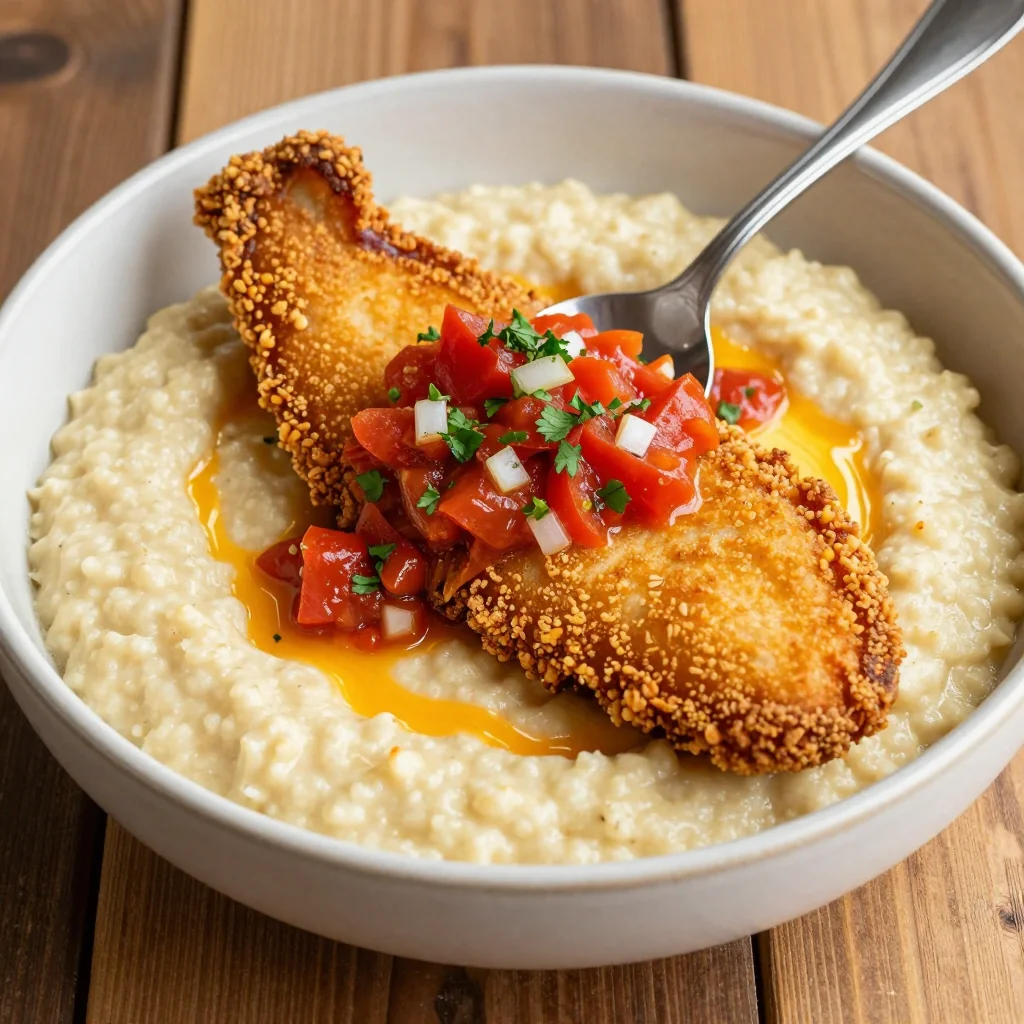
Spoon a generous puddle of grits into warm shallow bowls. Nestle a catfish fillet on top, spoon over tomato-pepper jam, and finish with a squeeze of lemon and a sprinkle of fresh parsley. Serve immediately with hot sauce on the side for those who like extra fire.
Expert Tips
Keep that oil hot
If the oil isn’t shimmering when the fish hits the pan, the breading will glue itself on and turn soggy. A quick-read surface thermometer should read 350 °F.
Overnight grits hack
Combine grits, milk, and stock in a slow-cooker insert the night before; set on low 7 hours. In the morning stir in cheese and butter—hands-off brunch hero.
Freeze & re-crisp
Cooked catfish fillets freeze beautifully: cool, layer between parchment, and freeze solid. Reheat on a wire rack at 425 °F for 8 minutes—crust revives like magic.
Color pop
Add ½ tsp turmeric to the cornmeal dredge for an even more golden crust that photographs like sunshine.
Temperature trumps time
Catfish goes from succulent to cottony in seconds. Pull at 135 °F and rest 3 minutes; carry-over heat finishes the job safely.
Smoked salt finish
A final pinch of smoked salt over the plated dish amplifies the gouda’s campfire note without adding more cheese.
Variations to Try
- Shrimp & Catfish Combo: Sauté 8 oz peeled shrimp in the skillet after the fish; toss with Old Bay and pile on top for a surf-surf brunch.
- Vegan Grits, Hold the Cheese: Substitute coconut milk for dairy, stir in 2 Tbsp nutritional yeast and 1 tsp white miso for umami.
- Charred Corn Relish: Replace tomato jam with grilled corn kernels, red onion, lime, and cilantro for a brighter summer version.
- Breakfast Bowl Meal-Prep: Pack cooled grits into muffin tins, freeze, then pop out and reheat in toaster oven for individual portions all week.
- Gluten-Free Flour Blend: Swap rice flour with equal parts cornstarch and chickpea flour for a protein boost.
- Spicy Maple Glaze: Whisk 2 Tbsp maple syrup with 1 tsp cayenne and brush over fish in the last minute of baking for a sweet-heat lacquer.
Storage Tips
Refrigerate: Store cooled grits and catfish separately in airtight containers up to 3 days. Reheat grits with a splash of milk over low heat, whisking until creamy. Revive catfish in a 400 °F oven on a rack set over a sheet pan for 6–7 minutes.
Freeze: Freeze individual portions of grits pressed flat in quart bags—thaw overnight in fridge, then reheat as above. Freeze fried catfish fillets on a parchment-lined tray; once solid, transfer to bags. Bake from frozen 12 minutes at 425 °F.
Make-Ahead: Tomato-pepper jam keeps 5 days chilled or 3 months frozen. Grits can be cooked the night before and held in a slow cooker on “warm” up to 4 hours; stir occasionally and thin with hot milk. Bread the fish up to 4 hours ahead; keep uncovered on a rack in the fridge so the coating stays dry and crisp.
Frequently Asked Questions
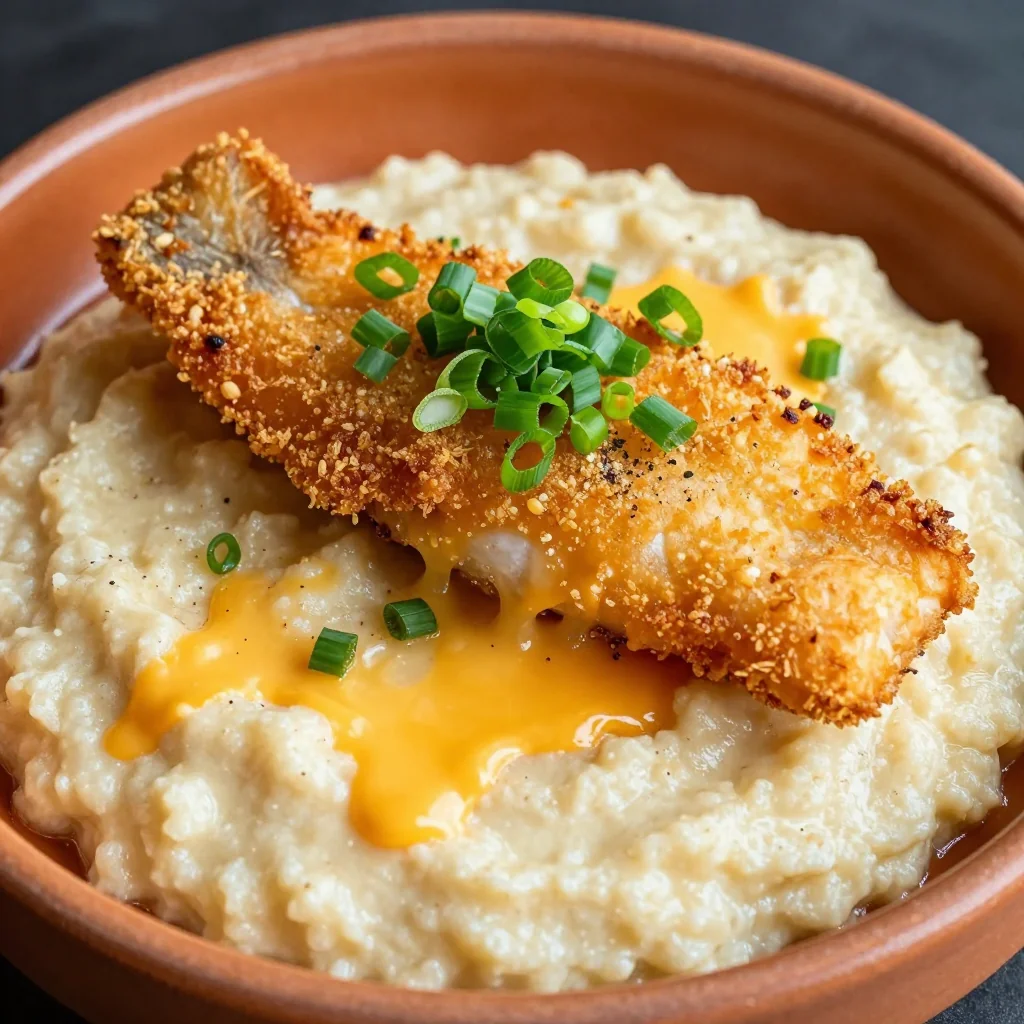
Southern Catfish and Grits for MLK Day Brunch
Ingredients
Instructions
- Soak grits: Cover with water, swirl, and pour off chaff.
- Simmer: Combine grits, milk, stock, and bay leaf; cook low 35–40 min until creamy. Stir in cheese, butter, salt, and white pepper.
- Season fish: Salt, paprika, garlic, cayenne; rest 10 min.
- Dredge: Cornmeal + rice flour + baking powder. Egg + hot sauce. Dip, coat, rest 5 min.
- Sear & bake: Cast-iron, 350 °F oil, 2 min per side, finish in 400 °F oven 4–5 min to 135 °F.
- Serve: Ladle grits, top catfish, spoon jam, finish with lemon and parsley.
Recipe Notes
Grits can be held in a slow cooker on “warm” up to 4 hours; float a thin layer of cream on top to prevent a skin. Tomato-pepper jam keeps 5 days refrigerated or 3 months frozen.