Love this? Pin it for later! 📌
There’s a moment—about halfway through Christmas lunch—when the room goes quiet. Not from boredom, but from awe. The platter hits the table, the duck gleams like a jewel under the fairy-lights, and someone inevitably whispers, “Did you make that?” That moment is why I cook. This plum-glazed roast duck has been my holiday trump card for twelve years running. It started as a panic move when the turkey didn’t defrost in time (who hasn’t been there?) and became the tradition my nieces now call “the purple duck holiday.” The skin is laquer-crisp, the meat stays blushing and juicy, and the glaze—made from late-season plums, star anise, and a kiss of balsamic—reduces to a sticky, spoonable syrup that tastes like Christmas distilled into sauce. If you want a centerpiece that looks straight out of a Bon Appétit cover yet is surprisingly forgiving, read on. I’ve tested this on everything from a tiny city oven to my parents’ AGA, and it never fails to steal the show.
Why This Recipe Works
- Air-dry overnight: A 24-hour fridge rest dehydrates the skin so it puffs into shatter-crisp crackling.
- Two-temperature roast: Low-and-slow melts the fat cap; a final blast at 240 °C renders and bronzes.
- Plum glaze timing: Brushing only during the last 20 minutes prevents the sugars from burning.
- Built-in side dish: Par-fried potatoes roast underneath in the duck fat—no waste, maximum flavor.
- Make-ahead friendly: The glaze keeps two weeks refrigerated; duck can be broken down a day early.
- Impressive yet economical: One duck feeds six generously for less than the cost of prime rib.
Ingredients You'll Need
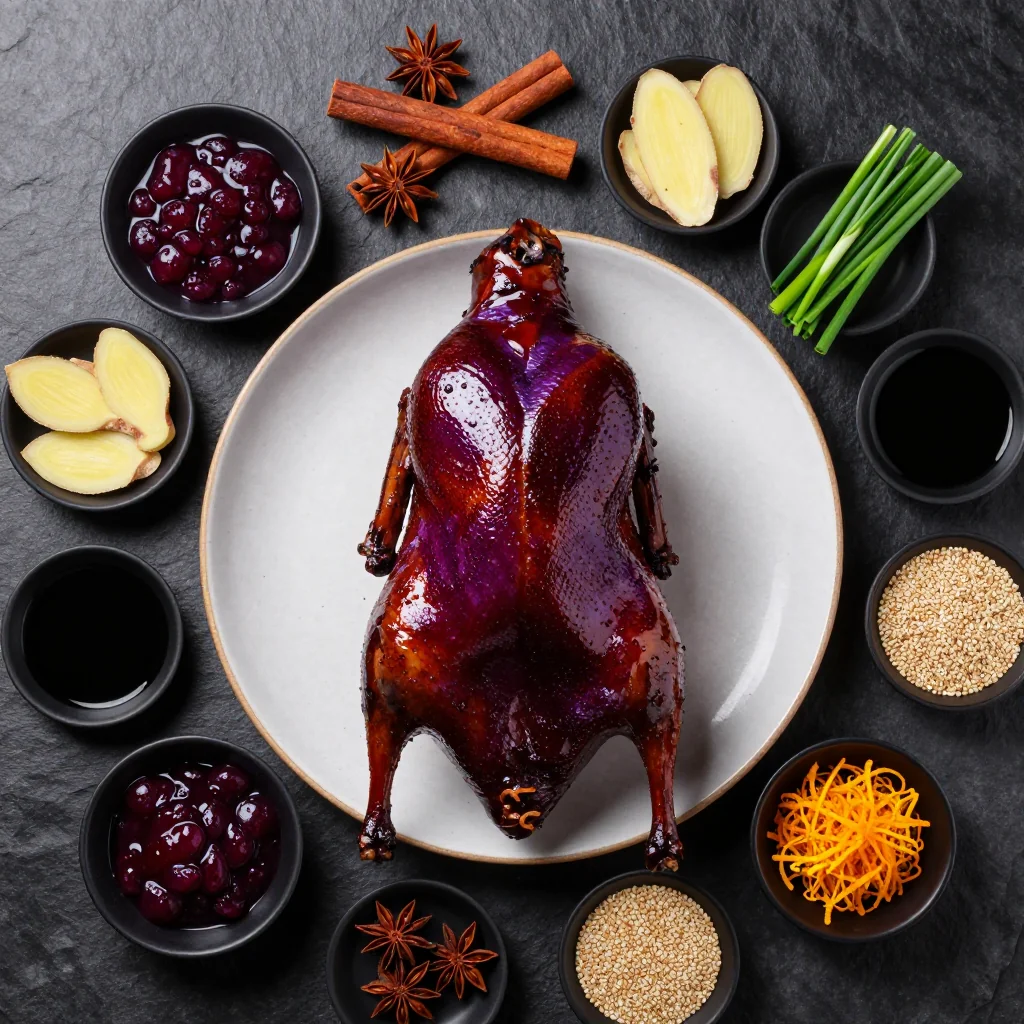
Quality matters when the ingredient list is short. Start with a fresh, free-range duck—look for pliable skin and a faint ivory fat layer. If it smells clean and slightly sweet, you’re golden. Frozen works; just thaw 48 hours in the fridge, breast-side up so melted juices drain away from the skin.
Whole Duck (2–2.3 kg): Giblets removed, neck reserved for stock if you like. A smaller bird cooks more evenly; if you’re feeding a crowd, roast two rather than one monster duck.
Plums (450 g): Choose firm, dark-skinned fruit. Italian prune plums are my favorite—they’re meaty, tart, and hold their shape. Out of season? Frozen plums (thawed) or good-quality canned ones in juice (drained) work.
Star Anise (2 pods): Delivers that whispered hint of licorice that makes people ask, “What’s in this?” No subs exactly replicate it; fennel seeds are the closest in a pinch.
Chinese Five-Spice (½ tsp): A backdrop of cinnamon, clove, and pepper. Buy small tins and replace yearly—spice drawer freshness equals flavor impact.
Balsamic Vinegar (60 ml): Use the everyday kind, not 25-year-aged treasure. Its sweet acidity concentrates into toffee notes.
Honey (30 g): Helps the glaze set to a mirror finish. Orange-blossom honey adds extra perfume; clover is neutral and reliable.
Sea Salt Flakes (25 g): The large crystals draw moisture without over-salting. If using fine table salt, halve the quantity.
Orange Zest (1 tsp): Just the colored part; zest the orange before you segment it for the gravy. Organic if possible—citrus oils live in the skin.
Butter (30 g, cold): Swirled into the finished sauce for silkiness. Duck fat works for dairy-free diners.
How to Make Plum Glazed Roast Duck Festive Showstopper
Dry & Air-Chill
Pat the duck inside and out with kitchen paper. Mix 2 Tbsp sea salt flakes with 1 tsp five-spice and the orange zest. Season cavity and skin, slipping salt under the skin wherever you can. Place duck on a wire rack set over a tray, uncovered, in the back of the fridge for 24–48 hours. The skin will feel like parchment; that’s perfect.
Make the Plum Glaze
Halve and pit plums. Tip into a saucepan with 120 ml water, star anise, honey, and balsamic. Simmer 15 minutes until fruit collapses. Blitz with a stick blender, then continue cooking on low until thick enough to coat the back of a spoon—about 10 minutes more. You should have 250 ml glossy purée. Cool, cover, refrigerate up to 2 weeks.
Truss & Tuck
Remove duck 45 minutes before roasting; cold skin contracts and can split. Fold wing tips under back, tie legs loosely with kitchen string. Prick the fat layer around the thighs—only the fat, not into the meat—using a cocktail stick; this creates escape routes for rendering fat.
Low & Slow Roast
Heat oven to 120 °C (100 °C fan). Place duck breast-side up on a rack in a deep roasting tin. Slide onto middle shelf 2½ hours. Meanwhile, par-boil waxy potatoes for 7 minutes, drain, rough-up edges; reserve.
Crank for Crackle
Increase heat to 240 °C (220 °C fan). Toss potatoes with 2 tsp salt and 2 Tbsp of the duck fat already in the tray. Scatter under the bird. Return to oven 20 minutes.
Glaze & Finish
Brush a thin layer of plum glaze over the breast and legs. Roast 5 minutes. Repeat twice more, building a candy shell. When an instant-read thermometer inserted into the thickest part of thigh reads 75 °C, transfer duck to a board. Rest 20 minutes, loosely tented—this sets the juices and finishes the glaze.
Quick Jus
Spoon excess fat from tin (save for roast veggies). Place tin over medium hob, add 250 ml chicken stock and juice of half an orange. Scrape browned bits, simmer 3 minutes. Strain, whisk in cold butter, taste for seasoning.
Carve & Serve
Snip string. Remove legs whole, slice breast on the bias. Arrange on a platter, drizzle with extra glaze, scatter pomegranate arils for sparkle. Serve with potatoes and garlicky kale for the full Technicolor holiday vibe.
Expert Tips
Maximize Crispy Skin
Pour a kettle of boiling water over the duck before salting. The heat tightens skin, helping fat render later.
Thermal Check
Check temperature at multiple thigh spots; duck keeps cooking while resting. Pull at 73 °C for perfect 75 °C carry-over.
Sweet Control
If your plums are super ripe, cut honey by half. Taste after simmering; add a splash of red-wine vinegar for balance.
Small-Oven Hack
For mini ovens, roast at 110 °C the entire time, then flash under a pre-heated grill 3 minutes to crisp.
Midnight Short-Cut
Skip the overnight air-dry by blow-drying the salted duck with a cool hair-dryer 10 minutes; surprisingly effective.
Fat Treasure
Strain rendered fat through muslin; it keeps months in fridge. Use for roast potatoes, confit vegetables, or savory popcorn.
Variations to Try
- Cherry Port Twist: Swap plums for cherries and balsamic for ruby port; add a cinnamon stick.
- Spicy Mandarin: Sub mandarin purée plus 1 tsp gochujang for a Korean-leaning heat-sweet profile.
- Sugar-Free: Replace honey with allulose; plums supply enough natural sugars to glaze.
- Citrus Herb: Omit star anise, add zest of 1 lemon + 2 sprigs rosemary to glaze; brush with lemon juice for acidity.
- Smoky Tea Rub: Add 1 tsp Lapsang Souchong tea leaves, ground, to the salt mix for campfire perfume.
Storage Tips
Leftover Duck: Cool completely, refrigerate in airtight container up to 4 days. Reheat gently in a 160 °C oven wrapped in foil with a splash of stock to prevent drying; skin will not be as crisp but flavor remains superb.
Glaze: Refrigerate up to 2 weeks or freeze in ice-cube trays 3 months. Thaw overnight in fridge; whisk to revive sheen.
Duck Fat: Strain, chill, keep in jar 3 months fridge, 1 year freezer. Label date—future you will thank present you.
Make-Ahead: Roast duck day before, chill whole. Bring to room temp, brush with glaze, reheat 20 minutes at 180 °C. Rest, carve, serve.
Frequently Asked Questions
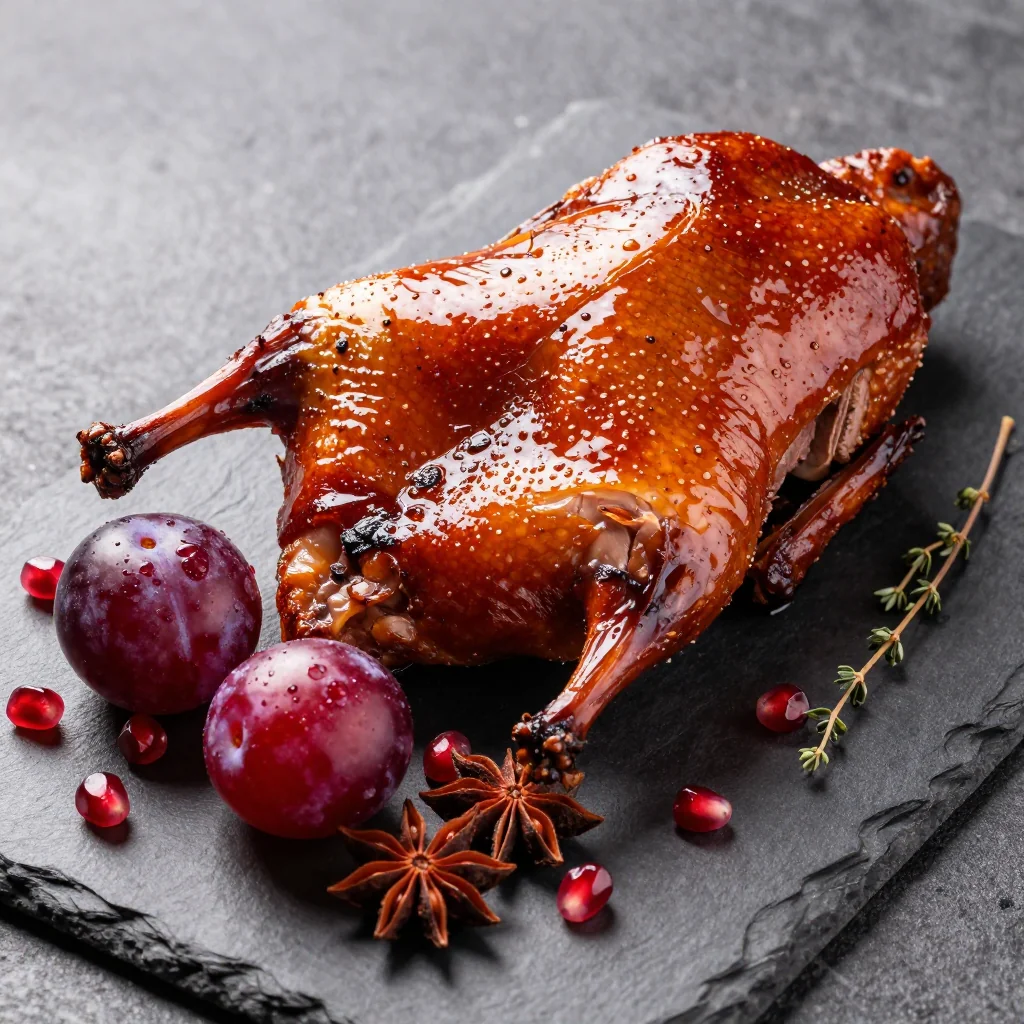
Plum Glazed Roast Duck Festive Showstopper
Ingredients
Instructions
- Air-Dry: Pat duck dry. Combine salt, five-spice, and zest; rub all over and under skin. Refrigerate uncovered on rack 24–48 hours.
- Make Glaze: Simmer plums, star anise, honey, vinegar, and 120 ml water 15 min. Blend, then cook to thick sauce. Cool.
- Roast Low: Heat oven to 120 °C. Place duck breast-up on rack in deep tin. Roast 2½ hours.
- Potatoes: Par-boil potatoes 7 min, drain, shake. After 2½ hours, toss potatoes with 2 Tbsp duck fat and salt in tin under duck.
- Crisp & Glaze: Raise heat to 240 °C. Brush duck with glaze every 5 minutes for 15–20 minutes until internal temp 75 °C.
- Rest & Jus: Rest duck 20 min. Simmer tin juices with stock and orange juice 3 min, whisk in butter, strain.
- Serve: Carve, spoon over extra glaze, scatter pomegranate, plate with potatoes and garlicky greens.
Recipe Notes
Glaze can scorch—apply only during final high-heat phase. Save rendered duck fat for the best roast potatoes you’ll ever eat.