
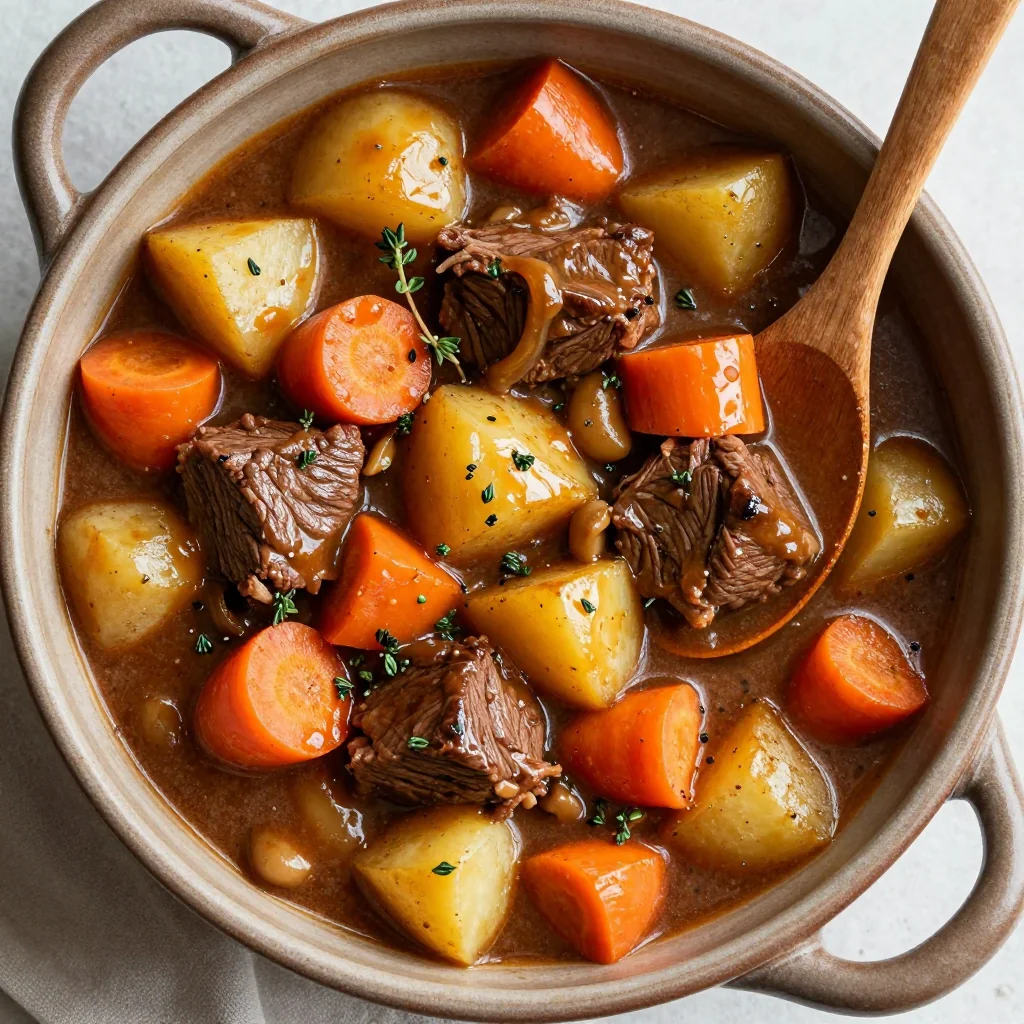
A timeless, hearty roast that fills your kitchen with aromatic herbs and the comforting scent of slow‑cooked beef.

Personal Story
The first time I tasted a perfectly roasted beef joint, it was at my grandmother’s countryside cottage during a chilly autumn weekend. The kitchen was alive with the scent of rosemary and garlic, while the crackle of the oven promised something truly comforting. I remember watching the amber‑brown crust form, feeling the anticipation build as the potatoes turned golden and the carrots softened to a sweet tenderness. That memory stayed with me, urging me to recreate that magic in my own kitchen.
Beef roast with potatoes and carrots is a cornerstone of French home cooking, often served at family gatherings and Sunday meals. Its roots trace back to rustic farmhouses where simple, robust ingredients were coaxed into a harmonious dish that could feed a crowd. The combination of beef’s rich umami, earthy potatoes, and sweet carrots creates a balance that feels both rustic and refined.
In this article, I’ll walk you through every step—from selecting the right cut of meat to mastering the perfect glaze—so you can achieve a restaurant‑quality roast without the stress. You’ll learn the science behind searing, the art of seasoning, and the subtle tricks that keep the vegetables perfectly caramelized.
I’m thrilled to share this recipe with you, and I hope it becomes a beloved staple in your culinary repertoire. Let’s get started!
🌟 Why This Recipe Will Capture Your Heart
This roast isn’t just a meal; it’s an experience that brings warmth, flavor, and confidence to your table.
- ✨ Perfectly Juicy Beef: A brief sear locks in juices, while a low‑and‑slow roast ensures tenderness that falls apart with a fork.
- ✨ One‑Pan Simplicity: The vegetables roast alongside the meat, absorbing savory drippings for a unified flavor profile.
- ✨ Flexible Seasoning: Classic herbs like rosemary and thyme provide a familiar base, yet you can easily swap in thyme, sage, or even smoked paprika for a twist.
- ✨ Nutrient‑Rich Side Dish: Potatoes and carrots deliver fiber, vitamins, and a natural sweetness that balances the richness of the beef.
- ✨ Ideal for Any Season: Whether it’s a summer picnic or a winter feast, this dish adapts with minimal adjustments.
- ✨ Crowd‑Pleaser: The comforting flavors appeal to both meat‑loving adults and picky eaters, making it perfect for gatherings.
🥗 Ingredients
📝 Complete Ingredient List
For the Beef Roast:
For the Vegetables:
For the Pan Sauce (optional):

🔍 Focus on Key Ingredients
Beef Chuck Roast
The chuck roast is a well‑marbled cut that benefits from long, slow cooking. Its connective tissue breaks down into gelatin, giving the final dish a silky mouthfeel. When selecting, look for a deep ruby color and even marbling; avoid pieces that appear too lean or have a grayish hue.
Fresh Herbs (Rosemary & Thyme)
Rosemary’s piney aroma and thyme’s subtle earthiness complement the beef’s richness while adding a bright herbal note. Use fresh herbs whenever possible; they release essential oils when heated, creating a fragrant crust. If you only have dried herbs, use half the amount.
Carrots and Potatoes
Potatoes provide a starchy base that soaks up the meat juices, while carrots contribute a natural sweetness that balances the savory broth. Cutting them into uniform pieces ensures even cooking. For extra caramelization, toss them lightly in olive oil and a pinch of salt before roasting.
🔄 Quick Substitutions
| If you don’t have… | Use instead… |
|---|---|
| Beef chuck roast | Boneless short rib or beef brisket |
| Fresh rosemary | Dried rosemary (½ tsp) |
| Red wine | Beef stock with a splash of balsamic vinegar |
👨🍳 Step‑by‑Step Instructions
Follow these detailed steps to achieve a succulent roast with perfectly caramelized vegetables. Each phase builds on the previous one, ensuring flavor layers develop gradually.
📋 Phase 1: Preparation & Mise en Place
Gather and prep all components before the oven gets hot.
Pat the Beef Dry and Season
Remove the beef from its packaging and pat it dry with paper towels. This step is crucial because excess moisture will steam the meat rather than sear it. Sprinkle the kosher salt, black pepper, and minced garlic evenly over all sides. Let the seasoned roast rest at room temperature for about 15 minutes; this helps the seasoning penetrate and promotes even cooking.
Prepare the Herb‑Oil Rub
In a small bowl, combine 2 tbsp olive oil, chopped rosemary, and a pinch of salt. Stir until the mixture forms a glossy paste. Rub this herb‑oil all over the beef, ensuring every crevice is coated. The oil will aid in browning and the rosemary will infuse the meat during roasting.
Trim and Cut the Vegetables
Peel the potatoes and cut them into uniform wedges, about 5 cm long. Peel the carrots and slice them into sticks of similar length. Uniformity ensures that the vegetables cook at the same rate as the meat. Toss the vegetables with 1 tbsp olive oil, thyme leaves, and a generous pinch of salt and pepper.
🔥 Phase 2: Searing and Roasting
Create a flavorful crust before the low‑and‑slow roast.
Sear the Beef
Heat a heavy‑bottomed Dutch oven or large oven‑proof skillet over medium‑high heat. Add a drizzle of olive oil. When the oil shimmers, place the roast in the pan. Sear each side for 3‑4 minutes until a deep brown crust forms. Use tongs to turn the meat; avoid moving it too often, as this prevents a proper crust.
Arrange Vegetables Around the Roast
Transfer the seared roast to a roasting pan if you used a skillet. Scatter the seasoned potatoes and carrots around the meat, ensuring they form a single layer. The vegetables will absorb the meat’s juices, becoming tender and flavorful.
Roast in the Oven
Pre‑heat the oven to 160 °C (320 °F). Place the pan in the center of the oven and roast for approximately 2 hours 30 minutes, or until the internal temperature reaches 60 °C (140 °F) for medium‑rare, 65 °C (150 °F) for medium. Use a meat thermometer inserted into the thickest part of the roast, avoiding the bone. If you prefer a richer sauce, add the beef broth and red wine to the pan during the last 30 minutes; the liquid will reduce and coat the vegetables.
✨ Phase 3: Finishing Touches & Plating
Rest, slice, and present your masterpiece.
Rest the Roast
Remove the pan from the oven and transfer the beef to a cutting board. Tent it loosely with foil and let it rest for 15 minutes. Resting allows the juices to redistribute, ensuring every slice is moist.
Make the Pan Sauce (Optional)
While the meat rests, place the roasting pan on the stovetop over medium heat. Add the butter and stir until melted. Scrape up any browned bits from the bottom of the pan, then simmer the broth and wine mixture for 5‑7 minutes until slightly thickened. Strain if desired, then drizzle over the sliced beef and vegetables.
Slice and Serve
Using a sharp carving knife, slice the beef against the grain into 1‑cm thick pieces. Arrange the slices on a serving platter surrounded by the roasted potatoes and carrots. Garnish with a sprinkle of fresh rosemary or parsley for a pop of color.
Enjoy with Suggested Accompaniments
Pair the roast with a robust red wine such as a Bordeaux blend, or serve alongside a crisp green salad for contrast. This dish also shines with a simple mustard‑based sauce if you enjoy a tangy note.
💡 Expert Tips & Tricks
🛒 Choosing the Right Ingredients
Opt for a chuck roast with visible marbling; the fat renders slowly, keeping the meat juicy. When buying potatoes, select Russet or Yukon Gold for their fluffy interiors. Carrots should be firm, bright orange, and free of cracks. Fresh herbs should have vibrant leaves—not wilted or yellowed.
🔪 Preparation Techniques
Trim excess silver skin from the beef, as it can become tough when cooked. Use a sharp chef’s knife to cut potatoes and carrots into similar sizes, promoting even caramelization. For a uniform sear, pat the meat completely dry and avoid crowding the pan.
🌡️ Mastering the Cooking Process
A meat thermometer is indispensable; it removes guesswork and prevents overcooking. If you lack a thermometer, a visual cue is a firm, but not hard, feel when pressed. Remember that the roast will continue to rise about 5 °C during resting.
🍽️ Presentation & Service
Slice the meat against the grain for maximum tenderness. Arrange the vegetables in a fan shape around the meat for visual appeal. A drizzle of the reduced pan sauce just before serving adds shine and depth.
🏆 Pro Tips
Professional chefs rely on precision and timing; here’s how you can elevate this home‑cooked roast to restaurant quality.
- 🎯 Brine the Beef for 4‑6 Hours: Dissolve 60 g salt in 1 L water, submerge the roast, and refrigerate. The brine enhances moisture retention and seasons the meat from the inside out.
- 🎯 Use a Cast‑Iron Dutch Oven: Its heavy lid traps steam, creating a moist environment that keeps the roast tender while still allowing a crust to form.
- 🎯 Add a Bed of Aromatics: Place sliced onions, celery, and a few garlic cloves beneath the roast. They infuse the drippings with extra flavor and become a natural base for the sauce.
- 🎯 Finish with a High‑Heat Sear: After the low‑and‑slow roast, increase oven temperature to 220 °C (425 °F) for the final 10 minutes. This step maximizes Maillard reactions for a deeper crust.
- 🎯 Deglaze with a Splash of Balsamic: Adding 1 tbsp balsamic vinegar to the pan sauce introduces a subtle acidity that balances the richness of the beef.
- 🎯 Rest on a Warm Plate: Transfer the sliced meat onto a warmed serving platter; this keeps it hot while guests serve themselves.
"A great roast is not just about heat; it's about time, patience, and respect for each ingredient." — Chef Alain Ducasse
🔄 Variations & Adaptations
This classic roast is a versatile canvas. Below are several ways to customize it for dietary preferences, flavor cravings, or family-friendly twists.
🥬 Vegetarian / Vegan Version
Replace the beef with a large cauliflower head cut into thick steaks. Marinate with the same herb‑oil mixture, then roast alongside the potatoes and carrots. For protein, add chickpeas tossed in olive oil and smoked paprika.
- Use 1 kg cauliflower steaks instead of beef.
- Add 400 g canned chickpeas, rinsed and tossed with smoked paprika.
🌶️ Flavor Variations
Adjust the herb profile or introduce global spices to give the dish a new personality.
Spicy Mexican Twist
Add 1 tsp cumin, ½ tsp smoked paprika, and a diced jalapeño to the vegetable mix. Finish with a squeeze of fresh lime and a sprinkle of cilantro.
Mediterranean Version
Substitute rosemary with oregano, add olives and sun‑dried tomatoes, and finish with a drizzle of extra‑virgin olive oil and a splash of lemon juice.
Asian‑Inspired Variation
Use soy sauce, ginger, and a dash of sesame oil in the herb‑oil rub. Garnish with toasted sesame seeds and sliced green onions before serving.
⚠️ Dietary Adaptations
Gluten‑Free
This recipe is naturally gluten‑free; ensure the broth and wine you select contain no added wheat.
Lactose‑Free
Omit the butter in the pan sauce or replace it with a dairy‑free margarine.
Low‑Calorie
Trim excess fat from the roast, reduce olive oil to 1 tbsp total, and increase the proportion of carrots to potatoes for added fiber.
👶 Family / Kids Version
Kids often prefer milder flavors. Reduce the amount of garlic and rosemary, and serve the vegetables with a light honey‑mustard dip. Cut the beef into bite‑size cubes and let children assemble their own mini‑skewers.
📦 Storage & Reheating
🧊 Conservation
Refrigerator
- Duration: 4 days
- Recommended container: airtight glass or BPA‑free plastic container
- Tip: Store the meat and vegetables separately to retain texture.
Freezer
- Duration: 3 months
- Method: Cool completely, then wrap tightly in freezer‑grade foil and place in a zip‑lock bag.
- Defrosting: Thaw overnight in the refrigerator for best results.
💡 For optimal flavor retention, portion the roast before freezing; this makes reheating quicker and reduces waste.
♨️ Reheating
🔥 Oven (Recommended)
- Preheat to 150 °C (300 °F).
- Cover the dish with aluminum foil to retain moisture.
- Reheat for 20‑25 minutes, or until the internal temperature reaches 60 °C (140 °F).
- Remove the foil, increase heat to 200 °C (390 °F) for 5 minutes to restore crust.
⚡ Microwave (Quick)
- Place a portion on a microwave‑safe plate.
- Cover with a microwave‑safe lid or damp paper towel.
- Heat on medium power for 2‑3 minutes, stirring vegetables halfway through.
- Check temperature and continue in 30‑second bursts if needed.
🍳 Stovetop
For a quick refresh, slice the roast thinly and sauté in a hot skillet with a splash of broth for 2‑3 minutes, stirring the vegetables until warmed through.
🍷 Perfect Pairings
🥗 Side Dishes
- Mixed Green Salad: A crisp salad with a light vinaigrette cuts through the richness of the roast.
- Garlic‑Infused Green Beans: Sautéed with butter and toasted almonds for added texture.
- Herbed Couscous: Fluffy couscous tossed with parsley, lemon zest, and a drizzle of olive oil.
🍷 Wine & Beverage Pairings
- Red Bordeaux Blend: Its firm tannins complement the beef’s depth.
- Cabernet Sauvignon: Offers bold fruit flavors that match the caramelized vegetables.
- Non‑Alcoholic: Sparkling apple cider with a hint of cinnamon provides a festive alternative.
🍰 Completing the Meal
Start with a light French onion soup, follow with the roast, and finish with a classic tarte Tatin or a simple vanilla panna cotta. The contrast of textures keeps the palate engaged from start to finish.
❓ Frequently Asked Questions
Q: Can I use a different cut of beef?
Absolutely. A boneless short rib or a beef brisket works well. Adjust cooking time slightly—short ribs may need up to 3 hours for the same level of tenderness, while brisket benefits from a low temperature for a longer period.
Q: How do I know when the roast is done without a thermometer?
Press the meat with your fingertip; it should feel firm but give slightly under pressure. Another indicator is the color of the juices—clear juices mean it’s cooked, while pink indicates more time is needed. However, a thermometer remains the most reliable method.
Q: Should I cover the roast while it cooks?
For the first 1 hour, keep the lid on to trap steam and keep the meat moist. Remove the lid for the final hour to allow the vegetables to brown and develop a caramelized crust.
Q: Can I add other vegetables?
Yes! Parsnips, turnips, or sweet potatoes add wonderful sweetness. Just cut them to a similar size as the carrots and potatoes so they cook evenly.
Q: How can I make the dish gluten‑free?
The core recipe is already gluten‑free. Ensure any broth or wine you use does not contain added wheat or malt. Check labels for hidden gluten sources.
Q: Is it possible to prepare the roast a day ahead?
Definitely. Cook the roast fully, let it cool, then refrigerate. Reheat gently in the oven as described in the reheating section. The flavors often deepen after an overnight rest.
🎉 Let’s Get Cooking!
This Beef Roast with Potatoes and Carrots brings together timeless techniques and comforting flavors, making it an ideal centerpiece for any gathering. By following the detailed steps, you’ll achieve a tender, juicy roast with perfectly caramelized vegetables that look as impressive as they taste. Remember, the secret lies in proper seasoning, a good sear, and patient roasting.
I can’t wait to hear how your roast turns out. Share your photos, ask questions in the comments, and don’t forget to leave a rating. Your feedback helps the community grow and inspires new culinary adventures.
Have you tried this recipe?
Leave a comment and a rating below! Share your photos on Instagram with #RoastDelight to be featured.
Beef Roast with Potatoes and Carrots
A classic, hearty roast that brings comfort to any table.
📝 Ingredients
Beef Roast
Vegetables
Pan Sauce (optional)
👨🍳 Instructions
- 1
Pat the beef dry, season with salt, pepper, and garlic, then let rest for 15 minutes.
- 2
Rub the herb‑oil mixture over the roast, ensuring even coverage.
- 3
Sear the roast on all sides in a hot Dutch oven until a deep brown crust forms.
- 4
Arrange seasoned potatoes and carrots around the meat in a single layer.
- 5
Roast at 160 °C for 2 hours 30 minutes, or until internal temperature reaches 65 °C for medium.
- 6
During the last 30 minutes, add beef broth and red wine to create a pan sauce.
- 7
Remove the roast, tent with foil, and rest for 15 minutes.
- 8
Finish the sauce by whisking in butter, then drizzle over the meat and vegetables.
- 9
Slice the beef against the grain and arrange on a platter with vegetables.
- 10
Serve immediately with suggested side dishes and wine pairings.
🥗 Nutritional Information (per serving)
*Values are estimates based on standard ingredient data.
📚 You Might Also Like

Herb‑Crusted Lamb Rack

Classic Chicken Pot Pie

Slow‑Cooked Pulled Pork

Vegetarian Mushroom Stroganoff
💬 Comments & Reviews
No comments yet. Be the first to share your thoughts!






Leave a Comment