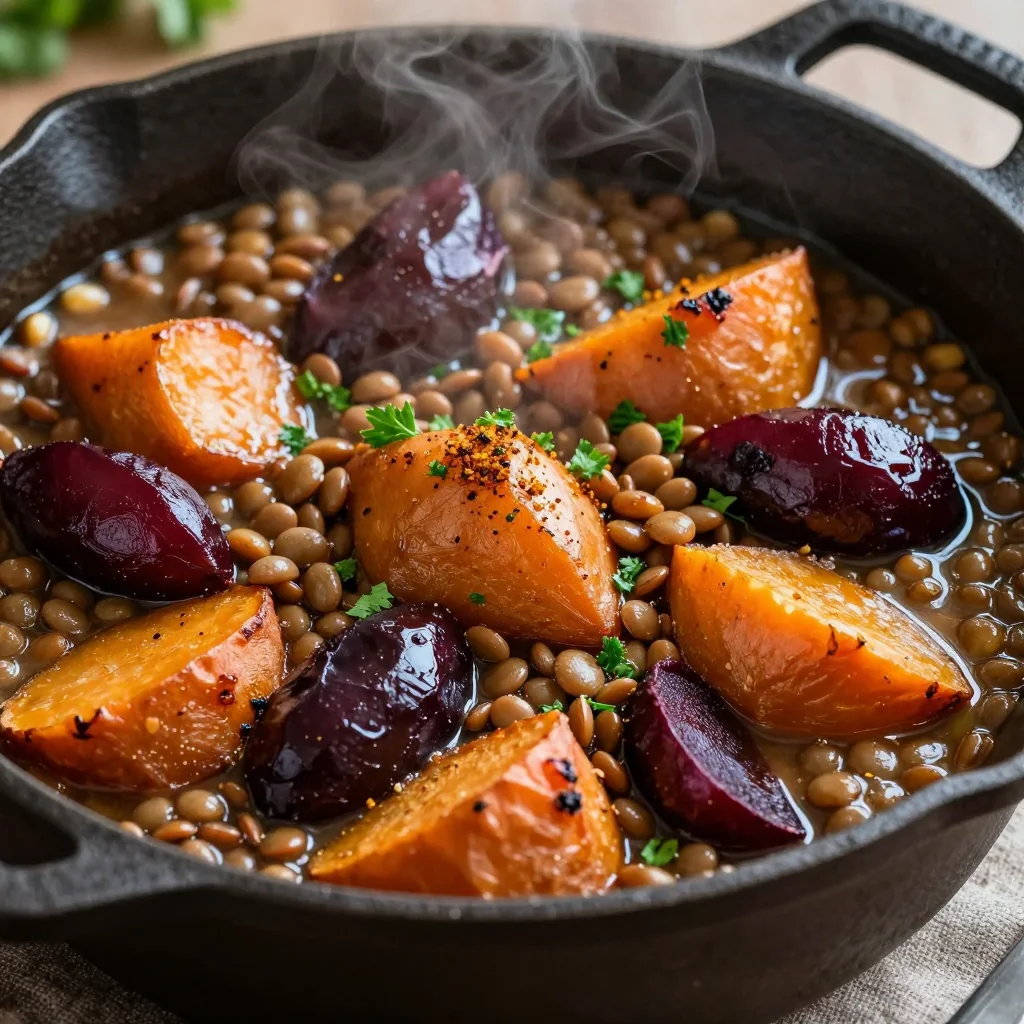
Love this? Pin it for later! 📌
There’s a certain kind of magic that happens when the first chilly evening of the season rolls in. The light turns golden earlier, the air smells like woodsmoke and damp leaves, and my kitchen beckons for something that will simmer quietly while I curl up with thick socks and a podcast. That’s when I reach for my biggest Dutch oven and start ladling out this One-Pot Lentil & Roasted Root Vegetable Stew. It’s the culinary equivalent of a weighted blanket: hearty, fragrant, and somehow both rustic and elegant. I first developed the recipe during a frenzied November when I was teaching evening classes and needed dinners that could feed a crowd of hungry grad students without breaking the bank. One batch, twenty minutes of active work, and we’d have bowls of silky lentils swimming with caramelized carrots, parsnips, and beets that stained everything a glorious ruby. Over the years I’ve refined the spice blend, swapped in whatever root vegetables were languishing in the crisper, and discovered that a quick roast before the simmer adds layers of sweet depth you simply can’t get from a straight stovetop stew. Whether you’re meal-prepping for a busy week, feeding a table of omnivores who swear they “don’t like healthy food,” or simply craving something that tastes like you spent all day cooking (when you absolutely did not), this stew delivers every single time.
Why This Recipe Works
- One-pot convenience: Everything from toasting spices to the final simmer happens in the same heavy pot, meaning minimal dishes and maximum flavor layering.
- Roasted roots = natural sweetness: A quick blast in high heat caramelizes the vegetables’ exterior, intensifying sugars before they melt into the broth.
- Protein-packed & budget-friendly: One cup of dried lentils delivers 18 g of plant protein for pennies compared to meat-based stews.
- Deep, balanced spice profile: Smoked paprika, coriander, and a whisper of cinnamon create warmth without heat, pleasing even picky palates.
- Freezer hero: The stew thickens beautifully when cooled, making it perfect for batch-cooking and reheating on frantic nights.
- Vibrant color retention: Roasting beets separately prevents the entire stew from turning muddy, giving you jewel-toned vegetables in every spoonful.
Ingredients You'll Need
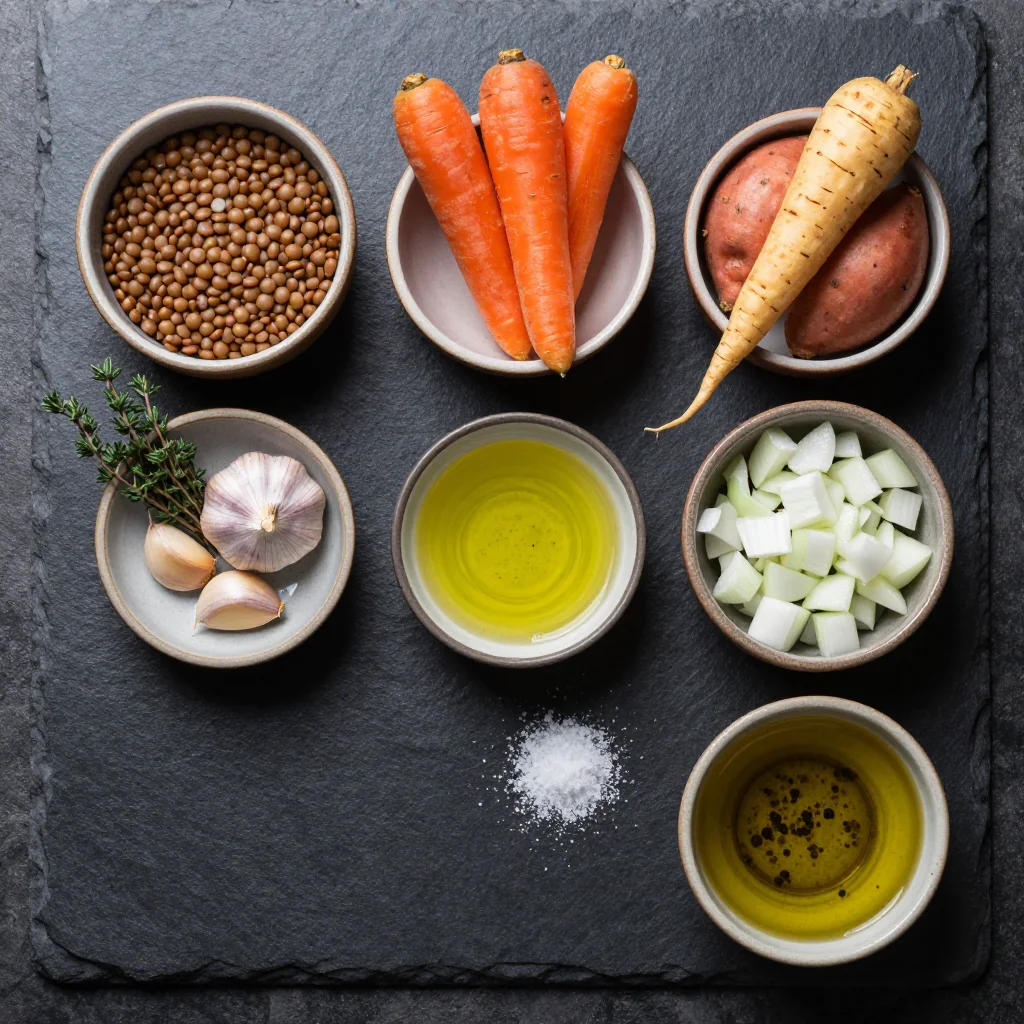
Great stew starts with great building blocks, but that doesn’t mean you need fancy specialty produce. Think of this list as a roadmap—you can swap in almost any root vegetable and still land in comfort-food territory.
French green lentils (a.k.a. Puy lentils): These tiny slate-colored legumes hold their shape after a long simmer and have a peppery nuance you won’t find in brown lentils. If your grocery only stocks brown, reduce cooking time by 5–7 minutes so they don’t collapse into mush.
Root vegetables: I use a trio of carrots, parsnips, and ruby beets for color contrast. Carrots bring classic sweetness, parsnips add earthy perfume, and beets give that gorgeous crimson marbling. If beets aren’t your thing, substitute golden beets or even sweet potatoes; just keep the total weight around 1½ lb so liquid ratios stay balanced.
Yellow onion & fennel: Onion lays the savory foundation, while a small shaving of fennel bulb melts into silky threads that whisper of licorice without overwhelming the dish. No fennel? Use one large onion and add ½ tsp crushed fennel seeds instead.
Garlic, lots of it: I use six fat cloves because they mellow beautifully once roasted. Smaller cloves often burn; choose the biggest you can find.
Tomato paste: A concentrated hit of umami that deepens color and marries with the paprika to create a quasi-smoky note reminiscent of bacon (minus the meat).
Spice blend: Smoked paprika supplies campfire aroma; ground coriander adds citrusy backbone; a pinch of cinnamon enhances the natural sweetness of roasted roots. Buy spices in small quantities from the bulk bin so they’re no more than six months old—stale spices mute the whole stew.
Vegetable broth: Choose a low-sodium, good-quality broth so you can control salt. If you’re a broth-from-scratch person, now’s the moment to show off.
Fresh herbs & finishing acid: Stir in chopped parsley for brightness and finish with a splash of sherry vinegar to wake up every layer of flavor.
How to Make One-Pot Lentil & Roasted Root Vegetable Stew for Filling Dinners
Preheat & prep vegetables
Position a rack in the center of your oven and preheat to 425°F (220°C). While it heats, scrub and peel (if desired) the carrots, parsnips, and beets. Cut carrots and parsnips into 2-inch batons about ½-inch thick so they roast quickly but don’t disintegrate in the stew. Peel beets with a vegetable peeler, then dice into ¾-inch cubes—small enough to caramelize yet large enough to stay plush inside. Keep beets separate from the other vegetables to prevent staining.
Season & roast
Spread carrots and parsnips on one rimmed sheet; toss with 1 Tbsp olive oil, ½ tsp kosher salt, and a few cracks of black pepper. On a second sheet, do the same with beets. (Aluminum foil-lined sheets save scrubbing later.) Roast 18–22 minutes, stirring once halfway, until edges are blistered and a thin caramelized film forms. Remove and set aside. The beets may need an extra 3 minutes—don’t be afraid of color; that’s flavor.
Toast aromatics & spices
Lower oven to 375°F (190°C) if you plan to bake no-knead bread while the stew simmers—optional but highly recommended for the full hygge experience. Heat 2 Tbsp olive oil in a heavy 5–6 qt Dutch oven over medium. Add diced onion and fennel; sauté 5 minutes until translucent. Stir in garlic for 1 minute, then tomato paste; cook 2 minutes until brick red. Sprinkle in smoked paprika, coriander, cinnamon, 1 tsp salt, and ½ tsp pepper; toast 30 seconds until kitchen smells like a Moroccan souk.
Deglaze & combine
Pour in ¼ cup of the vegetable broth; scrape the pot’s bottom with a wooden spoon to loosen any browned bits (fond = free flavor). Add lentils, roasted vegetables, remaining broth, and 2 cups water. The liquid should just cover solids by ½ inch; add a splash more water if needed. Stir in 2 tsp sherry vinegar now so the acid seasons lentils from the inside out.
Simmer low & slow
Bring to a gentle simmer, then clamp on the lid slightly ajar. Reduce heat to low and cook 28–32 minutes, stirring twice. You want tiny bubbles lazily breaching the surface—vigorous boiling will rupture lentils. Taste at 25 minutes; lentils should be creamy inside yet retain silhouette. If your water is hard or your lentils are old, they may take up to 40 minutes.
Adjust texture & season
Remove lid, increase heat to medium, and simmer 5 minutes to thicken if you like a stew that stands up to crusty bread. For soup-ier consistency, add a cup of hot water. Finish with remaining 1 tsp sherry vinegar, then salt and pepper to taste. The stew will continue thickening as it cools, so err on the slightly brothy side.
Serve & garnish
Ladle into warm shallow bowls. Shower with chopped parsley, a drizzle of grassy olive oil, and—if you’re feeling decadent—a spoonful of garlicky yogurt or crumbled feta. Provide lemon wedges at the table; a last-minute squeeze elevates every vegetable.
Store for later
Cool completely, then refrigerate in airtight containers up to 5 days or freeze up to 3 months. Thaw overnight in the fridge and reheat gently with a splash of broth or water to loosen.
Expert Tips
Salt in stages
Salting vegetables before roasting draws out moisture and encourages browning, but hold back on lentils until after they simmer; salting too early can toughen skins.
Preheat your sheet pans
Sliding vegetables onto an already-hot surface jump-starts caramelization and prevents sticking—just be careful of the sizzle when you toss.
Older lentils need more time
If your lentils have been in the pantry over a year, add an extra ½ cup water and simmer 5–10 minutes longer. Acidity from vinegar added late keeps them from turning mushy.
Overnight flavor boost
Make the stew a day ahead; the lentils absorb spice-infused broth and taste even better. Reheat gently—aggressive boiling muddles flavors developed overnight.
Double the roasted veg
Roast extra carrots and beets, refrigerate separately, and toss into salads all week for instant meal upgrade with zero extra effort.
Thicken with aquafaba
For a silky sheen without cream, whisk 2 Tbsp chickpea brine (aquafaba) into the stew during the last 2 minutes of simmering—it emulsifies the broth and adds body.
Variations to Try
-
Moroccan twist: Swap smoked paprika for 1 tsp each sweet paprika and turmeric, add ½ cup chopped dried apricots with the lentils, and finish with a handful of baby spinach and a squeeze of orange juice.
-
Protein powerhouse: Stir in one 14-oz can of rinsed chickpeas during the last 10 minutes for extra bite and protein diversity.
-
Umami mushroom: Replace half the root vegetables with roasted cremini mushrooms; their earthy flavor mimics beef stew vibes without any meat.
-
Coconut curry: Use coconut oil instead of olive, swap coriander for yellow curry powder, and replace 1 cup broth with full-fat coconut milk for a creamy, Thai-inspired version.
-
Grains & greens: Add ½ cup pearl barley or farro along with the lentils for a chewier texture; toss in chopped kale during the last 5 minutes so it wilts but stays vibrant.
-
Smoky heat: Stir in 1 chipotle pepper in adobo sauce (minced) with the tomato paste for a subtle, smoky kick that warms the back of your throat.
Storage Tips
Let the stew cool to room temperature within two hours of cooking (transfer to shallow containers to speed cooling). Refrigerate in glass jars or BPA-free plastic for up to 5 days. For longer storage, ladle into quart-size freezer bags, squeeze out excess air, and lay flat to freeze—stackable, space-saving blocks thaw quickly under warm water. The stew will thicken significantly; when reheating, add broth or water until you reach desired consistency and warm gently over medium-low heat, stirring occasionally. Microwave works in a pinch: use 50% power and stir every 60 seconds to prevent hot spots. If you plan to pack leftovers for lunch, store the garnish separately so parsley stays pert and colors remain bright.
Frequently Asked Questions
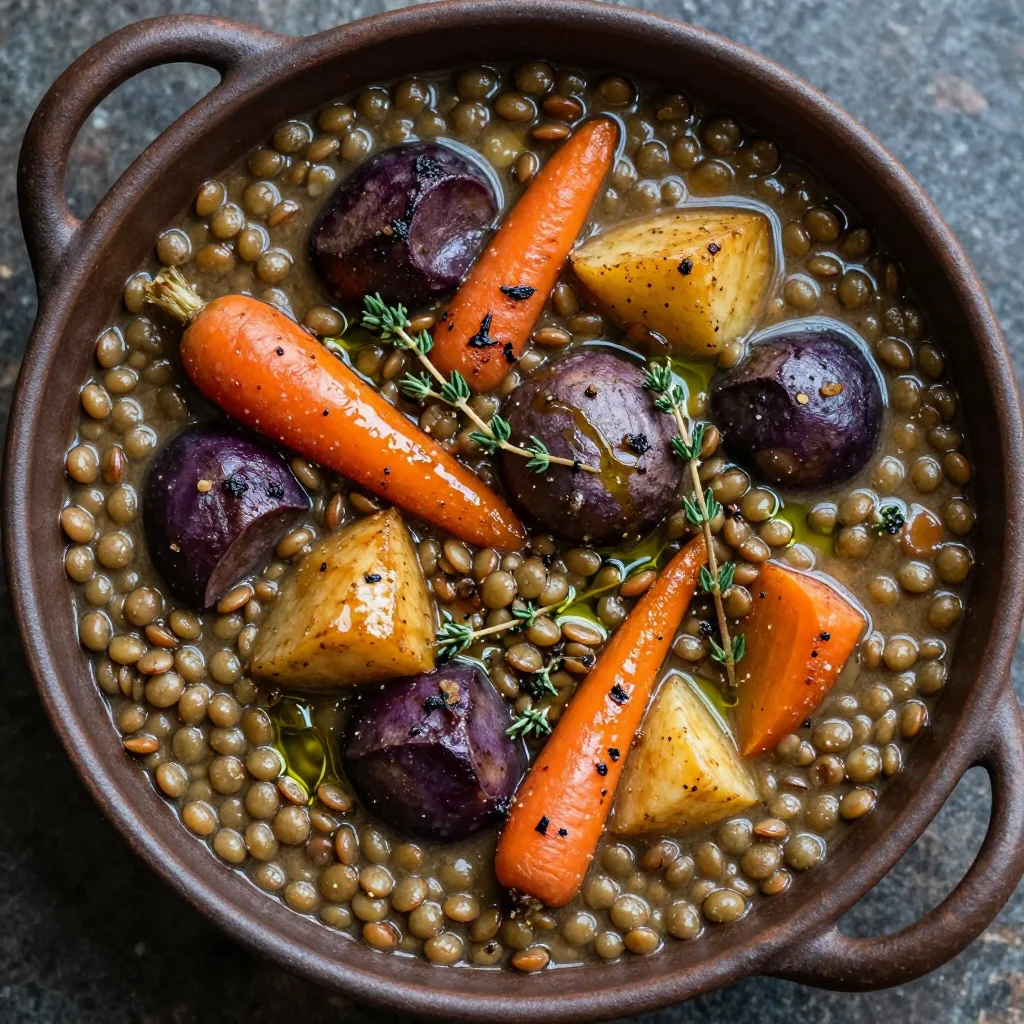
One-Pot Lentil & Roasted Root Vegetable Stew for Filling Dinners
Ingredients
Instructions
- Preheat & roast vegetables: Heat oven to 425°F. Toss carrots and parsnips with ½ Tbsp oil, ¼ tsp salt, and pepper on one rimmed sheet; repeat beets on a second sheet. Roast 18–22 minutes until caramelized.
- Sauté aromatics: In a Dutch oven heat remaining 1½ Tbsp oil over medium. Add onion and fennel; cook 5 minutes. Stir in garlic 1 minute, then tomato paste 2 minutes. Add spices; toast 30 seconds.
- Deglaze: Pour in ¼ cup broth; scrape browned bits. Add lentils, roasted vegetables, remaining broth, 2 cups water, and 2 tsp vinegar. Simmer, partially covered, 28–32 minutes until lentils are tender.
- Finish: Adjust thickness with water, season with salt and pepper, and stir in remaining 1 tsp vinegar. Serve hot, garnished with parsley.
Recipe Notes
Stew thickens as it stands; thin with broth when reheating. For a smoky twist, add a minced chipotle pepper with the tomato paste.