Love this? Pin it for later! 📌
Why This Recipe Works
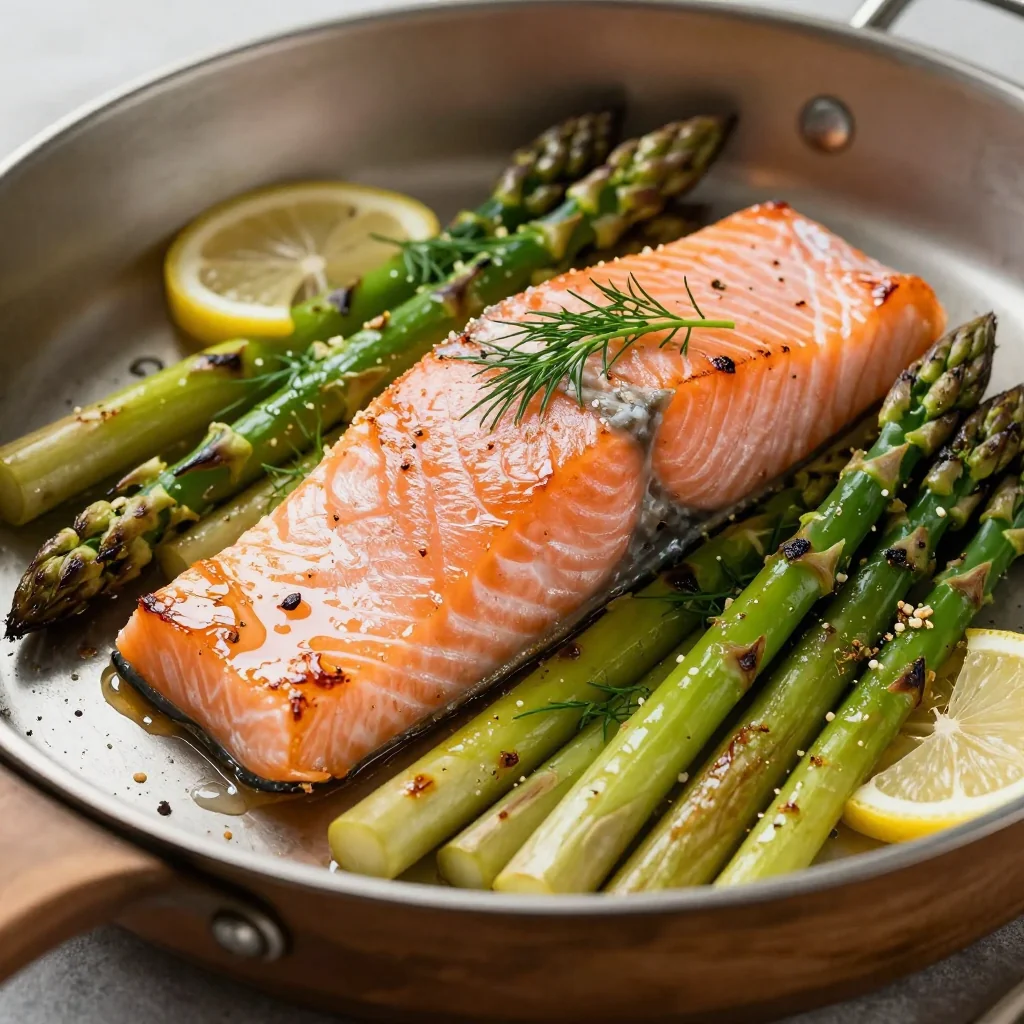
- One pan, zero drama: Parchment paper equals zero scrubbing, and everything cooks together so the asparagus drinks in the citrusy salmon juices.
- Omega-3 powerhouse: Each serving delivers over 2 g of EPA & DHA for brain and heart health without heavy cream or butter.
- Meal-prep friendly: Filets reheat like a dream, so you can portion lunches for three days without that sad “leftover fish” taste.
- Restaurant sear at home: A quick 450 °F blast creates the same Maillard browning you’d get from a cast-iron skillet—no flipping required.
- Macro-balanced: 30 g+ protein, 12 g healthy fat, 9 g carbs, and 5 g fiber keep blood sugar steady and cravings quiet.
- Seasonally agile: Swap asparagus for green beans in winter or zucchini ribbons in summer—same timing, same sheet pan.
- Freezer-to-plate in 30: You can roast frozen salmon fillets straight from the bag (just add 5 min); no thaw gymnastics.
Ingredients You'll Need
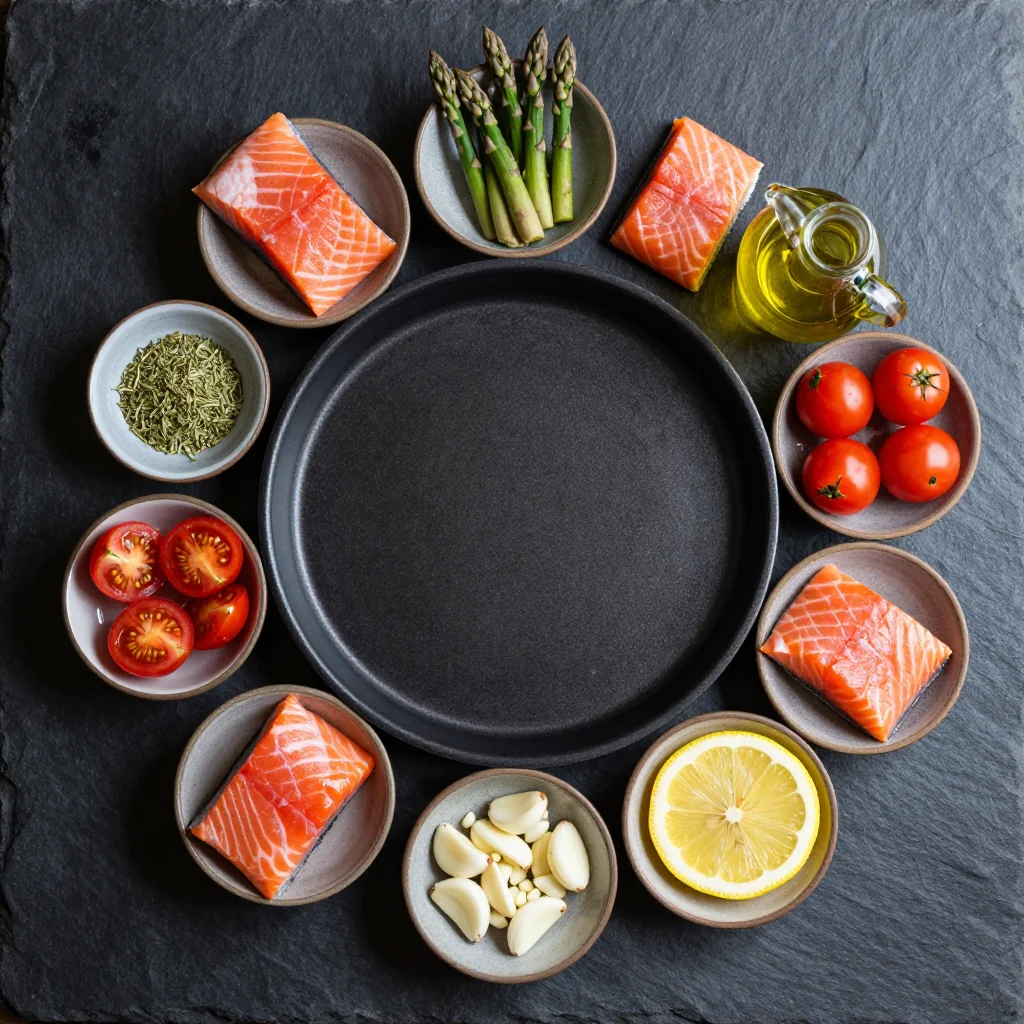
Great salmon starts at the seafood counter. Look for filets that are translucent coral with no fishy smell—just a faint ocean breeze aroma. If the flesh springs back when pressed and the white albumin lines are minimal, you’ve found a winner. I prefer wild Alaskan sockeye for its deep flavor and lower mercury, but Atlantic farmed works if that’s what’s available; just drop the cook time by 2 minutes because it’s fattier.
For asparagus, choose pencil-thin spears in spring; they roast in the same time it takes salmon to reach 125 °F (my pull temp for moist results). Fat supermarket stalks? Snap off the woody ends and halve them lengthwise so they don’t lag behind. When out of season, substitute French green beans or broccolini—both deliver that verdant snap.
The rest of the ingredient list is short and purposeful: extra-virgin olive oil for heart-healthy monounsaturates, fresh lemon for vitamin C and brightness, garlic for anti-inflammatory allicin, and a trio of herbs you can swap based on pantry inventory. Dill evokes Scandinavian summers; thyme whispers Provence; parsley keeps it universal. If you’re soy-free, replace the splash of tamari with coconut aminos; both provide umami depth and help the surface caramelize.
How to Make Easy Sheet Pan Salmon and Asparagus for Clean Eating
Preheat & Prep
Position rack in center of oven and preheat to 450 °F (232 °C). Line an 18 × 13-inch rimmed sheet pan with unbleached parchment, letting it overhang the short sides by 2 inches—built-in handles for sliding everything onto a serving platter later.
Make the Marinade
In a small bowl whisk 3 Tbsp extra-virgin olive oil, 2 Tbsp fresh lemon juice, 1 Tbsp tamari, 2 tsp Dijon mustard, 1 tsp maple syrup, 2 minced garlic cloves, ½ tsp kosher salt, and ½ tsp freshly ground black pepper. The mustard emulsifies the mixture so it clings evenly to the fish and vegetables.
Season the Asparagus
Snap woody ends off 1 pound asparagus and spread spears on one half of the pan. Drizzle with 2 tsp of the marinade, toss to coat, then arrange in a single layer so tips point outward—this prevents overcrowding and lets hot air circulate.
Marinate the Salmon
Pat four 6-oz salmon filets dry with paper towel (moisture is the enemy of browning). Place skin-side down on the other half of the sheet pan. Spoon ¾ of the remaining marinade over the tops, letting it drip down the sides; reserve the rest for finishing. Marinate 10 minutes while the oven finishes heating—long enough for flavor, short enough to keep texture firm.
Roast
Slide pan into oven and roast 11–14 minutes, depending on thickness. Target internal temperature is 125 °F for medium-rare (moist and slightly translucent center) or 130 °F for medium. If your asparagus is very slender, check at 9 minutes; remove spears earlier if they char too quickly.
Broil for the Finish
Switch oven to Broil on High. Broil 1–2 minutes until the top of the salmon bronzes and the asparagus tips blister. Keep the door ajar and watch closely—30 seconds can be the difference between golden and bitter.
Rest & Glaze
Transfer pan to a cooling rack. Drizzle reserved marinade over salmon (the heat neutralizes any raw-fish contact) and sprinkle with 2 Tbsp chopped fresh dill or parsley plus additional lemon zest. Rest 3 minutes—the juices redistribute so every bite is buttery.
Serve
Peel off the skin if you like (it lifts in one sheet) or serve it crispy-side up. Plate alongside quinoa, cauliflower mash, or crusty whole-grain bread to mop up the lemony pan juices.
Expert Tips
Use an Instant-Read Thermometer
Fish turns from velvety to chalky fast. Pull at 125 °F for wild salmon, 130 °F for fattier farmed. Carry-over heat will nudge it another 3–4 degrees.
Pat, Then Marinate
Excess moisture causes steaming instead of roasting. A quick blot with paper towel guarantees those coveted crispy edges.
Don’t Crowd the Pan
Airflow = even cooking. If doubling the recipe, use two pans on separate racks and rotate halfway.
Sheet Pan = Time Saver
While salmon roasts, whisk a 30-second Greek-yogurt dill sauce or microwave a pouch of brown rice—dinner without extra dishes.
Cook from Frozen
Rinse ice glaze off filets under cool water, pat dry, then proceed as written, adding 4–5 minutes to roast time.
Reuse the Parchment
If you’re roasting a second batch for meal prep, simply slide the old parchment off and lay a fresh sheet—prevents any burned-bit transfer.
Variations to Try
- Spicy Cajun: Swap lemon for lime, add 1 tsp smoked paprika + ½ tsp cayenne to marinade. Serve over cilantro-lime cauliflower rice.
- Miso-Ginger: Replace tamari with 1 Tbsp white miso and whisk in 1 tsp grated fresh ginger. Finish with sesame seeds and scallions.
- Mediterranean Medley: Add 1 cup halved cherry tomatoes and ¼ cup pitted olives to the pan. After roasting, crumble feta on top.
- Maple-Mustard: Increase maple syrup to 2 Tbsp and Dijon to 1 Tbsp for a glossy glaze reminiscent of Nordic smoked salmon.
- Asian Pear & Sesame: Purée ¼ cup grated Asian pear into the marinade; the natural enzymes tenderize the fish in minutes.
Storage Tips
Cool leftovers within two hours. Transfer salmon and asparagus to an airtight glass container; refrigerate up to 3 days. To reheat, place fillets skin-side down in a skillet with a splash of water, cover, and steam over medium-low for 4 minutes—keeps the texture silky. Microwave works in a pinch: cover with a damp paper towel and heat at 60 % power for 45-60 seconds. I often flake cold salmon over salads or mash it with avocado for a clean-eating “tuna” salad.
For longer storage, freeze individual portions on a parchment-lined tray until solid, then vacuum-seal or wrap in foil + zip bag for up to 2 months. Thaw overnight in the fridge and use within 24 hours for best flavor.
Frequently Asked Questions
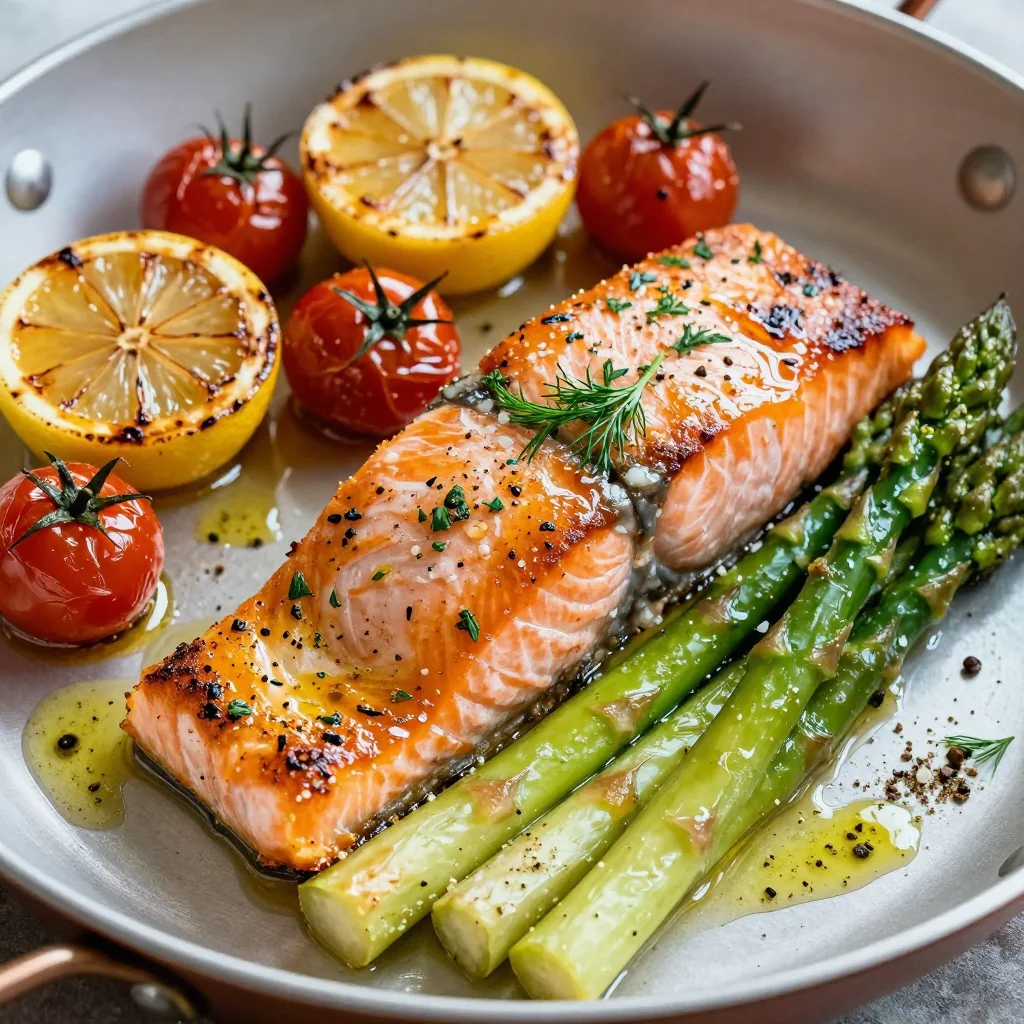
Easy Sheet Pan Salmon and Asparagus for Clean Eating
Ingredients
Instructions
- Preheat: Preheat oven to 450 °F (232 °C). Line a rimmed sheet pan with parchment.
- Make marinade: Whisk olive oil, lemon juice, tamari, Dijon, maple syrup, garlic, salt, and pepper.
- Season asparagus: Toss asparagus with 2 tsp marinade; spread on one half of pan.
- Marinate salmon: Place salmon on other half, coat with ¾ of remaining marinade, marinate 10 min.
- Roast: Roast 11–14 min until internal temp hits 125 °F (medium-rare).
- Broil: Broil 1–2 min for a caramelized top.
- Finish: Drizzle reserved marinade, sprinkle herbs, rest 3 min, serve with lemon wedges.
Recipe Notes
For frozen salmon, rinse off ice, pat dry, add 5 extra minutes to cook time. Pencil-thin asparagus cooks perfectly alongside; thicker stalks benefit from a quick peel or halving.