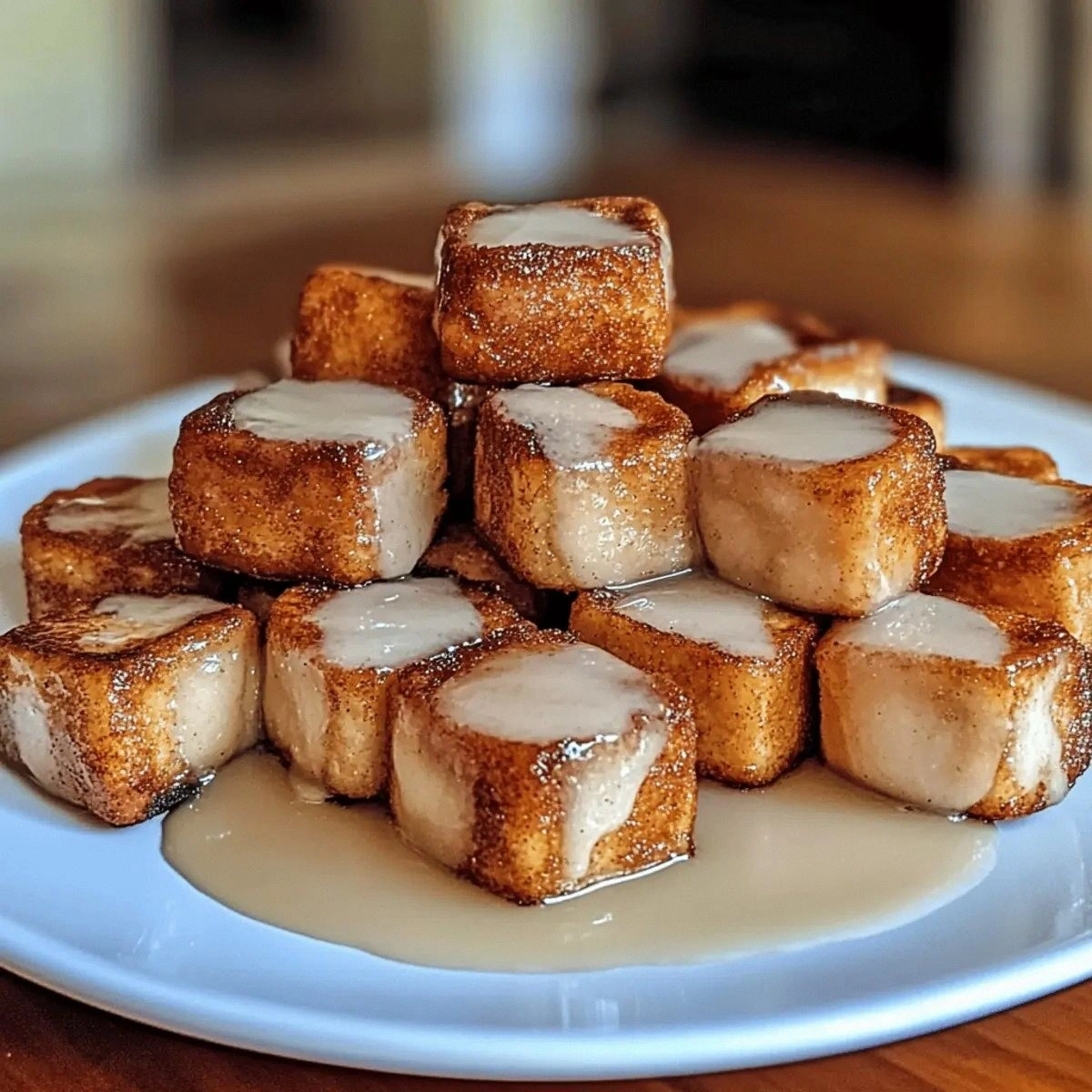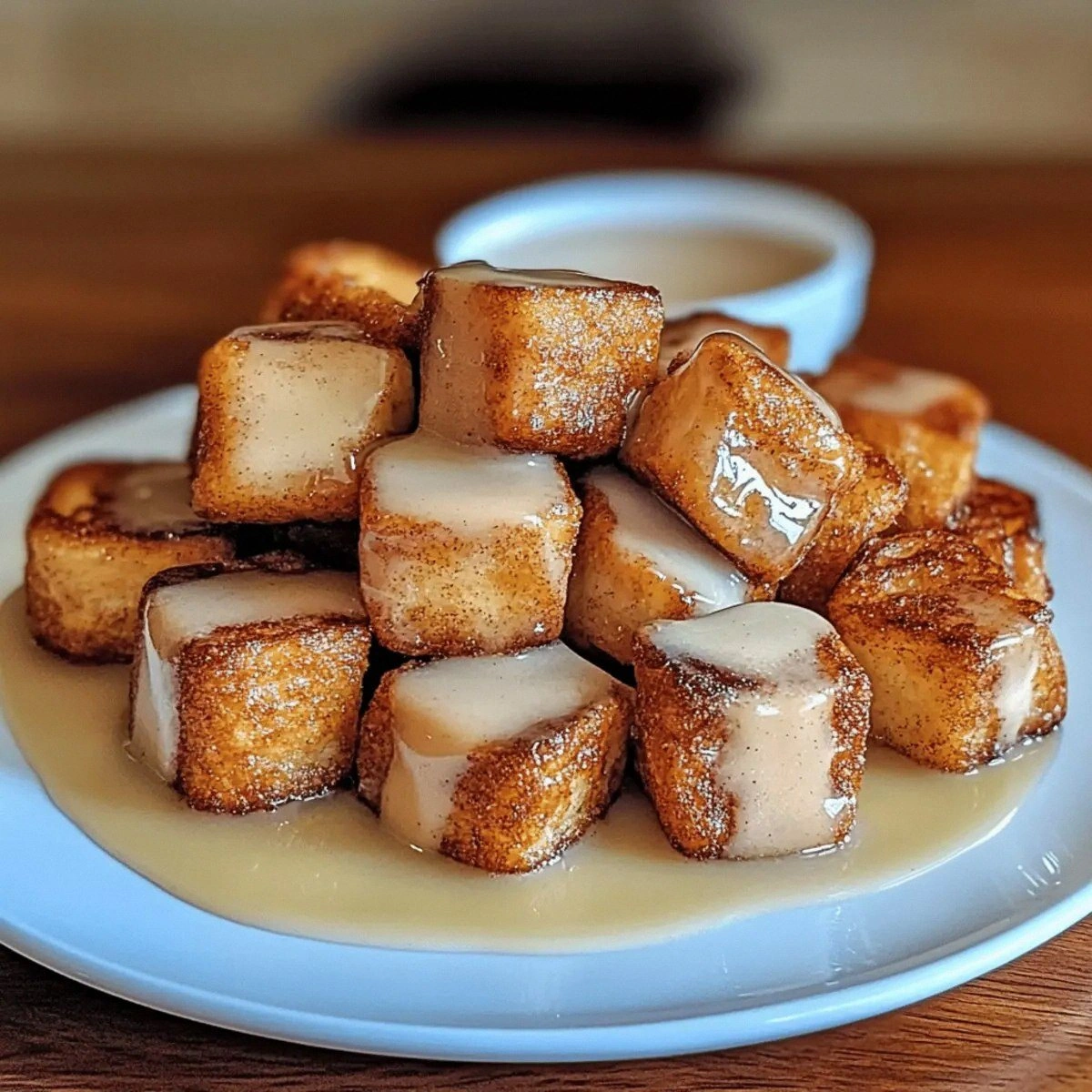
I burned a whole tray of cinnamon rolls last winter and nearly swore off breakfast forever. The smoke alarm was shrieking like a banshee, the dog was howling in solidarity, and my roommate—still half-asleep—stumbled in holding a fire extinguisher like we were storming a castle. In that moment of chaos, clutching a charred spiral of dough that looked more like a fossil than food, I muttered the fateful words: “What if I just French-toast the next batch?” Fast-forward through a dozen experiments, a small sugar high that lasted three days, and one memorable Sunday when the neighbors knocked because the hallway smelled like a Cinnabon factory. What emerged was this: bite-size cubes of custard-soaked bread that taste like the love child of a cinnamon roll and perfect French toast, with edges that shatter like thin ice and centers that melt like velvet on your tongue. I dare you to taste this and not go back for seconds—actually, thirds—while the maple syrup is still warm and your coffee’s still steaming.
Picture yourself pulling this out of the oven, the whole kitchen smelling incredible, the kind of aroma that makes people float downstairs in their pajamas like cartoon characters lured by a pie on the windowsill. The butter sizzles, the cinnamon sugar caramelizes into glossy little pockets, and the bread—oh, the bread—turns into custardy nuggets that are somehow both crisp and cloud-soft. Most recipes get this completely wrong: they cube the bread first, then soak it, then wonder why everything collapses into a soggy heap that tastes like bread pudding gone sad. Here’s what actually works: we leave the slices whole for the soak, let them drink up every drop of the spiced custard, then stack, slice, and cube so every piece keeps its shape and dignity. Stay with me here—this is worth it, and your future self, the one hovering over the skillet at 8 a.m. on a snow day, will thank you.
I’ll be honest—I ate half the batch before anyone else got to try it. I told myself I was “testing for seasoning,” but really I was powerless against those little squares, each one wearing a crunchy cinnamon crown and dripping with maple syrup like edible jewels. My original plan was to save some for Monday meal-prep; instead, I stood at the counter in fuzzy socks, popping bites like they were kettle corn, swearing each one would be “the last.” Spoiler: they weren’t. If you’ve ever struggled with French toast that turns out wet in the middle, or cinnamon rolls that stay doughy no matter how long you bake them, you’re not alone—and I’ve got the fix. This version gives you the best of both worlds without a yeasted dough, without a rolling pin, and without the three-hour rise that derails brunch before it even starts.
Okay, ready for the game-changer? We’re going to treat thick white bread like it’s royalty: bathe it in eggs, milk, a whisper of salt, then coat it in cinnamon sugar that toasts into a glossy shell. The trick is in the timing—melt the butter just until it foams, drop in the cubes, and let them sit undisturbed long enough to build a crust that crackles under your fork. The sugar hits the hot fat, the cinnamon blooms, and suddenly you’ve got caramelized edges that taste like the top of a crème brûlée. Let me walk you through every single step—by the end, you’ll wonder how you ever made it any other way.
What Makes This Version Stand Out
- Crispy-Custardy Magic: Every cube has a shattering shell that gives way to a silky center, so you get that satisfying crunch without dry, bready middles.
- One Skillet, Zero Fuss: No overnight rests, no proofing, no special pans—just a sturdy cast-iron or non-stick and ten minutes of sizzle time.
- Cinnamon Roll Flavor, French Toast Speed: You score all the swirly, spicy comfort of a cinnamon roll in the time it takes to brew coffee.
- Portion-Controlled Indulgence: Bite-size pieces mean you can nibble like a civilized human or pile a mountain on your plate—no judgment, no unraveling spirals.
- Kid-and-Crowd Approved: I’ve served these at sleepover birthdays, bridal showers, and one very hung-over college reunion; plates returned empty every single time.
- Make-Ahead Friendly: Soak the bread tonight, stash in the fridge, and wake up to a five-minute finish that feels like room service.
- Maple Syrup Nooks: The uneven cubes create tiny pockets that drink up syrup so every forkful is pre-glazed—no puddles left behind.
Alright, let’s break down exactly what goes into this masterpiece, starting with the humble loaf that’s about to become royalty.
Inside the Ingredient List
The Flavor Base
Thick white bread is the blank canvas, but not all loaves are created equal. Reach for the Texas-toast style or a sturdy farmhouse white—something with a tight crumb that won’t turn to mush when it takes a milk bath. Skip the airy supermarket sandwich bread; it disintegrates faster than my willpower near a plate of cookies. If you only have thin slices, stack two together with a smear of butter and press gently to fake thickness. And hey, if you’ve got brioche or challah lying around, you just won the breakfast lottery—those buttery, eggy loaves turn the custard into liquid silk.
The Custody Crew
Whole milk gives you the creamiest interior, but 2% works if that’s what’s in your fridge. Anything leaner and you lose richness; anything richer and the bites start tasting like fried ice cream (which, honestly, doesn’t sound terrible). Eggs supply structure; we need three large ones for six slices—think of it as half an egg per slice of future deliciousness. A pinch of salt wakes up the sweetness, the same way sea salt makes caramel sing. Whisk until the mixture is the color of sunshine and no streaks of white remain; nobody wants scrambled egg pockets in their breakfast.
The Cinnamon Sugar Armor
Granulated sugar melts and recrystallizes into a thin, crackly shell, so don’t swap in brown sugar here—it’ll burn before it crisps. Two teaspoons of ground cinnamon may sound modest, but we’re rolling the bites while they’re hot, so the spice blooms and perfumes every corner. If you’re tempted to double it, go ahead; just keep a vacuum handy because the cinnamon cloud will settle on your countertops like fairy dust. Pro tip: add a whisper of nutmeg or cardamom for a bakery-level mystery note.
The Final Flourish
Butter is both cooking fat and flavor bomb. Four tablespoons sounds indulgent, but you need enough to foam and surround each cube like a golden bath. Clarified butter or ghee buys you a higher smoke point if you like your edges deep mahogany. Maple syrup is non-negotiable—use the real stuff, not the corn-syrup pretender hiding in a plastic squeeze bottle. Warm it gently so it flows like velvet and hits the hot bites with a hiss that smells like Sunday morning in Vermont.
Everything’s prepped? Good. Let’s get into the real action...
The Method — Step by Step
- Prep the custard bath. Crack the eggs into a shallow dish wide enough to lay a slice of bread flat. Add the milk and salt, then whisk like you mean it—tiny bubbles should form on the surface and the mixture should look like liquid custard, not streaky scrambled sadness. This is the moment of truth: if your custard is under-mixed, you’ll get white splotches on the finished bites that taste like omelet. Let the mixture rest for two minutes so the proteins relax and the cinnamon sugar will have something to grab onto later.
- Soak, don’t drown, the slices. Lay each slice in the custard for a slow count of five Mississippi, flip and repeat. You want the bread saturated but not disintegrating—think of a well-dunked cookie that’s still holding its shape. If you’ve ever struggled with French toast that collapses, you’re not alone; the fix is timing. Slide the soaked slices onto a plate, stacking them like pancakes; the residual liquid will redistribute and finish the job while you move on to the next step.
- Build the cinnamon sugar. Stir together the granulated sugar and cinnamon in a medium bowl until the mixture looks like beach sand at sunset. Taste it—yes, taste it—and adjust; if you want a punchier spice hit, sneak in another ½ teaspoon. This next part? Pure magic: we’re going to roll the hot bites in this mixture so it melts and sticks like edible glitter. Keep the bowl near the stove; timing matters when sugar meets hot butter.
- Cube with confidence. Stack the soaked slices into two piles, then cut into 1-inch squares. A serrated knife glides without squishing the custardy layers. Don’t stress over perfect geometry—rustic nooks mean extra crispy edges. If a cube feels too soft, slide it onto a plate and refrigerate for five minutes; chilled cubes hold their shape better in the skillet.
- Heat the skillet like a pro. Place a large non-stick or cast-iron pan over medium heat and add the butter. When it foams and just starts to smell nutty, you’re in the sweet spot. Too cool and the sugar won’t caramelize; too hot and you’ll blacken the butter. That sizzle when it hits the pan? Absolute perfection.
- Sear without scooting. Drop the cubes in a single layer, leaving breathing room so steam can escape—work in batches if needed. Let them sit undisturbed for 90 seconds; I set a timer because I’m impatient and always peek too early. When the bottoms turn golden and smell like toasted marshmallows, flip with a thin spatula. Don’t toss like stir-fry; each cube deserves individual attention, like tucking in tiny soldiers.
- Roll hot, coat fast. Transfer the bites straight from the skillet into the cinnamon-sugar bowl while they’re still steaming. Toss gently; the residual butter melts the sugar so it clings like a thin, crackly jacket. Work in small handfuls so the heat doesn’t dissolve everything into syrup. I dare you to taste this and not go back for seconds—impossible.
- Finish with maple theatrics. Pile the bites on a warm platter, drizzle with maple syrup, and serve immediately. The syrup will hiss against the hot sugar and form glossy threads that snap like caramel. If you want to gild the lily, add a pat of butter on top and watch it slide into every crevice. Serve with forks or let people spear with toothpicks; either way, the plate will be empty before the coffee pot needs a refill.
That's it—you did it. But hold on, I've got a few more tricks that'll take this to another level...
Insider Tricks for Flawless Results
The Temperature Rule Nobody Follows
Most people crank the heat to rush the sear, then wonder why the outsides taste bitter. Medium is your magic number; it gives sugar time to dissolve, bubble, and re-harden into a glassy shell without scorching. If the butter browns faster than a minute, slide the pan off heat for ten seconds to cool the surface. A friend tried skipping this step once—let’s just say her bites tasted like licking a campfire log.
Why Your Nose Knows Best
When the cinnamon sugar hits hot fat, it releases an aroma that smells like Christmas and warm hugs. That’s your cue to flip—ignore the clock and trust your olfactory instincts. If you smell nutty, toasty heaven, you’re golden; if you smell acrid, you’ve crossed into bitter territory and need to evacuate the cubes immediately.
The 5-Minute Rest That Changes Everything
After soaking, let the stacked slices rest on a wire rack so excess custard drips away. Too much liquid in the pan creates steam, which means soggy bottoms instead of crispy edges. Five minutes is the difference between French toast that tastes like it came from a diner and French toast that tastes like it came from a food magazine shoot.
Creative Twists and Variations
This recipe is a playground. Here are some of my favorite ways to switch things up:
Pumpkin Spice Autumn Edition
Swap the cinnamon sugar for a mix of sugar, cinnamon, ginger, nutmeg, and a pinch of clove. Replace ¼ cup of the milk with canned pumpkin puree and whisk until smooth. The result tastes like you folded a cinnamon roll into a pumpkin latte and fried it—basic never tasted so good.
Chocolate Chip Churro Style
Fold mini chocolate chips into the custard-soaked cubes right before searing. The chips melt into gooey pockets that contrast with the crispy sugar shell. Roll the finished bites in cinnamon sugar spiked with a whisper of espresso powder for a mocha edge.
Bananas Foster Brunch Bomb
Add a splash of dark rum and a pinch of allspice to the custard. Once the bites are cooked, toss sliced bananas in the same skillet with butter and brown sugar until they caramelize, then spoon over the cubes. Flame if you’re feeling flashy; serve with vanilla ice cream if you’re feeling reckless.
Savory-Sweet Bacon Maple
Reduce the sugar in the custard by half and add cracked black pepper. Crisp chopped bacon separately, then fold it into the finished bites along with a drizzle of maple syrup. The smoky-salty-sweet combo tastes like breakfast at a cabin in the woods with a plaid blanket and no cell service.
Berry Cheesecake Dream
Beat a tablespoon of cream cheese into the custard for subtle tang. After rolling in cinnamon sugar, top with warm berry compote and a snow flurry of powdered sugar. The cream cheese adds richness that plays beautifully against tart berries.
Coconut Rum Tropical Escape
Replace ½ cup of the milk with canned coconut milk and add a teaspoon of rum extract. Roll the bites in cinnamon sugar mixed with toasted coconut flakes. Close your eyes and you’re on a beach where the syrup comes in pineapple-shaped bottles.
Storing and Bringing It Back to Life
Fridge Storage
Cool the bites completely, then layer in an airtight container with parchment between rows so the sugar doesn’t glue them together. They’ll keep for three days, though honestly they’ve never lasted longer than 24 hours in my house. Reheat in a dry skillet over medium heat for two minutes per side to restore crunch; microwaves turn them rubbery, and we don’t do rubbery.
Freezer Friendly
Flash-freeze the cooled cubes on a sheet pan for an hour, then toss into a zip-top bag. They’ll keep for two months—perfect for emergency brunch cravings. Bake from frozen on a wire rack set over a sheet pan at 375°F for 8–10 minutes; the hot air circulates and revives the crispy edges like a breakfast phoenix rising.
Best Reheating Method
Add a tiny splash of water to the skillet before reheating; it steams back to perfection without drying the centers. Cover with a lid for 30 seconds so the sugar softens slightly, then uncover to let it recrisp. The result tastes almost as good as minute-one fresh, which is saying something for French toast.