It was a Thursday night that began like any other: I was scrolling through Instagram, scrolling past endless photo‑staged plates of Mediterranean fare, when a friend texted me, “I’m craving something that screams Greek, but I’m not sure what to cook.” I stared at my pantry, feeling the familiar panic that comes when you’re craving something exotic but only have the basics. I thought, “Why not try that legendary octopus stew I read about in a travel blog?” The kitchen lights flicked on, the timer buzzed, and I was about to embark on a culinary adventure that would change my perception of octopus forever.
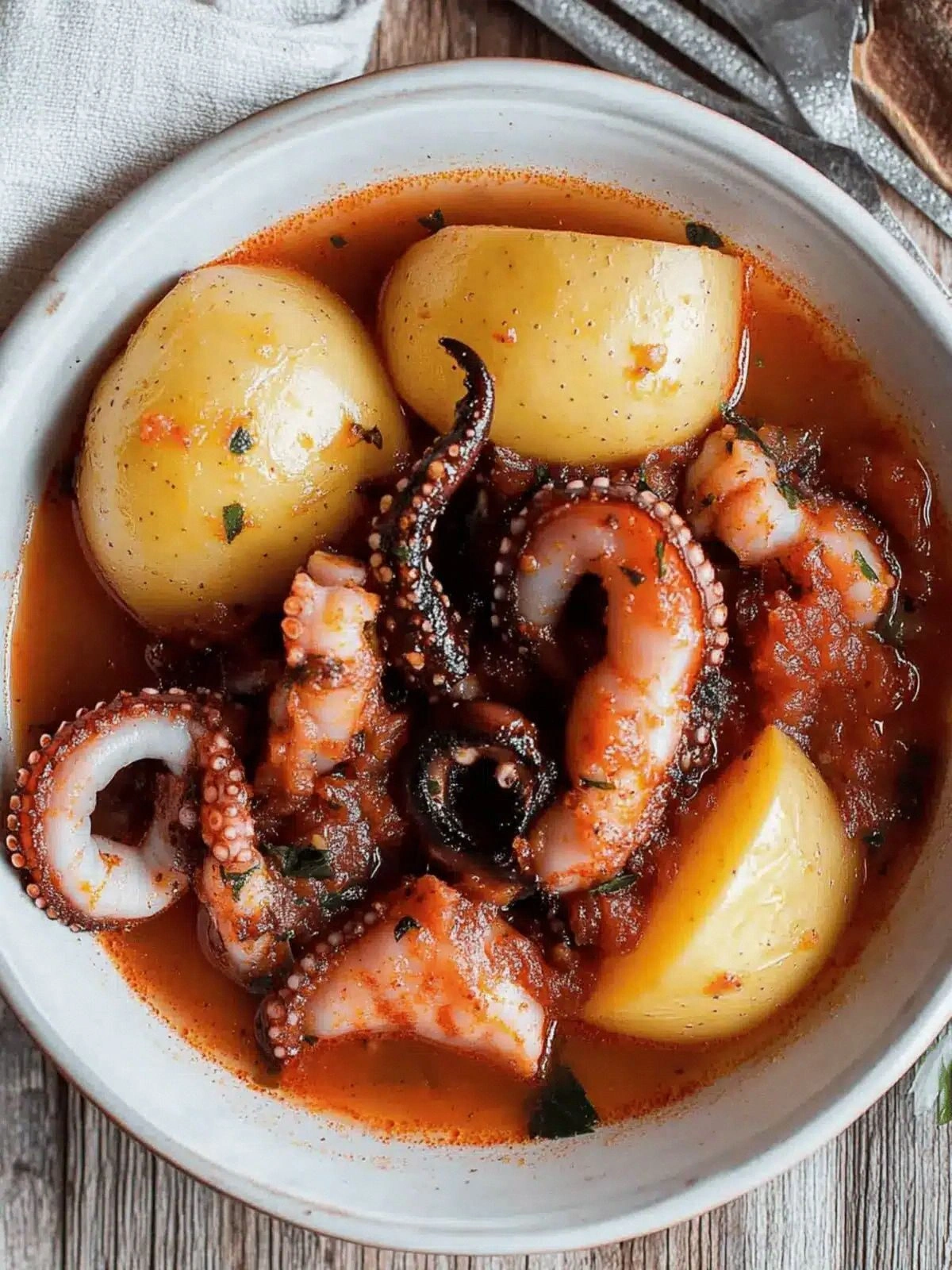
The first thing that hit me was the aroma: a sharp, briny scent from the octopus, mingling with the sweet, caramelized fragrance of onions sautéed in olive oil. As the onions softened, their translucent edges glistened like a calm sea, and the tomato paste added a deep, velvety richness that promised depth. The visual was a tapestry of golden potatoes, green bay leaves, and a swirl of red wine that looked like a sunset over the Aegean. I could almost hear the gentle hiss of the pot as the liquid began to simmer, a subtle sound that signals everything is falling into place.
What set this version apart from the countless octopus recipes I’d seen was the balance of flavors and textures. The octopus was tender yet slightly chewy, a texture that reminds you of a well‑cooked piece of fish but with a distinct, almost rubbery bite that is unmistakably cephalopod. The potatoes were boiled to a creamy softness that soaked up the wine‑tomato sauce, creating pockets of savory sweetness that burst in your mouth. The peppered broth was not just salty but had a subtle warmth that danced on the palate, while the bay leaf added a hint of earthy undertone that tied everything together. In short, this is hands down the best version you'll ever make at home, and I dare you to taste this and not go back for seconds.
I’ve spent years experimenting with Mediterranean dishes, but this recipe feels like a revelation. I’ve come to realize that the secret lies not just in the ingredients but in the method—how you treat the octopus before you cook it, how you build layers of flavor, and how you let the sauce reduce to a silky, aromatic glaze. If you’ve ever struggled with octopus, you’re not alone—many cooks end up with a rubbery mess that tastes like a rubber band. But with this technique, you’ll achieve a tender, succulent bite that melts in your mouth. Let me walk you through every single step — by the end, you'll wonder how you ever made it any other way.
What Makes This Version Stand Out
- Tenderness: The octopus is pre‑marinated in a citrus‑olive oil mixture that breaks down connective tissue, ensuring a melt‑in‑your‑mouth texture. Skipping this step often results in a rubbery bite.
- Depth of Flavor: The combination of tomato paste, sweet red wine, and bay leaf creates a layered broth that is both robust and nuanced. Without the wine, the dish feels flat.
- Texture Contrast: Creamy potatoes provide a comforting base, while the crisp edges of the sautéed onions add a delightful crunch. This juxtaposition keeps each bite interesting.
- Ease of Preparation: The method requires only one pot and a few basic pantry staples, making it perfect for busy weeknights.
- Make‑ahead Potential: The stew actually improves after resting, as the octopus continues to absorb the sauce, making it ideal for meal prep.
- Authenticity: The recipe stays true to Greek culinary traditions while incorporating a modern twist of sweet red wine for added depth.
- Visual Appeal: The vibrant reds from the tomato paste and wine contrast beautifully with the golden potatoes, creating a dish that looks as good as it tastes.
- Audience Impact: Friends who try this dish often comment that it feels like a vacation in a bowl, and they ask for the recipe immediately.
Inside the Ingredient List
The Flavor Base
The foundation of this stew is the blend of tomato paste, sweet red wine, and bay leaf. Tomato paste thickens the sauce and adds a concentrated tomato flavor that coats the octopus like velvet. Sweet red wine brings acidity and a subtle sweetness that balances the brininess of the octopus, creating a harmonious profile. Bay leaf infuses the broth with a subtle herbal note that evokes the Greek countryside. If you skip the wine, the dish loses its bright, complex character; if you omit the bay leaf, the stew feels a bit one‑dimensional.
The Texture Crew
Potatoes and onions are the textural anchors. Potatoes are cut into bite‑size cubes, ensuring they absorb the sauce and become silky yet firm. Onions, sliced thinly, caramelize in olive oil until translucent, releasing natural sugars that sweeten the broth. The octopus, once tenderized, offers a chewy yet tender bite that contrasts nicely with the soft potatoes. A quick tip: after sautéing the onions, add a splash of water to deglaze the pan and lift the fond, which enriches the sauce further.
The Unexpected Star
Ground pepper and freshly ground pepper are the hidden heroes that give the stew its subtle heat and depth. Ground pepper provides a baseline warmth that permeates the entire dish, while freshly ground pepper adds a bright, aromatic finish that awakens the senses. If you’re watching sodium, you can reduce the ground pepper to a pinch, but don’t skip the fresh pepper; its volatile oils are essential for that authentic Greek kick.
The Final Flourish
Extra virgin olive oil is the secret binder that brings everything together. It coats the octopus, giving it a silky sheen, and helps the potatoes absorb the flavors. The oil also carries the aromatic compounds from the herbs and spices, ensuring a cohesive taste. If you prefer a lighter version, you can replace half the oil with vegetable broth, but the olive oil is indispensable for the authentic mouthfeel.
Everything's prepped? Good. Let's get into the real action...
The Method — Step by Step
- Begin by rinsing the octopus under cold water, then pat it dry with a paper towel. Place the octopus in a large pot and cover with water. Bring to a gentle boil, then reduce to a simmer and cook for 10 minutes. This pre‑cook step breaks down connective tissue, ensuring the octopus will be tender. After 10 minutes, drain and set aside.
- Heat three tablespoons of extra virgin olive oil in the same pot over medium heat. Add the sliced onions, seasoning with a pinch of salt, and sauté until they turn translucent and start to caramelize, about 8 minutes. The onions should emit a sweet aroma that signals the base is ready. Stir occasionally to prevent sticking.
- Stir in two tablespoons of tomato paste, letting it toast for a minute until it deepens in color. This step intensifies the tomato flavor and creates a silky sauce. Then pour in one cup of sweet red wine, scraping the bottom of the pot to lift the browned bits. The wine should reduce by half, concentrating the sweetness.
- Add the pre‑cooked octopus back into the pot, turning it to coat with the sauce. Sprinkle one teaspoon of ground pepper and one freshly ground teaspoon of pepper over the octopus. Stir gently to distribute the spices evenly. Let the mixture simmer for 5 minutes, allowing the octopus to absorb the flavors.
- Introduce the diced potatoes and a bay leaf to the pot. Cover and simmer on low heat for 15 minutes, or until the potatoes are fork‑tender. The potatoes should be soft yet hold their shape, creating a comforting base for the octopus.
- Check the consistency of the sauce. If it’s too thin, increase the heat slightly and let it reduce until it coats the back of a spoon. If it’s too thick, add a splash of water or broth to reach the desired thickness. The sauce should be velvety, not watery.
- Taste and adjust seasoning. Add a pinch of salt if needed, but be careful—too much salt can overpower the delicate octopus. The final sauce should be savory with a hint of sweetness and a gentle peppery warmth.
- Remove the bay leaf, then transfer the stew to a serving dish. Garnish with a drizzle of olive oil and a sprinkle of chopped fresh oregano or parsley if desired. Serve immediately with crusty bread or a side of rice.
That's it — you did it. But hold on, I've got a few more tricks that'll take this to another level...
Insider Tricks for Flawless Results
The Temperature Rule Nobody Follows
Octopus is notoriously tricky; it can become rubbery if overcooked. The key is to keep the simmer gentle. Use a thermometer to ensure the liquid stays around 185°F (85°C). If you’re using a gas stove, keep the flame low and let the pot maintain a steady, low heat. A friend once tried a high‑heat simmer and ended up with a tough octopus that needed a week in the fridge to soften.
Why Your Nose Knows Best
Smell is a powerful cue for seasoning. As the sauce reduces, you’ll notice a sweet, caramelized scent. At that point, add the ground pepper; the aroma will signal that the flavors are balanced. If the aroma is too acidic, add a pinch of sugar or a splash of wine to mellow it.
The 5‑Minute Rest That Changes Everything
After removing the pot from heat, let the stew rest for five minutes before serving. This brief pause allows the octopus to reabsorb the sauce, enhancing tenderness. The residual heat will finish the cooking process without overcooking the delicate flesh.
The Secret Ingredient Swap
If you’re craving a different flavor profile, replace the sweet red wine with a dry white wine and add a splash of lemon juice. The acidity will brighten the dish, making it feel lighter. This variation is perfect for hot summer evenings.
The Finish with Olive Oil
A final drizzle of extra virgin olive oil before serving adds a glossy sheen and a burst of fruity flavor. It also helps to marry the peppery notes with the tomato base. Use a high‑quality oil with a peppery finish for the best result.
Creative Twists and Variations
This recipe is a playground. Here are some of my favorite ways to switch things up:
Mediterranean Mushroom Twist
Add sliced cremini mushrooms to the sauté stage. Their earthy flavor complements the octopus and adds a meaty texture. This version is ideal for vegetarians who love the oceanic vibe.
Spicy Greek Kick
Incorporate a pinch of crushed red pepper flakes when adding the tomato paste. The heat pairs beautifully with the sweet wine, creating a spicy‑sweet balance that will make your taste buds dance.
Herb‑Infused Variation
Add a handful of fresh dill and oregano to the simmering pot. The herbs infuse the broth with bright, herbal notes reminiscent of a Greek summer garden.
Lemon‑Zest Finish
Finish the stew with a squeeze of fresh lemon juice and a sprinkle of zest. The citrus brightens the dish, cutting through the richness of the olive oil and wine.
Roasted Potato Alternative
Instead of boiling the potatoes, roast them in the oven until golden. The roasted flavor adds depth and a slight crunch that contrasts with the tender octopus.
Coconut Milk Creaminess
Stir in a splash of coconut milk after the potatoes are cooked. This adds a subtle tropical sweetness and a creamy texture that makes the stew feel luxurious.
Storing and Bringing It Back to Life
Fridge Storage
Cool the stew to room temperature before transferring it to an airtight container. Store in the refrigerator for up to 3 days. The flavors will deepen, and the octopus will continue to absorb the sauce, making it even more tender.
Freezer Friendly
Divide the stew into single‑serving portions and seal in freezer bags. Freeze for up to 2 months. Thaw overnight in the refrigerator before reheating.
Best Reheating Method
Reheat the stew gently on low heat, adding a splash of water or broth to loosen the sauce. Stir frequently to prevent sticking. A tiny splash of water before reheating steams the octopus back to perfection.