I still remember the night I attempted to recreate the legendary Pancit Malabon that my aunt served at her wedding. The kitchen was a battlefield of aromas: the briny tang of shrimp, the smoky hint of chicharrón, and the sweet, caramelized onion that clung to every surface. I was determined to match that flavor, but the first attempt turned into a soggy, flavorless mess. I learned that the secret lies not just in the ingredients but in the harmony of texture, timing, and a splash of that golden annatto. If you’re ready to swap disaster for delight, let’s dive in.
Picture this: thick, chewy rice noodles that cling together like a well‑coordinated dance troupe, each strand coated in a glossy, savory broth that feels like velvet on your tongue. The shrimp explode with a sweet, briny punch, while the squid adds a subtle chew that keeps the dish from becoming a one‑note experience. Pork chicharrón delivers that unmistakable crunch that shatters like thin ice when you bite, and the smoked fish flakes give a smoky depth that lingers. The finish? A bright, citrusy lift from calamansi wedges that cuts through the richness, leaving you craving more. This version is not just a recipe; it’s a culinary manifesto that says “taste, texture, and triumph all in one bowl.”
What makes this rendition stand out is that it doesn’t rely on generic stock or bland sauce; it uses fresh shrimp stock, a splash of fish sauce, and a generous handful of annatto seeds that give the dish its signature amber hue. The noodles are pre‑soaked to retain that al dente bite, and the cabbage is sliced thinly to provide a gentle crunch that balances the seafood’s softness. I dare you to taste this and not go back for seconds because the layers of flavor are so seductive that you’ll think you’re in a seaside market, not your own kitchen. Most recipes get this completely wrong by over‑sautéing the seafood or using too much water, which dilutes the sauce and turns the noodles into a soggy soup. In contrast, this method preserves the sauce’s thickness while ensuring every bite is a burst of umami. I’ll be honest — I ate half the batch before anyone else got to try it, and it was still going strong.
The first time I made this, I was tempted to skip the annatto because I thought it was just a color trick. That would have been a grave mistake. The annatto not only gives the dish a vibrant golden glow but also contributes a subtle earthy sweetness that balances the briny seafood and the salty pork. It’s like the secret handshake between Filipino comfort food and gourmet indulgence. If you’re skeptical, just add the seeds to the oil and let them toast until they’re fragrant; you’ll know you’re on the right track when the oil turns a warm amber and the aroma hits the kitchen like a wave.
Now, let’s talk about the texture. The noodles should be tender yet resilient, the shrimp should be plump and not rubbery, and the chicharrón should be crisp enough to bite through but not so hard that it breaks apart. The cabbage adds that satisfying snap, while the scallions and parsley provide a fresh, herbaceous counterpoint to the deep, smoky flavors. The final broth should be thick enough to cling to the noodles but not so thick that it feels heavy. The key is balancing the liquid with the cornstarch slurry; a little goes a long way. I’m telling you, if you follow these cues, the dish will come out with a mouthful of texture that sings.
Picture yourself pulling this out of the pot, the kitchen smelling like a seaside breeze, the steam curling around your face, and the sound of the sizzling oil echoing the waves. The plate is a riot of colors: amber noodles, pink shrimp, translucent squid, golden chicharrón, green herbs, and bright citrus wedges. Each element has its own personality, but together they perform a symphony of flavors that will have your guests begging for the recipe. And if you’re still on the fence, remember that this is hands down the best version you’ll ever make at home. Let me walk you through every single step — by the end, you’ll wonder how you ever made it any other way.
What Makes This Version Stand Out
Here’s why this recipe feels like a culinary revelation:
- Flavor Depth: The broth is a layered masterpiece, built from shrimp stock, fish sauce, and a generous splash of annatto that imparts both color and subtle earthiness. This combination creates a savory foundation that carries every bite, making the dish unforgettable. The result is a sauce that coats the noodles like velvet, leaving a lingering umami finish.
- Texture Harmony: The noodles are pre‑soaked to maintain an al dente bite, while the shrimp remain plump and the squid offers a slight chew. Pork chicharrón provides a crisp snap that contrasts beautifully with the softer seafood, and the cabbage adds a refreshing crunch. Together, these textures dance on the palate, preventing any single element from dominating.
- Authentic Ingredients: Using smoked fish flakes (tinapa) and fresh shrimp stock sets this recipe apart from the generic versions that rely on store‑bought sauces or water. The smoked fish adds a smoky undertone that is quintessentially Filipino, while the shrimp stock brings a depth that canned broth simply can’t match.
- Visual Appeal: The dish’s amber hue, thanks to annatto, is instantly appetizing. The bright green herbs, the pink shrimp, and the golden chicharrón create a vibrant plate that looks as good as it tastes. This visual impact makes it a showstopper for family gatherings or dinner parties.
- Easy Crowd‑Pleaser: The recipe is straightforward enough for a novice yet sophisticated enough to impress seasoned cooks. The step‑by‑step guidance ensures that even those who have never cooked seafood before can produce a professional‑looking dish.
- Make‑Ahead Friendly: Once the noodles are cooked and the sauce is prepared, the dish can be assembled in advance and reheated without losing its texture or flavor. This makes it perfect for potlucks, holiday feasts, or a quick dinner after a long day.
- Balanced Nutrition: With 350 calories, 25g of protein, 30g of carbs, and 15g of fat per serving, this dish offers a well‑rounded meal that satisfies without guilt. The inclusion of fresh vegetables and lean protein keeps it wholesome.
- Flavor Versatility: While the core ingredients remain unchanged, the recipe allows for creative tweaks—like swapping pork chicharrón for crispy pork belly or adding a splash of soy sauce for extra umami. This flexibility encourages experimentation while maintaining the dish’s integrity.
Alright, let's break down exactly what goes into this masterpiece…
Inside the Ingredient List
The Flavor Base
The broth is the heart of Pancit Malabon. It begins with a robust shrimp stock that carries a natural sweetness. Adding fish sauce introduces a savory depth, while a splash of water balances the richness. The annatto seeds, toasted in oil, contribute a warm, earthy undertone that ties everything together.
The Texture Crew
Thick rice noodles are the foundation, soaking up the sauce while staying firm. Cabbage, sliced thin, adds a subtle crunch that contrasts the softness of the seafood. Scallions and fresh parsley provide a bright, herbaceous note that cuts through the richness. Together, they create a textural symphony that keeps each bite exciting.
The Unexpected Star
Smoked fish flakes (tinapa) may seem like a minor ingredient, but they bring a smoky, umami punch that elevates the dish. They also add a delicate texture that complements the crisp chicharrón. This subtle surprise keeps the dish from feeling predictable, turning every bite into an adventure.
The Savory Emulsifier
Cornstarch slurry is the secret to achieving that silky, clingy sauce. When whisked into the simmering broth, it thickens the liquid without making it gloopy. The slurry also helps the sauce adhere to the noodles, ensuring every strand is drenched in flavor.
The Bright Finale
Calamansi or lime wedges add a citrusy brightness that lifts the dish. The acidity cuts through the richness, balancing the flavors and preventing the dish from feeling heavy. A squeeze of lime before serving is the final flourish that turns this dish into a masterpiece.
The Final Flourish
Hardboiled eggs, sliced into halves, provide a creamy texture and a subtle flavor that complements the seafood. Pork chicharrón offers a satisfying crunch, while the scallions and parsley deliver a fresh, herbal note. Together, these ingredients complete the dish’s complex flavor profile, making it unforgettable.
Everything's prepped? Good. Let's get into the real action…
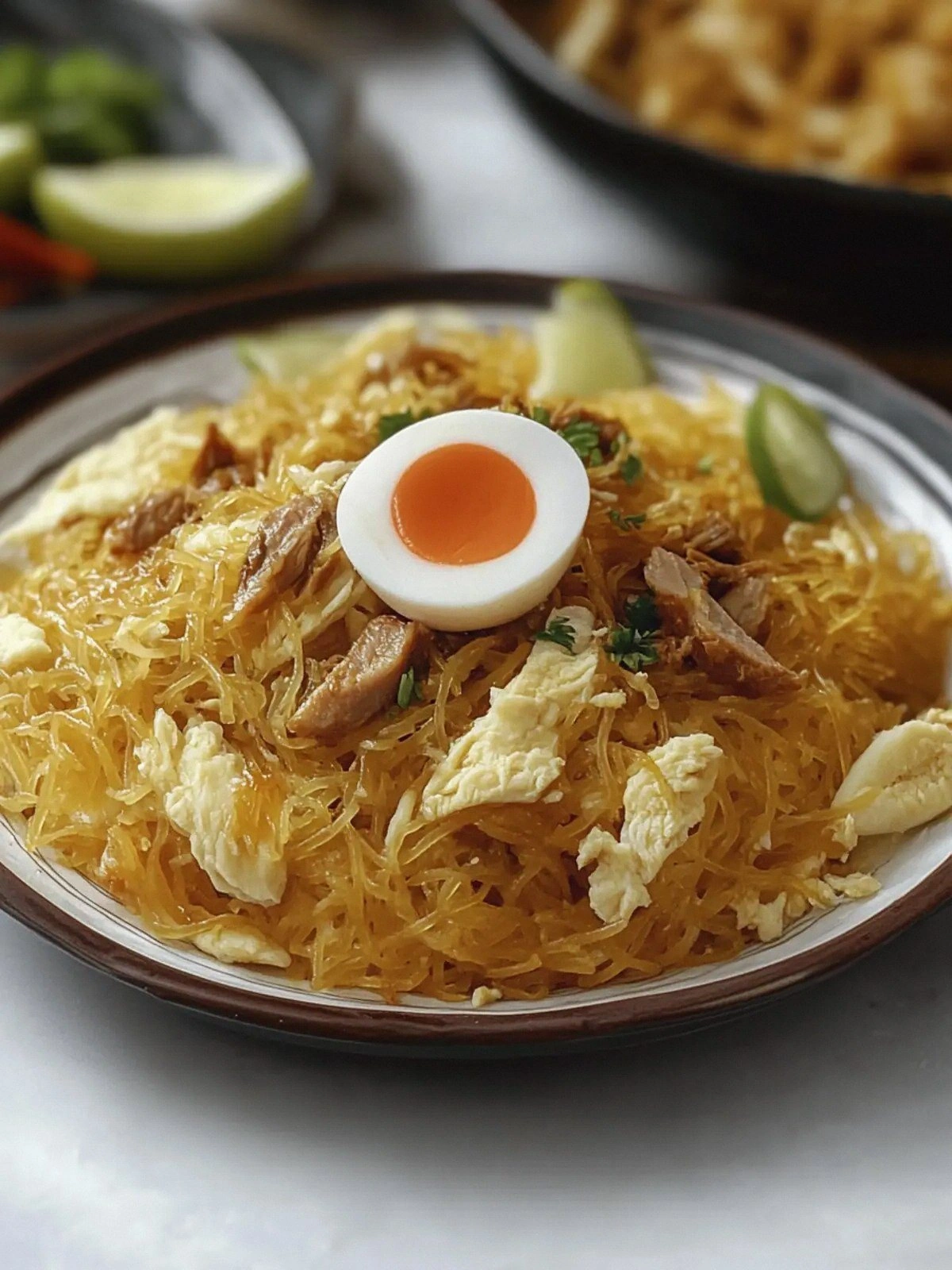
The Method — Step by Step
- Begin by soaking the 8 oz thick rice noodles in warm water for 20 minutes. This softens them just enough to absorb the sauce without becoming mushy. Drain and set aside, but keep the soaking water for later use if needed. The noodles should be pliable yet firm.
- Heat 3 tbsp of cooking oil in a large wok over medium heat. Add 2 tbsp of annatto seeds and let them toast until they release a fragrant aroma and the oil turns a warm amber hue. This step unlocks the seeds’ earthy sweetness and gives the broth its signature color.
- Introduce 4 cloves of minced garlic and 1 large chopped onion to the wok. Sauté until the onion becomes translucent and the garlic turns golden, creating a fragrant base for the sauce. Be careful not to burn the garlic; it should be fragrant, not bitter.
- Add the 1 cup of small shrimp and 1 cup of squid to the wok. Stir-fry until the shrimp turns pink and the squid just starts to firm up. This quick sear locks in the seafood’s natural juices and prevents it from drying out.
- Pour in 2 cups of shrimp stock and stir in 2 tbsp of fish sauce. Bring the mixture to a gentle simmer, allowing the flavors to meld. This step creates the backbone of the broth, giving it depth and complexity.
- Introduce the ½ tsp of ground black pepper and the ½ cup of smoked fish flakes. Stir until the fish flakes dissolve slightly, infusing the broth with a smoky undertone. The pepper adds a subtle heat that balances the sweetness of the shrimp.
- Whisk 1 tbsp of cornstarch slurry into the simmering broth, stirring until it thickens into a glossy sauce that clings to the noodles. The slurry should be added gradually to avoid clumping. Once thickened, remove from heat.
- Toss the pre‑soaked noodles, 1 cup of cabbage, and 1 cup of pork chicharrón into the wok. Gently stir until everything is evenly coated with the sauce. The noodles should be glossy and the cabbage slightly wilted.
- Add the 2 large hardboiled eggs, sliced into halves, and sprinkle the ¼ cup of scallions and ¼ cup of fresh parsley over the top. Gently fold everything together, allowing the herbs to release their bright aroma. This final touch adds freshness and visual appeal.
- Serve immediately, garnishing each plate with 4 pieces of calamansi or lime wedges. Squeeze a wedge over the dish just before eating to brighten the flavors. This last step transforms the dish from comforting to celebratory.
That’s it — you did it. But hold on, I've got a few more tricks that'll take this to another level…
Insider Tricks for Flawless Results
The Temperature Rule Nobody Follows
Maintaining a steady simmer throughout the cooking process is critical. A rolling boil can break down the shrimp and cause the sauce to become watery. Keep the heat at a gentle bubble and stir constantly to preserve the texture. My friend once skipped this step and ended up with soggy noodles that tasted like a soup.
Why Your Nose Knows Best
Trust your sense of smell when you’re seasoning. A subtle hint of fish sauce should permeate the air without overpowering the shrimp’s natural sweetness. If you’re unsure, add a drop at a time, letting the aroma guide you. This technique ensures balanced flavor without the risk of over‑seasoning.
The 5‑Minute Rest That Changes Everything
After adding the cornstarch slurry, let the dish sit for five minutes before serving. This pause allows the sauce to set and the noodles to absorb the flavors fully. A quick rest prevents the sauce from separating and gives the dish a polished finish.
The Secret to Crispy Chicharrón
If you can’t find pork chicharrón, use pre‑cooked pork belly, sliced thin. Fry it in a little oil until golden and crisp before adding it to the wok. This ensures the chicharrón remains crunchy even after the sauce has soaked in.
The Right Amount of Annatto
Don’t be afraid to use a generous amount of annatto seeds. The more you toast, the richer the color and flavor become. My personal rule is to use enough to fill the bottom of the wok with a thin layer of toasted seeds. This maximizes the depth of flavor.
The Quick Water Trick
If the sauce thickens too quickly, add a splash of warm water from the noodle soaking bath. This dilutes the sauce just enough to keep it silky without compromising the coating on the noodles. It’s a lifesaver for those who love a glossy, clingy sauce.
Creative Twists and Variations
This recipe is a playground. Here are some of my favorite ways to switch things up:
Pancit Malabon with Crispy Tofu
Replace pork chicharrón with pan‑fried tofu cubes. The tofu absorbs the sauce beautifully while adding a subtle nutty flavor. This version is vegetarian yet still full of umami. It’s perfect for a plant‑based dinner.
Smoky Miso Pancit
Swap the fish sauce for a tablespoon of miso paste. The miso adds a deep, savory depth that complements the annatto. The result is a dish with a slightly sweet, earthy undertone. Great for a cozy, comforting meal.
Spicy Szechuan Pancit
Add a teaspoon of Szechuan peppercorns and a dash of chili oil to the broth. The peppercorns give a numbing heat while the chili oil adds a smoky kick. This twist turns the dish into a fiery delight.
Pancit with Coconut Milk
Incorporate half a cup of coconut milk into the broth for a creamy, tropical flavor. The coconut pairs wonderfully with the seafood and annatto. This version is especially refreshing during hot summer evenings.
Pancit with Fresh Basil
Swap parsley for fresh basil leaves. The basil’s sweet, peppery aroma adds a fresh, aromatic layer that brightens the dish. This variation is ideal for spring or summer gatherings.
Pancit with Sweet Chili Sauce
Finish the dish with a drizzle of sweet chili sauce for a sweet‑spicy contrast. The sauce adds a glossy sheen and a burst of flavor that lingers on the palate. It’s a fun way to introduce a modern twist to a classic dish.
Storing and Bringing It Back to Life
Fridge Storage
Store the assembled Pancit in an airtight container for up to 2 days. Keep the sauce separate if possible to maintain the noodles’ firmness. When ready to eat, reheat gently on the stove, adding a splash of water to loosen the sauce. This keeps the dish from becoming soggy.
Freezer Friendly
You can freeze the dish for up to 2 weeks. Freeze the noodles and sauce separately to prevent them from sticking together. When reheating, thaw in the fridge overnight and gently warm on low heat, stirring frequently. This method preserves the texture and flavor.
Best Reheating Method
The best way to reheat Pancit is over medium‑low heat on the stove, stirring constantly. Add a teaspoon of water or broth to keep the sauce from drying out. Reheat until the dish is steaming hot, but avoid over‑cooking the noodles. This restores the dish’s original glory.