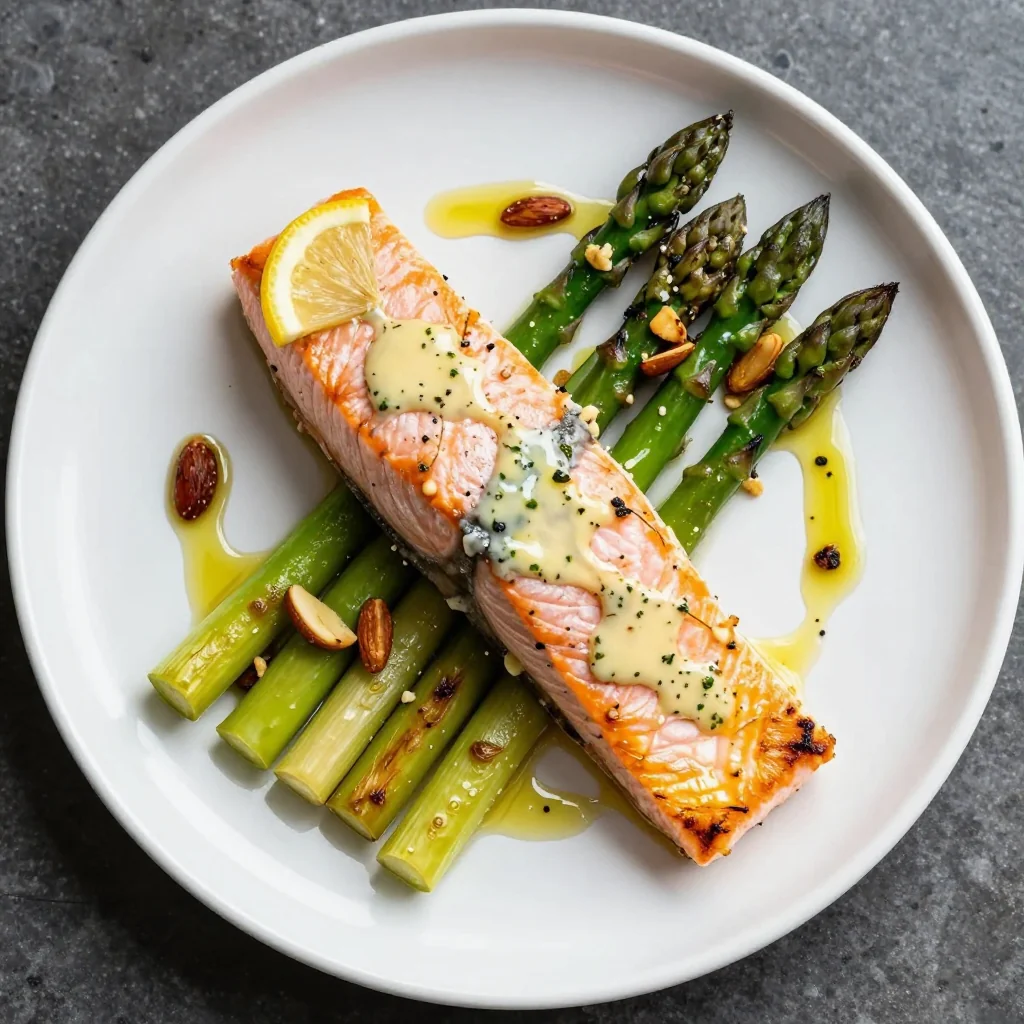
Love this? Pin it for later! 📌
Why This Recipe Works
- One-pan wonder: Salmon and asparagus roast together, so cleanup is limited to a single sheet pan and a whisk.
- Ready in 25 minutes: While the oven preheats you’ll mix the glaze; everything else is hands-off roasting time.
- Restaurant-level flavor: A quick marinade of lemon, garlic, and a kiss of honey caramelizes into a shiny lacquer.
- Meal-prep superstar: Filets reheat like a dream and the asparagus stays snappy for up to four days.
- Omega-3 powerhouse: Each serving delivers over 2 g of heart-healthy EPA & DHA plus 30 g of protein.
- Flexible fillets: Works with skin-on, skin-off, center-cut, or tail pieces—no need to run to a specialty fish market.
Ingredients You'll Need
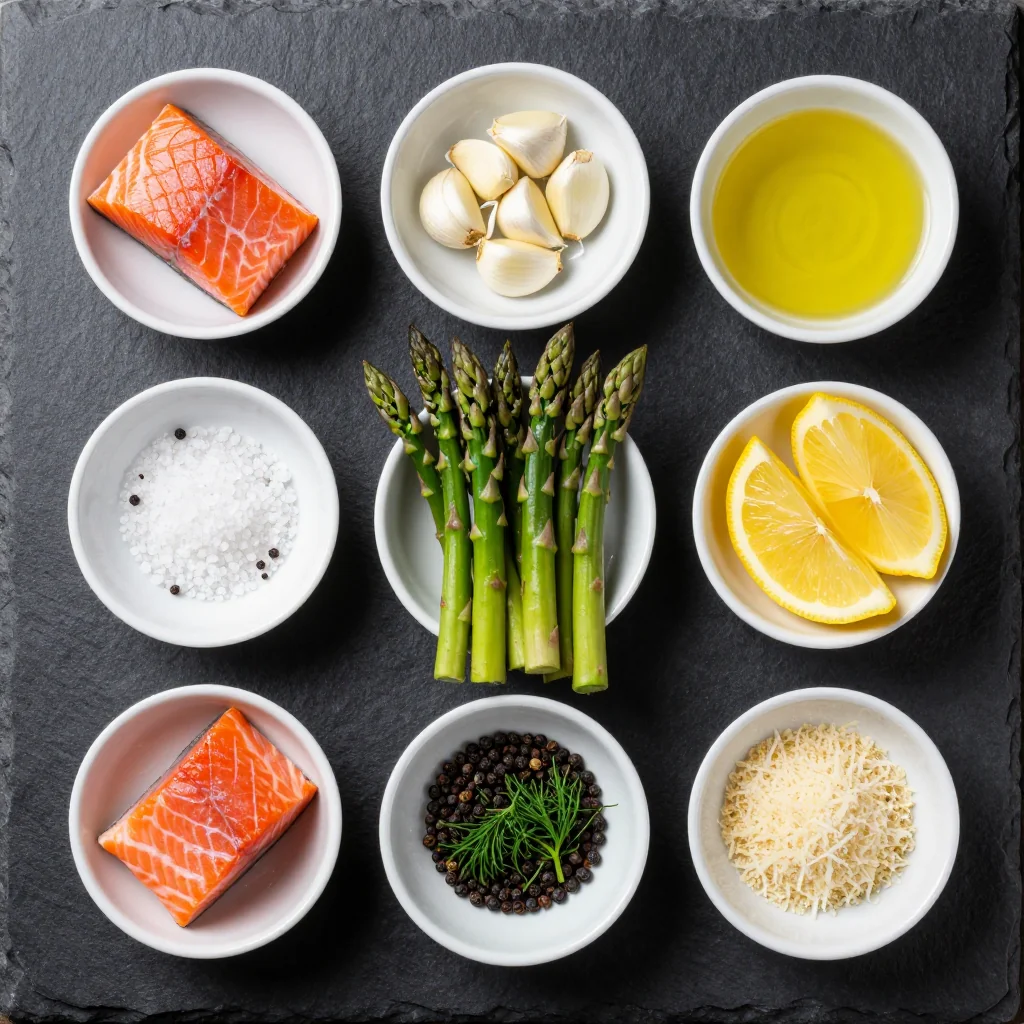
Great salmon starts at the seafood counter. Look for fillets that are translucent and coral-colored, never cloudy or yellowing. If the fish smells like the ocean on a good day—briny and fresh—you’re in business. I prefer skin-on because the layer between the flesh and the hot pan acts like insulation, buying you a safety net against overcooking. Asparagus should squeak when you bundle a bunch together; that squeak means freshness. Thicker spears roast better here—they don’t shrivel into string beans. The glaze is a simple balance of acid, fat, and sweet: fresh lemon juice, extra-virgin olive oil, honey, and garlic. I add a pinch of smoked paprika for subtle warmth, but you could swap in chili flakes for heat or fresh dill for a Scandinavian vibe. Don’t skip the lemon zest; the oils in the skin hold twice the flavor of the juice. For a soy-free option, coconut aminos stand in beautifully for the dash of tamari I sometimes include for umami depth. Finally, flaky sea salt and freshly cracked pepper are non-negotiables—they form the crust that locks in moisture.
How to Make Oven Baked Salmon with Asparagus for Healthy Dinners
Preheat and prep the pan
Set your oven to 425 °F (220 °C) with a rack in the center. Line a rimmed half-sheet pan with parchment for zero sticking or scrubbing later. If you like extra-crispy asparagus, preheat the empty pan inside the oven so the spears sizzle on contact—just be sure to use oven mitts when you add them.
Whisk the glaze
In a small bowl, combine 3 Tbsp extra-virgin olive oil, 1 Tbsp honey, zest of 1 lemon, 2 Tbsp lemon juice, 2 minced garlic cloves, 1 tsp tamari (or coconut aminos), ½ tsp smoked paprika, ½ tsp kosher salt, and ¼ tsp black pepper. Whisk until the honey dissolves completely. Taste; it should be bright, slightly sweet, and assertive—seasonings mute under heat.
Season the fillets
Pat 4 salmon fillets (6 oz each) dry with paper towels—moisture is the enemy of browning. Brush about 1 tsp of the glaze over the flesh side only; reserve the rest for the vegetables. Let the fish rest while you trim the asparagus so the salt can start dissolving into the surface.
Prep the asparagus
Snap off the woody ends of 1 lb asparagus; they’ll naturally break at the tender point. If spears vary wildly in thickness, group similar sizes so everything cooks evenly. Toss asparagus with the remaining glaze, coating each spear thoroughly. Spread in a single layer on one half of the pan, leaving space for the salmon.
Arrange and roast
Nestle salmon fillets skin-side down on the empty half of the pan. Slide everything into the oven and roast for 9 minutes. Thin fillets (¾ inch) may be done at 7; thicker king salmon might need 11. You’re aiming for 125 °F for medium-rare or 135 °F for medium. The flesh should flake but still look slightly translucent in the very center.
Broil for gloss
Switch the oven to broil on high for 1–2 minutes. Keep the door cracked and watch like a hawk; the honey in the glaze can burn in seconds. You want tiny charred spots on the asparagus tips and a bronzed top on the salmon. Remove pan, tent loosely with foil, and rest 3 minutes so juices can redistribute.
Finish and serve
Squeeze the remaining lemon half over everything, then shower with chopped parsley or dill. Serve directly from the pan for casual nights, or plate atop lemony quinoa or cauliflower rice for a low-carb option. Any leftover salmon makes stellar cold salads the next day.
Expert Tips
Use an instant-read thermometer
Salmon goes from silky to chalky fast. Pull at 125 °F for medium-rare; carry-over heat will nudge it to 130 °F while resting.
Dry = crispy
Blot both fish and asparagus with paper towels before glazing. Excess water causes steam, which prevents caramelization.
Flip the asparagus
Halfway through roasting, give the spears a quick flip so both sides get those irresistible blistered spots.
Rest, don’t rush
A 3-minute rest lets proteins relax, so juices stay put when you cut in. Tent loosely—too tight and the crust softens.
Choose center-cut fillets
They’re uniform in thickness, so every bite is equally succulent. Tail pieces taper and can overcook before the thick end finishes.
Flash-freeze for meal prep
Roast an extra tray, cool completely, then freeze portions on a parchment-lined plate. Transfer to bags; reheat at 275 °F for 10 minutes.
Variations to Try
- Mediterranean: Swap lemon for lime, add ½ tsp oregano and a handful of cherry tomatoes to the pan; finish with feta and olives.
- Asian-inspired: Replace honey with maple syrup and add 1 tsp grated ginger plus 1 tsp sesame oil. Sprinkle with sesame seeds and scallions.
- Spicy Cajun: Use brown sugar instead of honey and season with 1 tsp Cajun seasoning plus ¼ tsp cayenne. Serve over dirty rice.
- Green goddess: Blend ¼ cup Greek yogurt, 2 Tbsp each parsley, tarragon, and chives, plus lemon juice. Dollop on salmon after roasting.
- Sheet-pan surf & turf: Add 8 oz peeled shrimp tossed in the same glaze during the last 4 minutes of roasting.
- Low-FODMAP: Omit garlic and use garlic-infused olive oil; replace honey with maple syrup.
Storage Tips
Cool leftovers within 2 hours and refrigerate in an airtight container up to 3 days. For best texture, reheat gently: place salmon on a wire rack set inside a rimmed baking sheet, cover loosely with foil, and warm at 275 °F for 10–12 minutes until just heated through. Microwaving works in a pinch—use 50 % power, cover with a damp paper towel, and heat 60–90 seconds. Asparagus can be chopped and tossed into omelets or grain bowls cold. Freeze cooked salmon for up to 2 months; wrap each fillet in parchment, then foil, then bag. Thaw overnight in the fridge and reheat as above. The glaze can be mixed 5 days ahead and stored in the fridge; bring to room temp and whisk before using.
Frequently Asked Questions
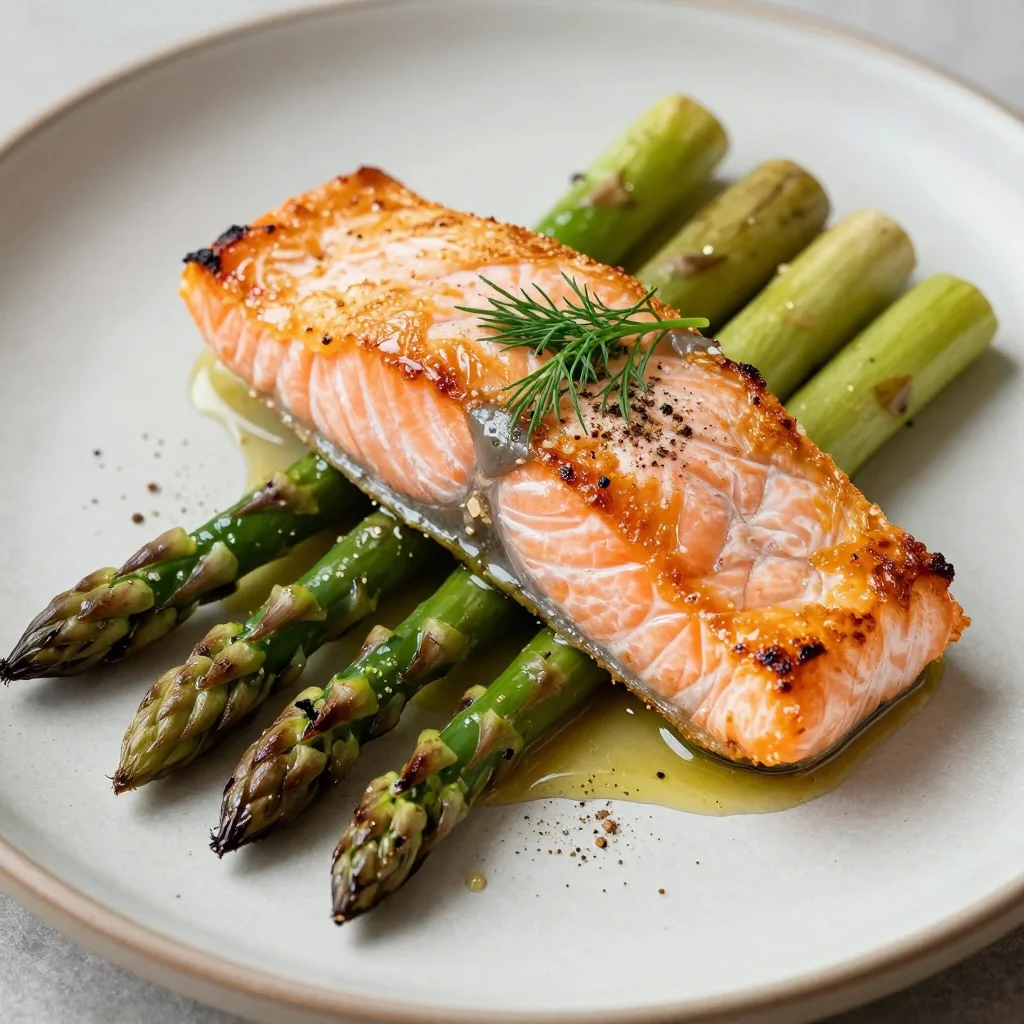
Oven Baked Salmon with Asparagus for Healthy Dinners
Ingredients
Instructions
- Preheat: Set oven to 425 °F. Line a rimmed sheet pan with parchment.
- Make glaze: Whisk oil, honey, lemon zest/juice, garlic, tamari, paprika, salt, and pepper.
- Prep veggies: Toss asparagus with half the glaze; spread on one side of pan.
- Season fish: Brush salmon flesh with 1 tsp glaze; place skin-side down on empty side of pan.
- Roast: Bake 9 minutes, then broil 1–2 minutes until salmon reaches 125 °F and asparagus is tender-crisp.
- Garnish & serve: Rest 3 minutes, sprinkle with herbs, and serve hot.
Recipe Notes
For crispy asparagus, preheat the empty pan 5 minutes before adding vegetables. Leftovers keep 3 days refrigerated or 2 months frozen.