I was in the middle of a Sunday dinner, the family gathered around the table, and the kitchen was a chaotic symphony of sizzling pans and the clatter of utensils. The air was thick with the scent of garlic and onions, a familiar aroma that promised comfort and flavor. I was scrambling to keep up with the requests—“More sauce, please!” “Can we add a splash of lemon?”—while my own eyes flicked to the pot of tomatoes simmering on the stove. Suddenly, the pot exploded with a loud hiss, sending a splash of crushed tomatoes across the countertop. The kitchen looked like a culinary battlefield, and I felt a surge of panic mixed with the thrill of improvisation.
The kitchen smelled of burnt garlic, the faint tang of oregano, and the sweet, slightly acidic burst of tomatoes that had been simmering for half an hour. The sound was a low, steady bubbling, punctuated by the occasional clink of a wooden spoon against the pot. The heat radiated from the stove, warm against my forearm as I stirred, and the texture of the sauce was thick, glossy, and velvety against my fingertips. I could taste the faint hint of pepper in the air, the promise of a sauce that would coat every bite. The sight of the sauce’s rich crimson color made my mouth water, and the anticipation of a dish that would pull at the heartstrings of my family was almost too much to bear.
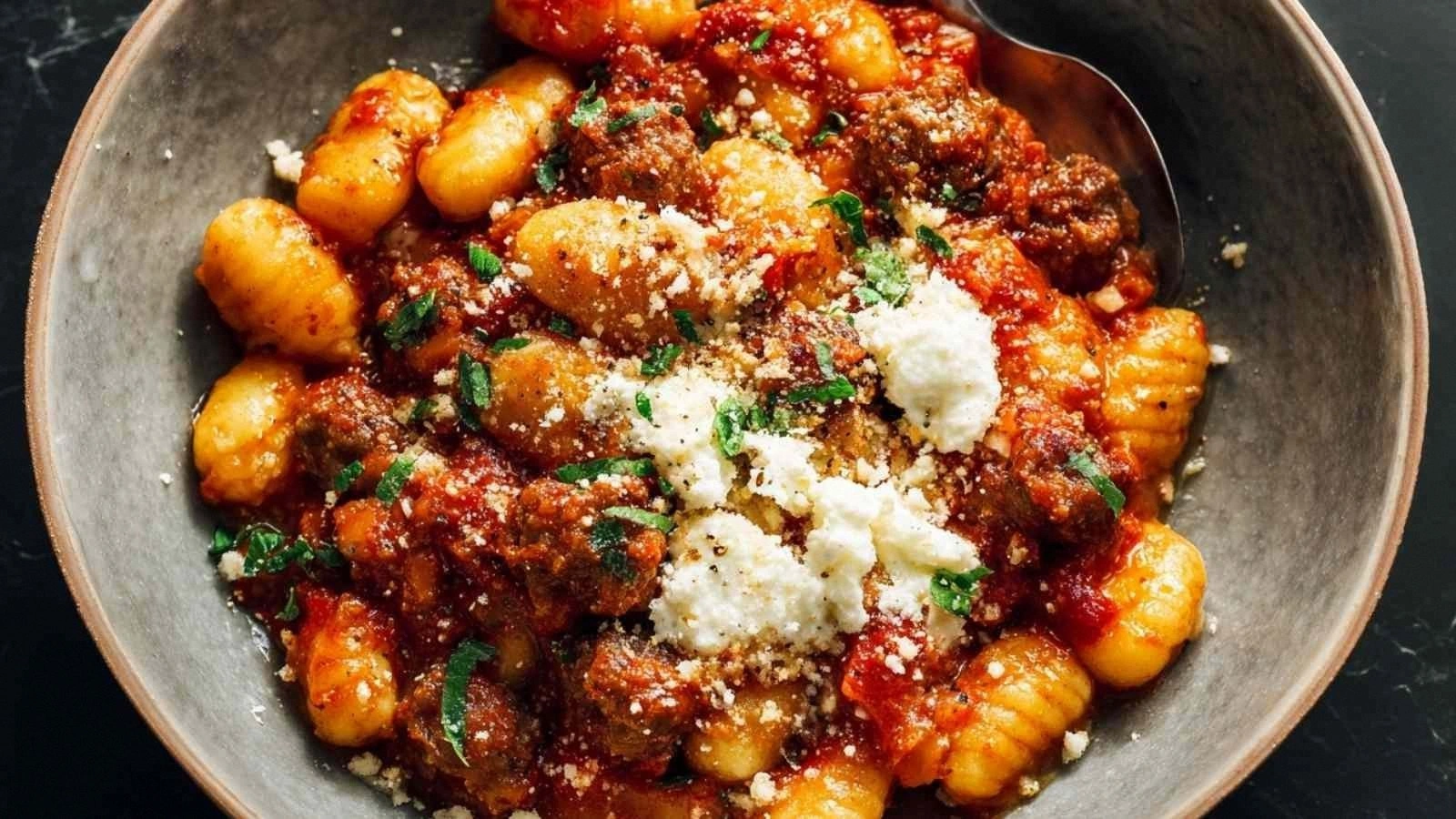
I realized that this was the moment to create something extraordinary, something that would eclipse every other gnocchi recipe I had tried. The combination of Italian sausage, ricotta, and a zesty red sauce had the potential to elevate the humble gnocchi into a dish worthy of a Michelin star. The sauce would cling to each potato pillow like velvet, the sausage would add a smoky depth that would linger on the palate, and the ricotta would bring a silky, airy contrast that would lift the entire dish. This version stands out because it balances richness and brightness, texture and flavor, and it does so with a simplicity that feels like a secret kept between friends. I dare you to taste this and not go back for seconds, because once you’ve experienced the harmony, you’ll know the rest are just echoes.
The idea hit me like a bolt of lightning: a sauce that would not only cover the gnocchi but also sing with flavor. I imagined the red sauce as a molten river, the sausage as a riverbank of savory earth, and the ricotta as a cloud of lightness that would drift above. I thought about the contrast of the buttery gnocchi against the sharp, citrusy lemon zest and the subtle heat of red pepper flakes. The sauce would have a depth that would make each bite feel like a revelation, a crescendo of flavors that would crescendo into a final, triumphant note. It was a bold claim, but I was ready to prove that this is hands down the best version you’ll ever make at home.
I started chopping the onion and garlic with a rhythm that felt like a metronome, the knife slicing through the vegetables with a satisfying snap. The onions turned translucent and sweet, while the garlic released a fragrant perfume that filled the kitchen. I added the sausage, letting it brown until it was caramelized and fragrant, the fat rendering into a golden pool that would serve as the sauce’s base. I poured in the crushed tomatoes, and the mixture began to bubble, the red liquid thickening into a glossy, savory sauce. The aroma that rose was intoxicating, a promise of a dish that would make the entire house smell like a cozy Italian trattoria.
The sauce was thickening, the edges of the pot starting to pull away as the tomatoes reduced. I stirred, watching the mixture swirl like a storm at sea, the flavors mingling into a harmonious blend. The heat was just right, not too hot to scorch but warm enough to coax the tomatoes into a velvety consistency. The sauce began to thicken, the edges pulling away from the pot, signaling that it was ready to be combined with the gnocchi. The anticipation was electric, the kitchen buzzing with the energy of a dish that would soon become a masterpiece.
I added the ricotta, the creamy white chunks melting into the sauce, creating a silky texture that would contrast beautifully with the chewy gnocchi. The lemon zest and juice were added next, brightening the sauce with a citrusy lift that cut through the richness. I sprinkled in the minced herbs, the fresh green notes adding a pop of color and a fresh, herbal aroma. I tasted the sauce, adjusting the seasoning with salt and red pepper flakes, creating a balance that was both bold and refined. The sauce was now a perfect blend of sweet, savory, and bright, ready to embrace the gnocchi.
Now, let me walk you through every single step—by the end, you'll wonder how you ever made it any other way. This dish is a playground, a culinary playground where every element plays a crucial role. The sauce, the sausage, the ricotta, the lemon—all of them dance together to create a symphony of flavors that will have your family begging for seconds. And trust me, this is not just a recipe; it's an experience that will stay with you long after the last bite. So grab your apron, and let’s dive into the world of Millionaire Gnocchi with Red S.
What Makes This Version Stand Out
- Flavor Depth: The combination of Italian sausage, crushed tomatoes, and ricotta creates layers of savory, sweet, and creamy notes that build complexity in each bite.
- Texture Play: Crispy sausage edges, tender gnocchi, and silky ricotta provide a mouthfeel that is both comforting and exciting.
- Freshness: Lemon zest and juice add a bright, citrusy lift that cuts through the richness and keeps the dish from feeling heavy.
- Time Efficiency: Using pre-cooked gnocchi and a quick sausage sauté means you can have a gourmet meal on the table in under 45 minutes.
- Visual Appeal: The crimson sauce, golden sausage, and ivory ricotta create a striking contrast that looks as good as it tastes.
- Make‑Ahead Potential: The sauce can be prepared ahead of time and reheated without losing flavor, making it a perfect dish for busy weeknights.
- Versatility: Swap the sausage for ground turkey or plant-based meat and the dish still shines, proving its adaptability.
- Family‑Friendly: The mild heat and familiar flavors make it a crowd‑pleaser for both kids and adults.
Alright, let's break down exactly what goes into this masterpiece…
Inside the Ingredient List
The Flavor Base
The ground Italian sausage is the heart of this dish, providing a smoky, savory foundation that permeates every bite. Its fat content renders into a golden pool that enriches the sauce, adding a depth that plain ground beef simply cannot match. If you skip the sausage, the sauce will taste thin and lack the comforting umami punch that makes this dish memorable. For those who prefer a leaner version, use a mix of ground pork and turkey to reduce fat while retaining flavor.
Crushed tomatoes bring acidity and sweetness that balance the richness of the sausage and ricotta. The 28-ounce can is a generous amount, ensuring the sauce is thick and flavorful enough to coat the gnocchi without being watery. If you’re using fresh tomatoes, cook them down until they reach a similar consistency, which can take about 15 minutes. The key is to let the tomatoes reduce slowly so that the sugars caramelize and deepen the flavor profile.
Onions and garlic are the aromatic backbone of the sauce. The medium yellow onion offers a subtle sweetness that contrasts nicely with the tomato’s acidity, while the garlic cloves add a pungent kick that lingers on the palate. If you’re sensitive to garlic, reduce the amount or use roasted garlic for a milder, sweeter note. Remember, the onions should be translucent, not browned, to keep the sauce bright.
The Texture Crew
Pre-cooked gnocchi are the canvas of this dish, providing a pillowy, potato-based texture that pairs perfectly with the sauce. Using pre-cooked gnocchi saves time and ensures that the gnocchi remain tender and not mushy. If you prefer homemade gnocchi, make sure to dry them on a paper towel for a few minutes before sautéing; this helps them crisp up slightly and prevents them from absorbing too much sauce.
Ricotta cheese is the silky, creamy element that balances the sauce’s richness. The 6-8 ounces of ricotta should be at room temperature to blend smoothly into the sauce without clumping. A light drizzle of olive oil over the ricotta before adding it to the sauce helps it melt into the mixture, creating a luscious, velvety finish. If you’re vegan, try a plant-based ricotta made from cashews or tofu for a similar texture.
The Unexpected Star
Lemon zest and juice are the secret weapon that elevates this dish. The zest adds a bright, citrusy aroma that cuts through the richness, while the juice provides a fresh, tangy lift that brightens the overall flavor. The lemon’s acidity also helps balance the sweetness of the tomatoes and the saltiness of the sausage. For a slightly different twist, add a splash of white wine after sautéing the sausage and before adding the tomatoes; it will deepen the sauce’s complexity.
Red pepper flakes add a gentle heat that awakens the palate without overpowering the dish. Use them sparingly, as the sauce’s other flavors are already robust. If you’re looking for a milder version, simply omit the flakes or replace them with a pinch of smoked paprika for a smoky undertone. The key is to let the heat mingle with the sauce, creating a subtle, lingering warmth.
The Final Flourish
Fresh herbs—such as basil, parsley, and oregano—add a burst of green freshness that brightens the dish visually and flavor-wise. Minced herbs should be added toward the end of cooking to preserve their bright, fresh flavor. If you’re in a pinch, dried herbs can be used, but they’ll need to be added earlier and in slightly larger quantities. The herbs tie all the components together, creating a cohesive, aromatic experience.
Everything's prepped? Good. Let's get into the real action…
The Method — Step by Step
- Heat a large skillet over medium heat and add 1-2 tablespoons of extra-virgin olive oil. Once the oil shimmers, add the ground Italian sausage, breaking it apart with a wooden spoon. Cook until the sausage is browned and crumbly, about 5–7 minutes. The key is to let the fat render and the meat develop a golden crust. Once browned, remove the sausage from the skillet and set aside on a plate.
- In the same skillet, add the diced yellow onion and minced garlic cloves. Sauté until the onion turns translucent and the garlic becomes fragrant, about 3–4 minutes. Be careful not to let the garlic burn; if it starts to darken, lower the heat. This step builds the aromatic base that will carry the sauce. The onions should be soft and slightly sweet.
- Return the browned sausage to the skillet, stirring to combine with the onions and garlic. Pour in the crushed tomatoes and stir to mix. Let the mixture come to a gentle simmer, allowing the flavors to meld for 10–12 minutes. The sauce should thicken slightly and develop a glossy sheen. This is the moment where the sauce starts to feel like a rich, savory river.
- Stir in the dried oregano, salt, and a pinch of red pepper flakes. Taste the sauce and adjust seasoning as needed. The oregano should infuse the sauce with a warm, earthy note that complements the tomatoes. Keep the heat at medium-low to let the flavors meld without evaporating the aromatics. Let the sauce simmer for another 5 minutes, allowing the oregano to bloom.
- Add the ricotta cheese to the skillet, stirring gently until it melts into the sauce. The ricotta should create a creamy, silky layer that balances the sauce’s acidity. If the ricotta clumps, add a splash of warm water or broth to smooth it out. The mixture should look like a luxurious, pale cream swirled into a deep red sauce. This step is where the dish transforms from simple to indulgent.
- Squeeze in the lemon zest and a generous splash of lemon juice. Stir to combine, allowing the citrus to brighten the sauce. The lemon should cut through the richness, creating a fresh, bright counterpoint to the savory elements. Be mindful of the amount of juice; too much can make the sauce tart. The final sauce should be balanced, with the lemon adding a subtle, uplifting note.
- Add the pre-cooked gnocchi to the skillet, tossing gently to coat each piece with the sauce. Cook for 2–3 minutes, allowing the gnocchi to heat through and absorb some of the sauce. The gnocchi should stay pillowy, not mushy, so keep the heat moderate. The sauce should cling to the gnocchi like a silky blanket, each bite delivering a burst of flavor.
- Finish the dish by stirring in the minced fresh herbs—parsley, basil, and oregano. The herbs should add a green, aromatic finish that brightens the plate. The final plating should showcase the deep red sauce, golden sausage, and ivory ricotta against a backdrop of fresh greens. The dish is now ready to serve, hot and steaming, ready to impress.
That's it — you did it. But hold on, I've got a few more tricks that'll take this to another level…
Insider Tricks for Flawless Results
The Temperature Rule Nobody Follows
Many cooks think a high heat is the secret to a great sauce, but the truth is that low, steady simmering allows the tomatoes to break down fully and the flavors to meld. I once tried a high-heat method and ended up with a sauce that was too acidic and lacked depth. The trick is to keep the heat at medium-low after the initial browning, letting the sauce slowly thicken over 15–20 minutes. This gentle simmer also allows the ricotta to integrate smoothly without curdling. Remember, patience pays off with a richer, more harmonious sauce.
Why Your Nose Knows Best
Your sense of smell is your secret ally in the kitchen. When the sauce starts to develop a deep, caramelized aroma, you know it’s ready to move on to the next step. If you’re unsure, sniff the sauce; if it smells slightly burnt, reduce the heat. My friend once skipped this step and ended up with a burnt, bitter sauce that was almost unrecognizable. Trust your nose, and you’ll always hit the sweet spot.
The 5-Minute Rest That Changes Everything
After cooking, let the sauce rest for 5 minutes before serving. This brief pause allows the flavors to settle and the sauce to thicken slightly, creating a more cohesive texture. I’ve seen dishes that look good on the plate but feel watery because the sauce was served immediately. A short rest also lets the ricotta re-emulsify, giving the dish a silkier finish. Give it a quick 5-minute break, and you’ll notice the difference.
The Secret of the Lemon
Many recipes call for lemon juice, but the zest is the real star. The zest contains essential oils that release bright, citrusy aromas when heated. I like to zest the lemon before adding the juice to keep the zest from falling into the sauce. The zest adds a layer of complexity that elevates the dish from good to unforgettable. Don’t skip it; it’s the final flourish that makes the dish pop.
The Perfect Plate
Presentation matters. Serve the gnocchi on a warm plate, drizzle a little olive oil over the top, and sprinkle fresh herbs for color. A drizzle of balsamic glaze adds a sweet, tangy finish that complements the savory sauce. If you’re feeling fancy, finish with a dusting of grated Parmesan or a sprinkle of toasted pine nuts. The final look should be inviting, making the dish as beautiful as it is delicious.
Creative Twists and Variations
This recipe is a playground. Here are some of my favorite ways to switch things up:
Spicy Sausage Swap
Replace the Italian sausage with spicy chorizo for a bold, smoky kick. The chorizo’s paprika-infused flavor adds depth and a subtle heat that pairs beautifully with the lemon zest. Keep the rest of the sauce unchanged for a fiery twist that still feels familiar.
Vegan Ricotta Replacement
Use a cashew-based ricotta to keep the dish dairy-free without sacrificing creaminess. Soak the cashews overnight, blend with a splash of plant milk, and season with nutritional yeast. The result is a silky, plant-based ricotta that mirrors the texture of traditional ricotta.
Herb-Infused Gnocchi
Add a handful of chopped fresh basil or thyme to the gnocchi before sautéing. This infuses the potato pillows with a subtle herbal note, creating a cohesive flavor profile that ties the dish together. The herbs should be added in the last minute of cooking to preserve their freshness.
Smoked Paprika Finish
Swap the red pepper flakes for smoked paprika to give the sauce a subtle, smoky depth. The paprika adds warmth without the sharpness of flakes, creating a mellow, comforting finish. Sprinkle the paprika over the finished dish for a smoky aroma that lingers.
Pesto-Infused Sauce
Stir in a spoonful of basil pesto at the end of cooking for a green, aromatic twist. The pesto adds a fresh, herbal brightness that complements the lemon and ricotta. The sauce becomes a vibrant, multi-layered experience that feels both classic and innovative.
Sweet & Tangy Variation
Add a tablespoon of honey or a splash of balsamic reduction to the sauce for a sweet, tangy contrast. The sweetness balances the acidity of the tomatoes and the sharpness of the lemon. This variation is perfect for a holiday dinner where a touch of decadence is welcome.
Storing and Bringing It Back to Life
Fridge Storage
Store the cooked gnocchi and sauce separately in airtight containers. Keep the sauce in the fridge for up to 4 days, and the gnocchi for up to 3 days. When you’re ready to reheat, combine the sauce and gnocchi in a skillet, adding a splash of water or broth to rehydrate. This method preserves the sauce’s thickness and the gnocchi’s tenderness.
Freezer Friendly
Freeze the sauce and gnocchi separately in freezer-safe bags. Label them with the date and keep them in the freezer for up to 2 months. When reheating, thaw the sauce in the fridge overnight, then warm it gently on the stove, adding a little water if needed. The gnocchi should be reheated separately to avoid sogginess.
Best Reheating Method
Reheat the sauce over low heat, stirring frequently to prevent sticking. Add a tiny splash of water before reheating; this steams the sauce back to perfection and keeps the ricotta from drying out. Once the sauce is hot and glossy again, fold in the gnocchi and let it heat through for 2–3 minutes. Serve immediately for the best texture and flavor.