Love this? Pin it for later! 📌
Why This Recipe Works
- Low & slow heat: A 300 °F oven coaxes collagen into gelatin without drying the meat.
- Double-thick sear: Browning in two batches builds the fond that later seasons the entire braise.
- Red wine & tomato paste: Acid plus glutamates equal lip-smacking umami.
- Vegetable sofrito: Carrots, onion, and celery melt into the sauce for natural sweetness.
- Fresh herbs finish: Parsley and orange zest added at the end keep flavors bright.
- Make-ahead magic: Flavor improves overnight, letting fat solidify for easy removal.
Ingredients You'll Need
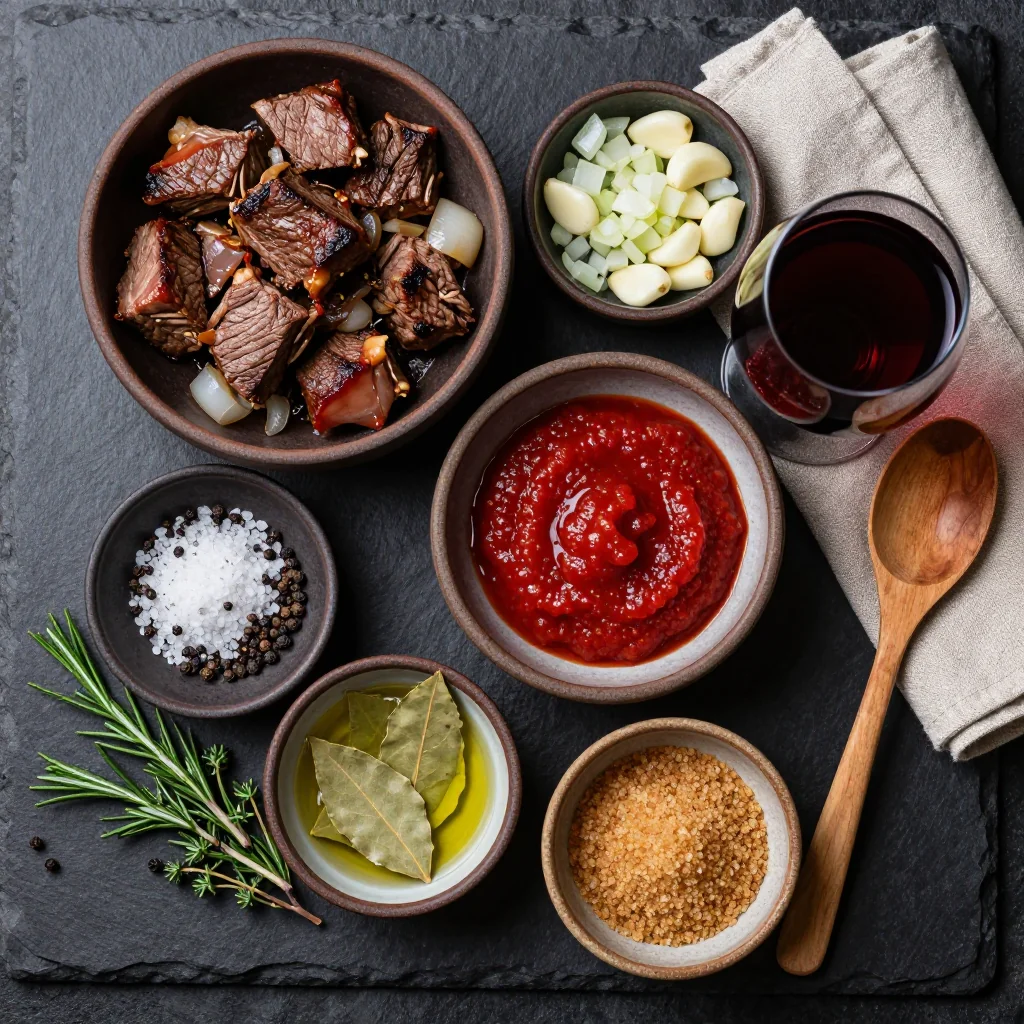
Start with a well-marbled chuck roast—4½ to 5 pounds gives you generous leftovers for next-day sandwiches. Look for thick white striations rather than large solid fat caps; intramuscular fat equals flavor insurance. If you spot blade roast or 7-bone roast on sale, those are simply different cuts from the same primal and work beautifully. Skip pre-cubed “stew meat”; uniformity in size ensures even cooking.
Choose a dry red wine you’d happily drink. A mid-tier Côtes du Rhône or Syrah brings berry notes and gentle tannins that concentrate as the sauce reduces. Avoid “cooking wine”; its saline aftertaste skews the final dish. Crushed tomatoes should be plain—no basil or garlic additives—so you control seasoning. Tomato paste in a tube stays fresh longer; you’ll only need two tablespoons, but its concentrated glutamates deepen color.
Beef stock is next. Homemade is gold, but a low-sodium carton version lets you reduce without over-salting. Keep a backup ½ cup chilled; if the braise tightens up you can loosen it at the end without watering down flavor. For aromatics, I like yellow onion for sweetness, parsnip in addition to carrot for earthy complexity, and a single celery stalk because more can turn bitter.
Spice-wise, classic bay leaves, cracked peppercorns, and a whisper of smoked paprika give subtle warmth. A parmesan rind saved from your holiday cheese board adds nutty richness—just remember to fish it out later. Finish with orange zest; the oils lift the long-cooked richness the way a squeeze of lemon brightens seafood.
How to Make Melt-in-Your-Mouth Braised Beef for New Year's Day
Pat, cube, and season the beef
Trim excess silver skin but leave fat intact. Cut into 2½-inch chunks—larger cubes prevent them from shredding to floss during the 3-hour braise. Blot with paper towels; moisture is the enemy of browning. Season boldly with 2 tsp kosher salt and 1 tsp freshly cracked black pepper per side. Let stand 20 minutes so the salt penetrates rather than falling off in the sear.
Sear in two controlled batches
Heat 2 Tbsp canola oil in a heavy 7-quart Dutch oven until it shimmers but doesn’t smoke. Add half the beef flat-side down; don’t crowd or they’ll steam. Leave undisturbed 3 minutes. When edges caramelize to deep walnut, flip and repeat. Transfer to a rimmed sheet; the fond stuck to the pot is liquid gold—do not wash the pot.
Build the sofrito
Lower heat to medium; add diced onion, carrot, parsnip, and celery plus a pinch of salt. Sweat 6 minutes, scraping browned bits. Stir in tomato paste and 1 tsp smoked paprika; cook 2 minutes until brick red and sticking slightly. This caramelization sweetens the paste’s natural glutamates.
Deglaze with wine & reduce
Pour in 2 cups red wine plus 1 Tbsp balsamic vinegar. Increase heat to high; boil 5 minutes until reduced by half, loosening stubborn fond with a wooden spoon. The raw alcohol smell should fade, leaving jammy fruit behind. This step concentrates flavor and ensures the finished sauce won’t taste boozy.
Return beef & add stock
Nestle seared beef and any resting juices into the pot. Add 3 cups low-sodium beef stock until meat is barely submerged; add more if needed. Toss in 2 bay leaves, 6 crushed peppercorns, and that parmesan rind. Liquid should sit ½ inch above meat—too much and you stew; too little and you risk scorching.
Slow-braise covered
Bring barely to a simmer—tiny bubbles should ring the edge only. Cover with a tight lid and slide into a preheated 300 °F oven. Set timer for 2½ hours. Resist peeking; each lift drops temperature 25 °F and adds 10 minutes to cook time. Trust the process.
Test, add veg, braise again
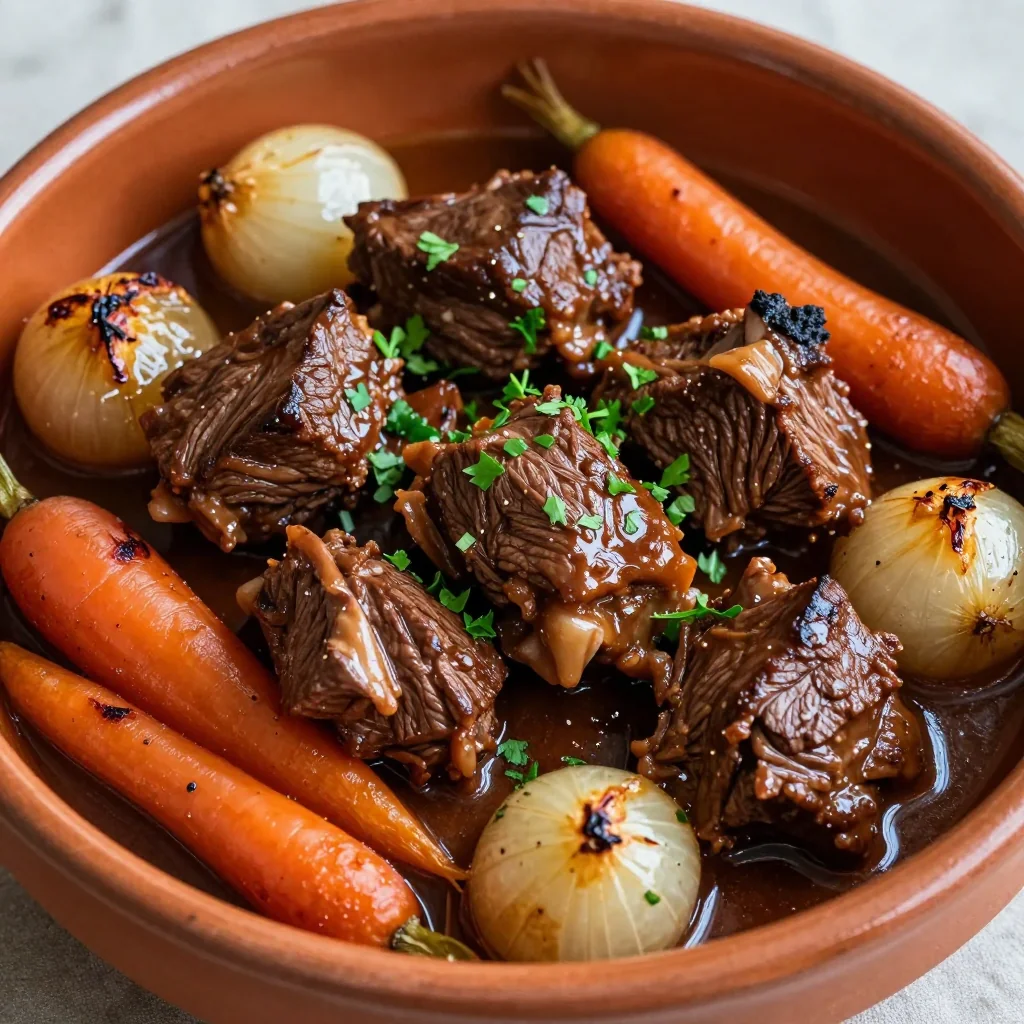
After 2½ hours, pierce a cube with a fork; you should feel slight resistance. Scatter in 1-inch pieces of carrot and parsnip plus whole pearl onions. Cover, return to oven 30–40 minutes until vegetables are tender and beef yields completely but still holds shape.
Skim fat & finish sauce
Remove beef and vegetables to a warm platter. Bring liquid to a gentle boil on stovetop; reduce 10 minutes until nappe (coats spoon). Skim surface fat with a ladle or chill briefly and lift solidified fat. Adjust salt, crack fresh pepper, and swirl in a knob of butter for silkiness. Add orange zest and chopped parsley just before serving.
Expert Tips
Overnight is better
Cook the day before, refrigerate in braising liquid, and reheat at 325 °F for 25 minutes. Collagen continues hydrating, and next-day slicing is effortless.
Keep it moist
If reducing sauce too far, loosen with warm stock—not cold water—to maintain temperature and seasoning balance.
Thickening shortcut
For a week-night version, dust beef in 2 Tbsp flour before searing. The roux thickens sauce as it cooks, saving a reduction step.
Check, don’t guess
Beef is done when a probe slides in at 205 °F. Any cooler and collagen hasn’t fully melted; hotter and fibers shrink, turning dry.
Splurge on parmesan rind
Save rinds in a freezer bag; they add nutty depth to any braise. Remove before serving—it won’t dissolve fully.
Transport tip
Taking to a party? Under-cook by 20 minutes, wrap Dutch oven in towels inside a cooler; carryover heat finishes en route.
Variations to Try
- Barrel-aged stout swap: Replace 1 cup wine with stout for malty bitterness reminiscent of Irish stew.
- Asian fusion: Sub ½ cup wine with shaoxing, add star anise, ginger coins, and finish with sesame oil.
- Mushroom lovers: Stir in rehydrated porcini and their soaking liquid; add sautéed cremini at the end.
- Smoky chipotle: Whisk 1 tsp adobo sauce into tomato paste for gentle heat that blooms in the oven.
- Spring vegetable: Replace root veg with fennel wedges and artichoke hearts in final 30 minutes.
Storage Tips
Cool the beef in its liquid within two hours to discourage bacteria. Transfer to shallow glass containers; depth under 2 inches chills faster. Refrigerate up to 4 days or freeze up to 3 months. If freezing, ladle beef and vegetables into quart freezer bags, press out air, and lay flat for stacking. Sauce can be frozen separately in ice-cube trays; pop cubes into soups for instant body.
To reheat, thaw overnight in fridge. Warm covered at 325 °F with a splash of stock until center registers 165 °F. Microwave works for single bowls—cover loosely and stir every 45 seconds to avoid toughening edges. Reheated sauce may appear broken; whisk in a teaspoon of butter or a quick buzz with an immersion blender re-emulsifies.
Frequently Asked Questions
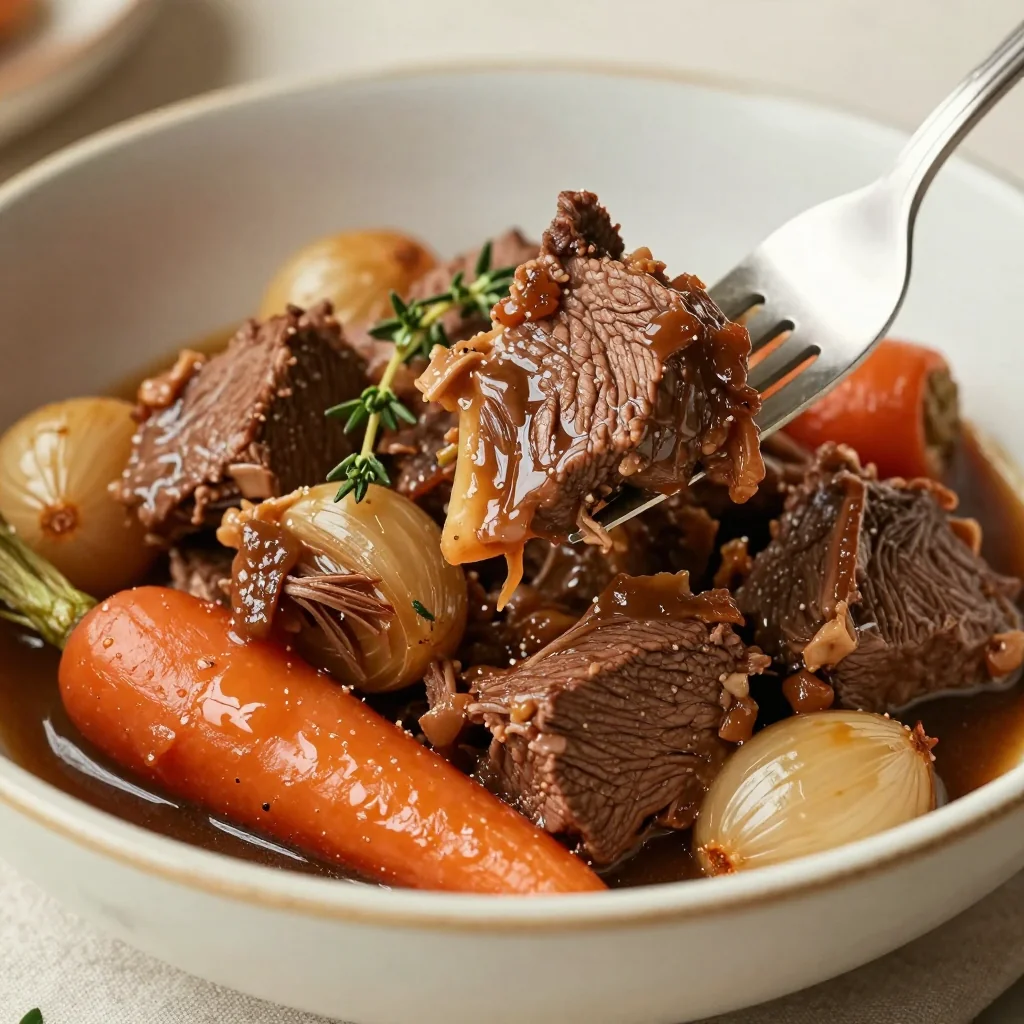
Melt-in-Your-Mouth Braised Beef for New Year's Day
Ingredients
Instructions
- Season beef: Pat cubes dry, season with 2 tsp kosher salt & 1 tsp pepper per side. Rest 20 min.
- Sear: Heat 1 Tbsp oil in Dutch oven. Brown half the beef 3 min per side; repeat. Reserve.
- Sofrito: Lower heat; sauté onion, carrot, parsnip, celery 6 min. Stir in tomato paste & paprika 2 min.
- Deglaze: Add wine & vinegar; boil 5 min until reduced by half.
- Braise: Return beef, add stock, bay, peppercorns, parmesan rind. Cover; oven 300 °F 2½ hr.
- Add veg: Stir in extra carrots & pearl onions; cover 30–40 min more.
- Finish: Skim fat, reduce sauce if needed, season. Stir in orange zest & parsley. Serve hot.
Recipe Notes
For deeper flavor, make a day ahead; chill overnight and lift solidified fat before reheating. Sauce thickness varies—reduce on stovetop to desired consistency.