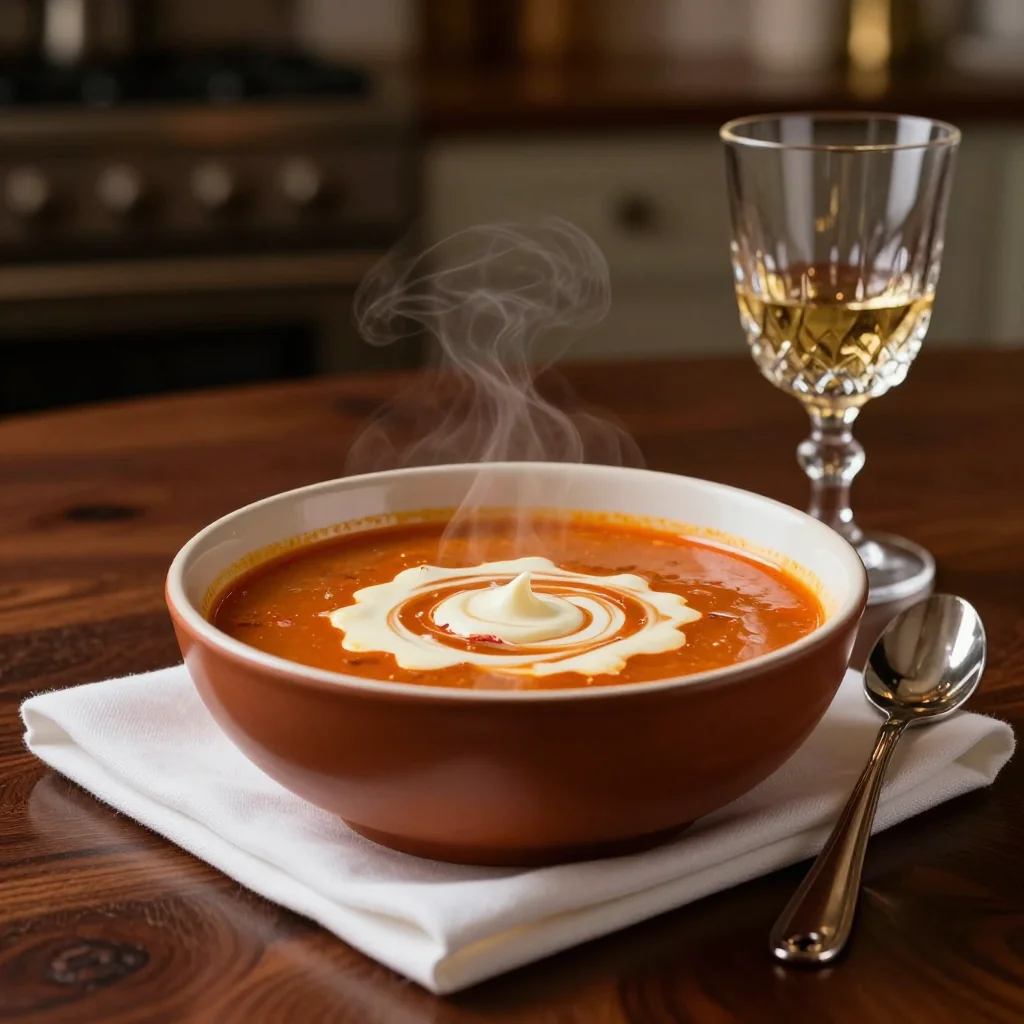
A velvety, luxurious soup that blends sweet lobster meat with the subtle warmth of sherry and the richness of cream.
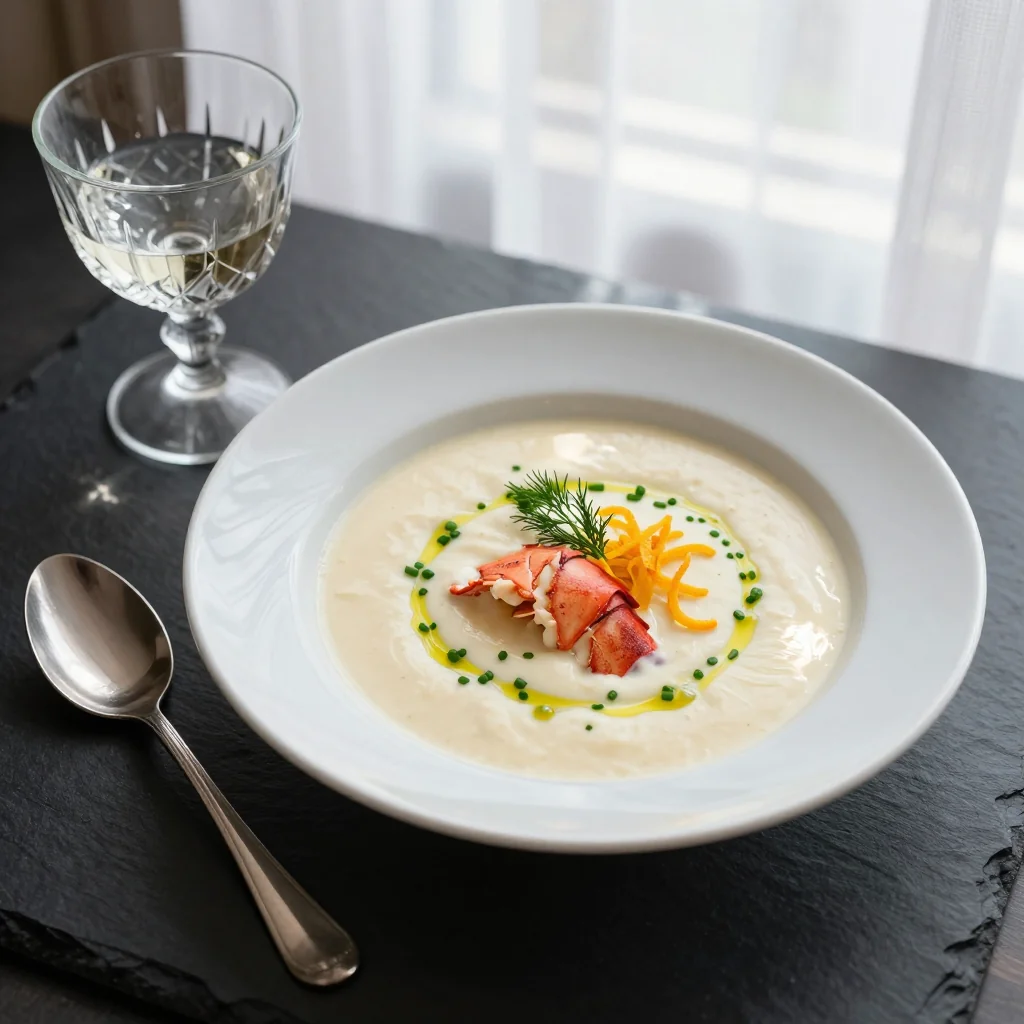
I still remember the first time I tasted a perfectly executed lobster bisque. It was on a breezy summer evening on the coast of Brittany, where the salty sea air mingled with the aroma of simmering shells and fresh herbs. The soup arrived in a polished porcelain bowl, its surface glistening with a silk‑smooth sheen, and the first spoonful was an orchestra of flavors – sweet, briny lobster, the gentle heat of sherry, and the luxurious cream that rounded everything out. I felt instantly transported, as if the ocean itself had been captured in a spoon.
Lobster bisque is a classic of French cuisine, traditionally prepared by extracting the deep, umami‑rich essence from lobster shells and then enriching the broth with cream and a splash of fortified wine. Its origins trace back to the 19th‑century aristocratic kitchens of Paris, where chefs sought to turn every part of the lobster into a celebration of flavor. Today, it remains a hallmark of fine dining, yet it can be mastered at home with a few thoughtful techniques.
In this article, I will walk you through every step of creating a restaurant‑quality bisque, from building a robust stock to achieving the perfect velvety texture. You’ll learn why each ingredient matters, how to balance the sherry’s subtle sweetness with the richness of cream, and the secrets to a glossy finish that will impress even the most discerning guests.
So roll up your sleeves, gather the freshest lobster you can find, and let’s dive into a culinary adventure that will leave your kitchen smelling like a seaside bistro.
🌟 Why This Recipe Will Captivate You
This bisque isn’t just a soup; it’s an experience that blends tradition, elegance, and comfort in every spoonful.
- ✨ Unmatched Depth of Flavor : By simmering the shells with aromatic vegetables and a splash of sherry, you extract a broth that’s richer than any store‑bought stock.
- ✨ Silky, Creamy Texture : The careful incorporation of cream at the right moment creates a luxurious mouthfeel without becoming heavy.
- ✨ Balanced Sweet‑Savory Profile : The natural sweetness of lobster meat is perfectly offset by the acidity of sherry and a hint of fresh lemon.
- ✨ Impressive Presentation : Served in a shallow bowl with a drizzle of cream and a garnish of fresh chives, it looks as stunning as it tastes.
- ✨ Versatile for Any Occasion : Whether it’s a romantic dinner, a holiday feast, or a special brunch, this bisque elevates the menu.
- ✨ Straightforward Technique : Though it feels sophisticated, the step‑by‑step method demystifies the process, making it accessible for home cooks of medium skill.
🥗 Ingredients
📝 Complete Ingredient List
For the Lobster Stock:
- 2 lobster shells (including shells, heads, and bodies)
- 1 large carrot peeled and chopped
- 1 celery stalk chopped
- 1 onion quartered
- 2 garlic cloves crushed
- 0.5 cup dry white wine
- 8 cups cold water
- 1 bay leaf
- 1 tsp black peppercorns
- 1 tsp thyme leaves
For the Bisque Base:
- 4 tablespoons unsalted butter
- 1 small onion finely diced
- 1 carrot finely diced
- 1 celery stalk finely diced
- 2 tablespoons tomato paste
- 0.5 cup dry sherry
- 1 cup heavy cream
- 1 tablespoon cognac or brandy (optional)
- 1 tsp fine sea salt
- 0.5 tsp freshly ground black pepper
- 2 tablespoons fresh chives, chopped (for garnish)
For the Garnish:
- 200 g cooked lobster meat, coarsely chopped
- 1 tsp lemon zest
- 1 drizzle extra‑virgin olive oil (optional)
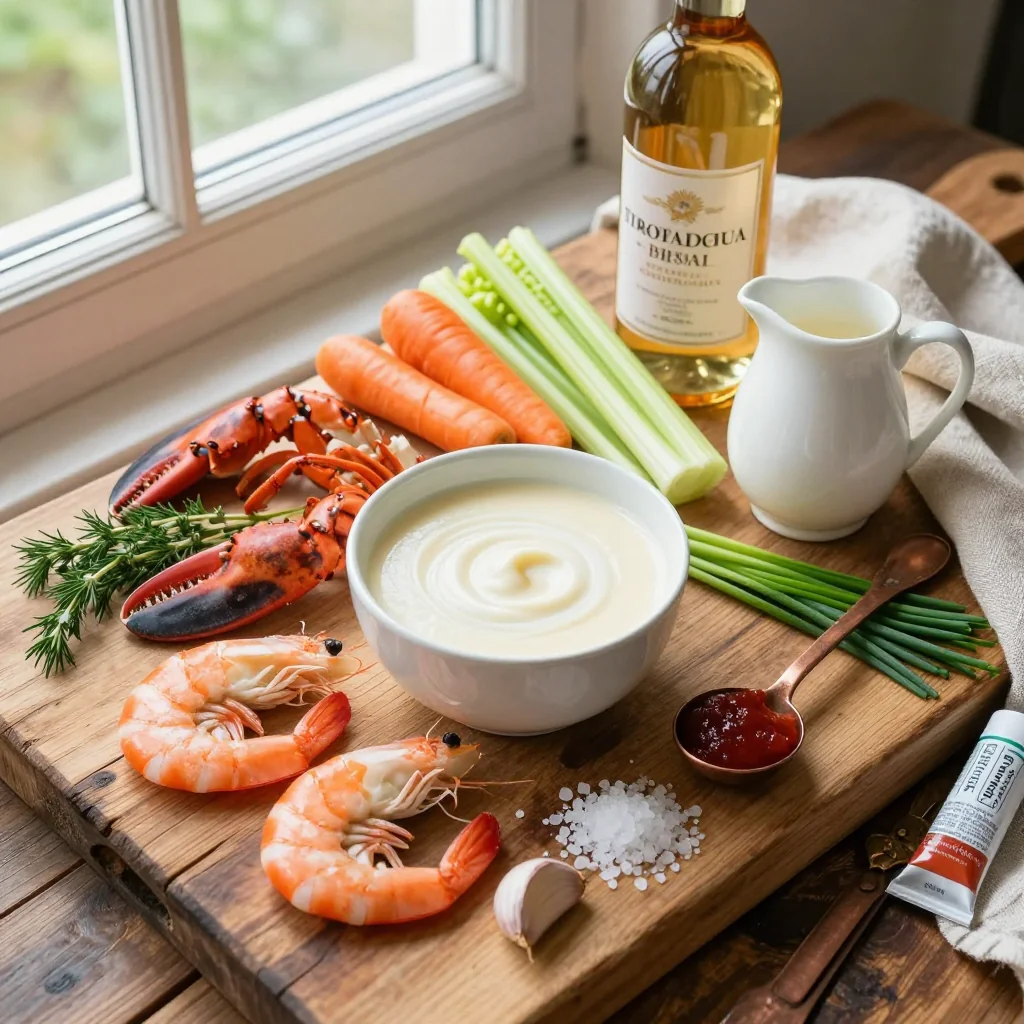
🔍 Focus on Key Ingredients
Lobster Shells
The shells are the foundation of the bisque’s depth. When roasted briefly before simmering, they release caramelized notes that add a subtle sweetness and a deep amber color to the stock. Choose shells that are still moist and fragrant; a dry or discolored shell will produce a weaker broth.
Sherry
Dry sherry contributes a gentle acidity and a nutty undertone that brightens the richness of the cream. It also helps to deglaze the pan after sautéing the vegetables, lifting any caramelized bits that would otherwise be lost. If you prefer a slightly sweeter profile, a medium‑dry sherry works beautifully.
Heavy Cream
Cream is the final silk‑maker, providing the luxurious mouthfeel that defines a bisque. Use a cream with at least 35% fat for the best emulsion. Adding it at the very end prevents curdling and ensures a glossy finish.
🔄 Quick Substitutions
| If you don’t have… | Use instead… |
|---|---|
| Lobster shells | Crab shells or shrimp shells (adjust cooking time) |
| Dry sherry | Dry white wine with a splash of brandy |
| Heavy cream | Half‑and‑half plus a tablespoon of butter per cup |
👨🍳 Step‑by‑Step Instructions
Follow these phases carefully, and you’ll end up with a bisque that tastes like it was crafted in a Michelin‑starred kitchen.
📋 Phase 1: Preparation and Mise en Place
Gather, clean, and prep all components before you start cooking.
Prepare the Lobster Stock
Rinse the lobster shells under cold water to remove any sand. Place them in a large stockpot with the chopped carrot, celery, onion, and crushed garlic. Add the dry white wine and let it reduce for about two minutes over medium‑high heat, stirring to scrape up any browned bits. Then pour in the cold water, add the bay leaf, peppercorns, and thyme. Bring the mixture to a gentle simmer and let it cook uncovered for 45 minutes, skimming any foam that rises to the surface. This slow simmer extracts maximum flavor without over‑cooking the delicate shell components.
Strain the Stock
After 45 minutes, remove the pot from the heat. Using a fine‑mesh sieve or cheesecloth, strain the stock into a clean bowl, pressing gently on the solids to extract every last drop of flavor. Discard the shells and vegetables. Set the clear, amber‑colored stock aside; you’ll use it as the liquid base for the bisque.
🔥 Phase 2: Cooking the Bisque
Transform the stock into a luxurious, velvety bisque.
Sauté the Aromatics
In a large heavy‑bottomed pot, melt the butter over medium heat. Add the finely diced onion, carrot, and celery, sautéing until they become translucent and fragrant, about 5‑7 minutes. Stir in the tomato paste and cook for another 2 minutes; this deepens the color and adds a subtle umami boost.
Deglaze with Sherry
Pour the dry sherry into the pot, stirring to deglaze the bottom. Allow the alcohol to evaporate for about 1 minute, which concentrates the sherry’s flavor while removing harsh alcohol notes.
Add the Lobster Stock
Slowly pour the strained lobster stock into the pot, whisking continuously to blend the aromatics. Bring the mixture to a gentle simmer and let it cook for 15 minutes, allowing the flavors to meld.
Puree the Soup
Using an immersion blender, puree the soup directly in the pot until completely smooth. If you prefer an ultra‑silky texture, pass the puree through a fine sieve or chinois. Return the pureed soup to a low heat.
✨ Phase 3: Finishing Touches and Plating
Add the final elements that bring the bisque to life.
Incorporate Cream and Adjust Seasoning
Stir in the heavy cream and, if using, the cognac or brandy. Heat gently—do not boil—until the bisque is just hot enough to steam. Taste and adjust with sea salt and freshly ground black pepper as needed. A final squeeze of lemon juice (about 1 teaspoon) can brighten the flavor if desired.
Add Lobster Meat
Gently fold the coarsely chopped lobster meat into the bisque, allowing it to warm through for 2‑3 minutes. This ensures the meat stays tender and does not overcook.
Plate the Soup
Ladle the bisque into warm shallow bowls. Drizzle a thin ribbon of extra cream on top, sprinkle with fresh chives, and add a pinch of lemon zest. For an extra touch of elegance, place a few whole lobster claw pieces on the side.
Serve Immediately
Serve the bisque hot, paired with a crisp white wine or a light rosé. The soup’s warmth and richness are best enjoyed straight from the bowl, while the aromas are still vivid.
💡 Expert Tips and Tricks
🛒 Choosing the Best Ingredients
When selecting lobster, look for shells that are firm and glossy. Live lobsters should move their claws slightly when handled. If buying frozen, ensure the packaging is airtight and the meat is free of ice crystals. For sherry, a dry or medium‑dry variety like Oloroso adds depth without excessive sweetness. Finally, opt for a cream with a high butterfat content; this ensures a smooth emulsion and prevents curdling during the final heating stage.
🔪 Preparation Techniques
Before cooking, split the lobster in half and remove the meat, keeping the shells intact for the stock. Reserve the meat for garnish. When dicing vegetables for the base, keep the pieces uniform—about ¼‑inch cubes—so they cook evenly and release their flavors consistently. Use a fine‑mesh sieve to strain the stock; this step eliminates any gritty particles and yields a crystal‑clear broth.
🌡️ Mastering the Cooking Process
Maintaining a gentle simmer is crucial. A rolling boil will emulsify the fats improperly, resulting in a cloudy bisque. Use a heavy‑bottomed pot to distribute heat evenly, and keep the temperature around 85‑90 °C (185‑194 °F). When adding cream, lower the heat to the lowest setting and stir continuously; this prevents the cream from separating and ensures a glossy finish.
🍽️ Presentation and Service
Warm the serving bowls in the oven (about 60 °C) before ladling the soup; this keeps the bisque hot longer. A drizzle of cream in a thin spiral adds visual appeal, while a sprinkle of chives provides a fresh, herbaceous contrast. Serve with crusty sourdough or a light brioche to soak up the flavorful broth, and place a small glass of chilled white wine on the side for an elegant touch.
🏆 Pro Tips
The difference between a good bisque and a truly restaurant‑level masterpiece lies in precision, timing, and a few scientific secrets.
- 🎯 Control the Emulsion : Adding cream at a temperature below 80 °C prevents the fat molecules from breaking apart. The cooler temperature allows the fat to stay suspended, creating that coveted silky mouthfeel.
- 🎯 Use a Roux for Body : A light roux (equal parts butter and flour cooked briefly) can be added before the stock to give the bisque a subtle thickness without making it heavy. Cook the roux just until it turns a pale golden hue to avoid a floury taste.
- 🎯 Deglaze with Acid : A splash of sherry not only adds flavor but also introduces mild acidity, which brightens the overall profile and helps balance the richness of the cream.
- 🎯 Strain Twice : For ultimate clarity, strain the bisque a second time through a cheesecloth after blending. This removes any remaining fine particles and results in a glass‑like appearance.
- 🎯 Finish with a Cold Butter Finish : Whisking in a tablespoon of cold butter at the very end creates a glossy sheen and adds a buttery depth that is instantly noticeable.
- 🎯 Rest Before Serving : Allow the bisque to rest for 5 minutes after plating; this lets the flavors meld further and the temperature even out, delivering a perfectly balanced bite.
"A great bisque is a symphony of sea, fire, and cream – each note must be perfectly tuned." — Chef Jacques Pépin
🔄 Variations and Adaptations
The core technique of this bisque is flexible, allowing you to tailor it to dietary needs, flavor preferences, or seasonal ingredients while preserving its luxurious character.
🥬 Vegetarian / Vegan Version
Substitute lobster shells with a combination of mushroom stems, smoked paprika, and seaweed (kombu) to replicate the umami depth. Use coconut cream instead of dairy cream, and replace sherry with a splash of white wine vinegar for acidity. The result is a richly flavored, plant‑based bisque that still carries the oceanic essence.
- Use 500 g mixed mushrooms, roasted and blended into the stock.
- Replace 1 cup heavy cream with 1 cup full‑fat coconut milk.
🌶️ Flavor Variations
Play with global inspirations by adjusting the aromatics and spices. Each version offers a distinct culinary journey while keeping the base technique intact.
Spicy Cajun Version :
Add 1 tsp Cajun seasoning and a pinch of smoked paprika to the aromatics. Finish with a dash of hot sauce for a gentle heat that complements the sweet lobster.
Mediterranean Version :
Incorporate a handful of chopped fresh basil and a drizzle of extra‑virgin olive oil. Replace sherry with a dry Marsala wine for a subtle nutty note.
Asian Fusion Version :
Use a splash of sake instead of sherry, add 1 tsp toasted sesame oil, and garnish with thinly sliced scallions and a few drops of chili oil for a fragrant, umami‑rich twist.
⚠️ Dietary Adaptations
Gluten‑Free :
Omit the roux or use a gluten‑free flour blend when thickening. All other ingredients are naturally gluten‑free.
Lactose‑Free :
Substitute heavy cream with lactose‑free cream or a blend of coconut cream and cashew cream for a similar richness.
Low‑Calorie :
Reduce the cream by half and replace the remaining portion with low‑fat milk. Use a leaner stock made primarily from shells and vegetables, and limit added butter to 2 tablespoons.
👶 Family / Kids Version
For younger palates, omit the sherry and reduce the amount of black pepper. Add a small pinch of mild paprika for color, and serve with a side of buttery garlic toast. The creaminess will be appealing, and the flavor will be gentle enough for children.
📦 Storage and Reheating
🧊 Storage
Refrigerator :
- Duration: 3 days
- Recommended container: airtight glass jar
- Tip: Place a thin layer of cream on top to form a protective seal.
Freezer :
- Duration: 2 months
- Method: Cool completely, then transfer to freezer‑safe containers, leaving 1 cm headspace.
- Defrosting: Thaw overnight in the refrigerator before reheating.
💡 For best texture, reheat only the portion you plan to serve; repeated heating can cause the cream to separate.
♨️ Reheating
🔥 Oven (Recommended) :
- Preheat to 150 °C (300 °F).
- Cover the bisque with foil to prevent a skin from forming.
- Heat for 15‑20 minutes, stirring halfway.
- Remove foil, add a splash of cream if needed, and heat an additional 5 minutes.
⚡ Microwave (Quick) :
- Place bisque in a microwave‑safe bowl, cover with a microwave‑safe lid.
- Heat on medium power for 2 minutes, stir, then continue in 30‑second intervals.
- Stir well after each interval to ensure even heating.
🍳 Stovetop :
Warm gently over low heat, stirring constantly. Add a teaspoon of butter or extra cream if the texture looks thin.
🍷 Perfect Pairings
🥗 Side Dishes
- Arugula Salad with Lemon Vinaigrette : The peppery arugula cuts through the richness, while the citrus brightens the palate.
- Garlic‑Sautéed Spinach : A quick sauté with a touch of butter adds a green, earthy contrast.
- Crusty Sourdough Bread : Perfect for soaking up the velvety broth.
🍷 Wine & Beverage Pairings
- Chardonnay (oaked) : The buttery notes echo the cream, while the acidity balances the richness.
- Sauvignon Blanc : Its crisp acidity lifts the bisque’s flavors without overwhelming them.
- Non‑Alcoholic : A sparkling elderflower soda offers floral sweetness that complements the sea flavors.
🍰 To Complete the Meal
Start with a light citrusy appetizer such as a grapefruit and avocado salad, then enjoy the lobster bisque as the main course. Finish with a delicate vanilla panna cotta topped with a raspberry coulis to keep the dessert refreshing yet indulgent.
❓ Frequently Asked Questions
Q: Can I use frozen lobster meat instead of fresh?
Absolutely. Thaw frozen lobster meat in the refrigerator overnight, then pat it dry before adding it to the bisque. The flavor will be slightly less briny than fresh lobster, but the overall richness remains intact. For the stock, using frozen shells works as well; just ensure they are fully thawed and rinsed.
Q: How do I prevent the bisque from becoming grainy?
Graininess usually occurs when the cream curdles or the stock is boiled too vigorously. Keep the simmer low, add the cream at the very end over gentle heat, and stir continuously. Straining the stock twice and using an immersion blender also help achieve a perfectly smooth texture.
Q: Is it possible to make this bisque ahead of time?
Yes, the bisque improves after resting for a few hours, as the flavors meld. Prepare the stock and base, then refrigerate the finished bisque. Reheat gently before serving, adding a splash of cream if the consistency has thickened too much.
Q: What can I substitute for sherry if I don’t have any?
A dry white wine combined with a teaspoon of brandy works well. Alternatively, a splash of dry vermouth or a small amount of apple cider vinegar (balanced with a pinch of sugar) can mimic the acidity and complexity of sherry.
Q: How do I make the bisque gluten‑free?
Omit the roux or use a gluten‑free flour blend for thickening. All other components are naturally gluten‑free, so the bisque will retain its silky texture without any wheat.
Q: Can I add other seafood like mussels or clams?
Certainly. Add cooked mussels or clams during the final 5 minutes of heating, allowing them to warm through. This creates a mixed‑seafood bisque, but be mindful of the additional salt content from the shellfish.
🎉 To Your Kitchen!
This Lobster Bisque with Sherry and Cream embodies the elegance of classic French cuisine while remaining approachable for a confident home cook. By mastering the stock, respecting temperature, and finishing with a silky cream, you’ll produce a soup that dazzles the senses and earns applause at any dinner table. Remember, the key lies in patience—allow the flavors to develop slowly, and don’t rush the emulsification step.
I can’t wait to see how you make this recipe your own. Share your photos, variations, or any questions in the comments below. Your feedback helps the community grow, and I love discovering new twists on this timeless dish.
Have you tried this recipe?
Leave a comment and rating below! Share your creations on Instagram with #LobsterBisqueDelight for a chance to be featured.
Lobster Bisque with Sherry and Cream
A luxurious, creamy soup that celebrates the sweet richness of lobster, enhanced with sherry and a velvety finish.
📝 Ingredients
Lobster Stock
Bisque Base
Garnish
👨🍳 Instructions
- 1 Prepare the lobster stock by simmering shells with vegetables, wine, and aromatics for 45 minutes.
- 2 Strain the stock through a fine mesh, pressing solids for maximum flavor.
- 3 Sauté butter, onion, carrot, and celery; add tomato paste and cook briefly.
- 4 Deglaze with sherry, letting the alcohol evaporate.
- 5 Add the lobster stock, simmer 15 minutes, then puree until silky.
- 6 Stir in cream and optional cognac; season with salt, pepper, and a touch of lemon.
- 7 Fold in lobster meat, warm through.
- 8 Plate, garnish with chives, lemon zest, and a drizzle of olive oil.
- 9 Serve hot with crusty bread and a glass of chilled Chardonnay.
- 10 Enjoy and share your experience with friends!
📌 Chef's Notes
- Tip 1 : For an extra depth of flavor, roast the lobster shells at 200 °C for 10 minutes before simmering.
- Tip 2 :