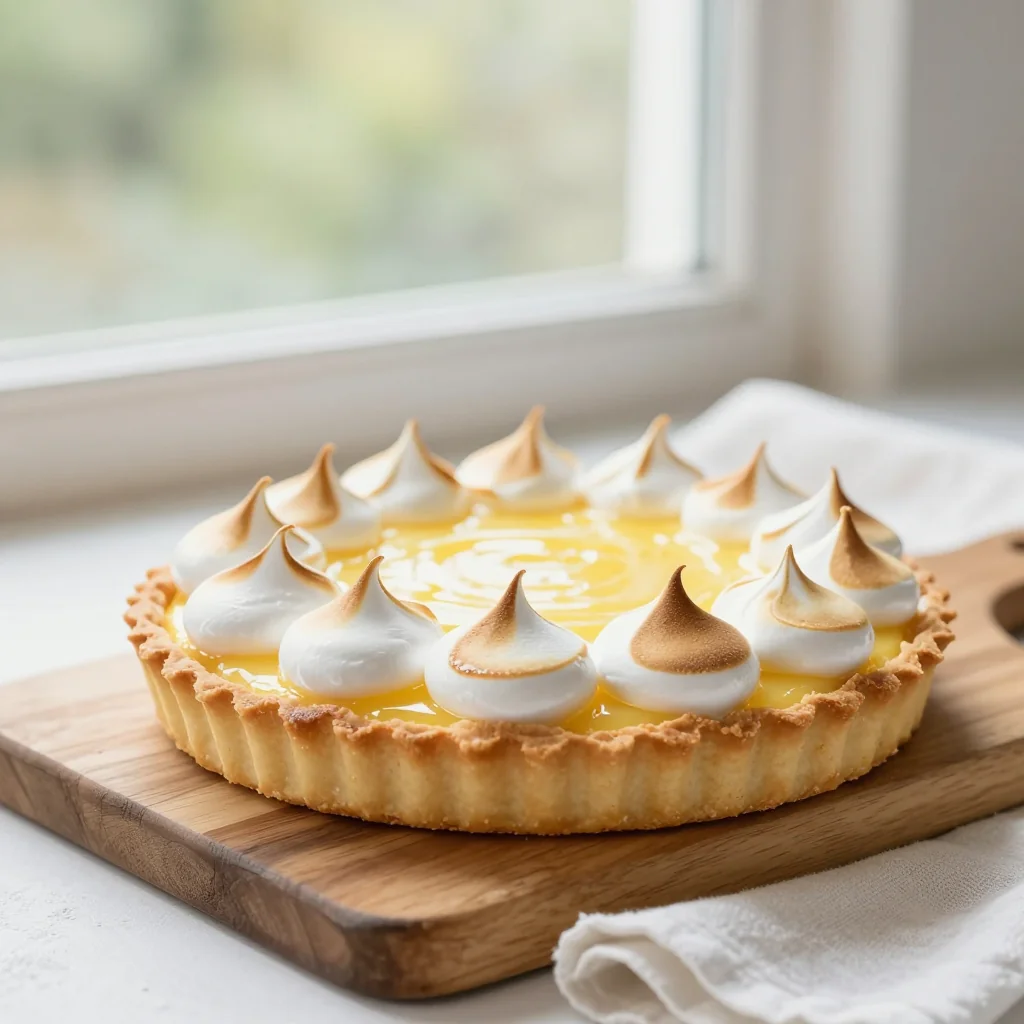
Lemon Meringur Tart with Shortbread Crust
A bright, buttery tart that balances tangy lemon curd with a cloud of sweet, glossy meringue.
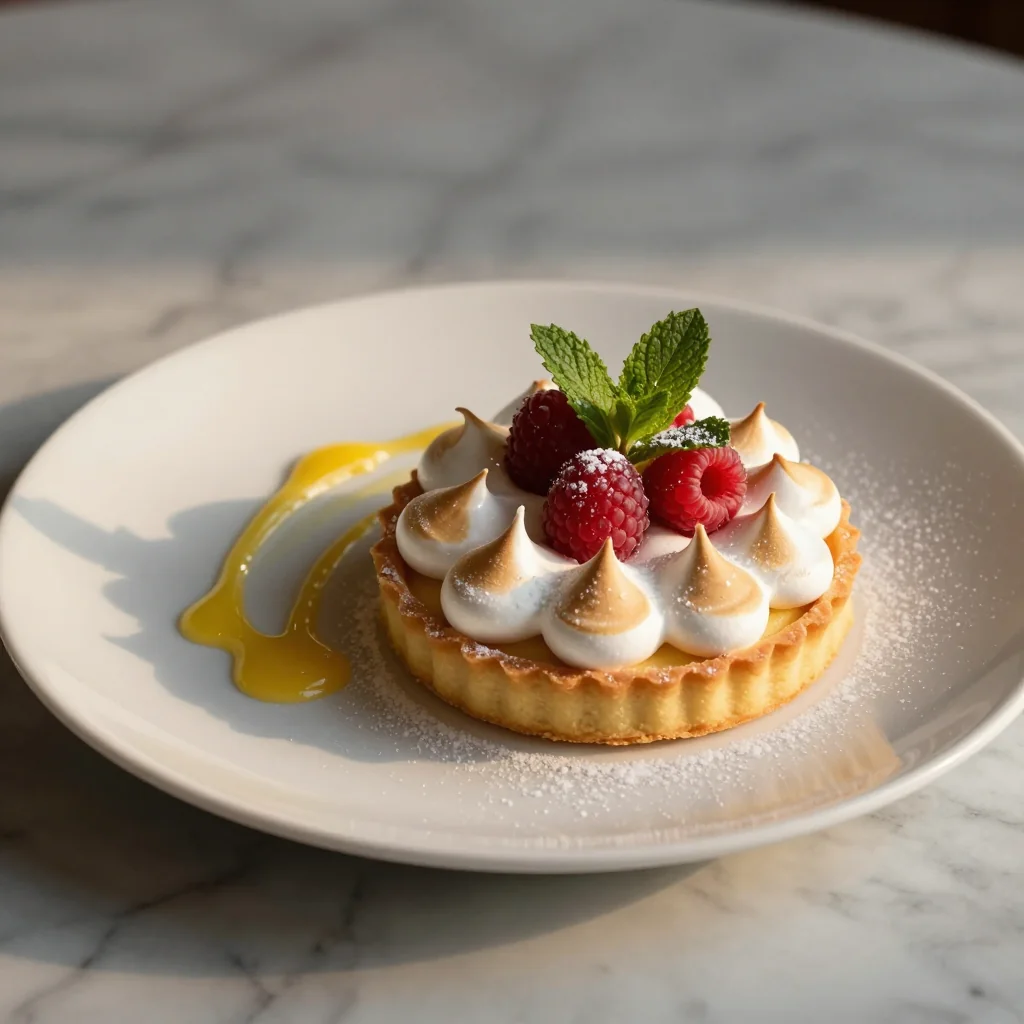
Personal Introduction
I still remember the first time I tasted a lemon meringue tart at a tiny seaside café in Provence. The moment the glossy meringue met my tongue, a burst of citrus sunshine mingled with the buttery crumble beneath, and I was instantly transported to a lazy summer afternoon, the scent of sea salt drifting through the air. That memory sparked an obsession; I began experimenting in my own kitchen, seeking the perfect balance between tartness and sweetness, crispness and cloud‑like softness.
The classic French lemon tart has long been a staple of patisserie, but the addition of a shortbread crust adds a luxurious, melt‑in‑your‑mouth texture that elevates the entire dessert. Historically, shortbread originated in Scotland, prized for its simple yet rich flavor; marrying it with a bright lemon curd is a cross‑cultural homage that feels both familiar and adventurous.
In this article, you’ll discover every nuance of the recipe: from the science of stabilizing meringue peaks to the art of blind‑baking a perfectly golden crust. I’ll walk you through each step, share troubleshooting tips, and reveal the subtle tricks that make my version consistently flawless.
I’m thrilled to share this beloved recipe with you. Grab your whisk, preheat the oven, and let’s create a tart that will become a centerpiece at any gathering.
🌟 Why This Recipe Will Captivate You
This tart isn’t just another dessert; it’s a symphony of textures and flavors that delights every sense.
- ✨ Perfect Balance of Sweet and Tart: The lemon curd delivers a bright, zesty punch while the meringue adds just enough sweetness to round it out without overwhelming the palate.
- ✨ Butter‑Rich Shortbread Crust: Unlike a flaky pastry, the shortbread base offers a dense, crumbly bite that holds the filling securely and adds a buttery depth.
- ✨ Show‑Stopping Presentation: The glossy, caramelized peaks of the meringue create an eye‑catching finish that looks as impressive as it tastes.
- ✨ Versatile Serving Options: Serve it warm with a dollop of whipped cream, or chilled with fresh berries for a refreshing summer treat.
- ✨ Beginner‑Friendly Yet Sophisticated: Though it looks complex, the step‑by‑step instructions keep the process manageable for home cooks of any skill level.
- ✨ Crowd‑Pleaser All Year Round: Its bright flavor profile works beautifully in any season, making it a reliable go‑to for brunches, holidays, or casual tea parties.
🥗 Ingredients
📝 Complete Ingredient List
For the Shortbread Crust:
- 200 g unsalted butter, cold, cubed
- 120 g granulated sugar
- 250 g all‑purpose flour
- ¼ tsp salt
For the Lemon Curd Filling:
- 4 large eggs
- 150 g granulated sugar
- 120 ml fresh lemon juice (≈3 lemons)
- 2 tsp lemon zest
- 60 g unsalted butter, cut into pieces
For the Meringue Topping:
- 4 large egg whites
- 200 g granulated sugar
- ½ tsp cream of tartar
- a pinch salt
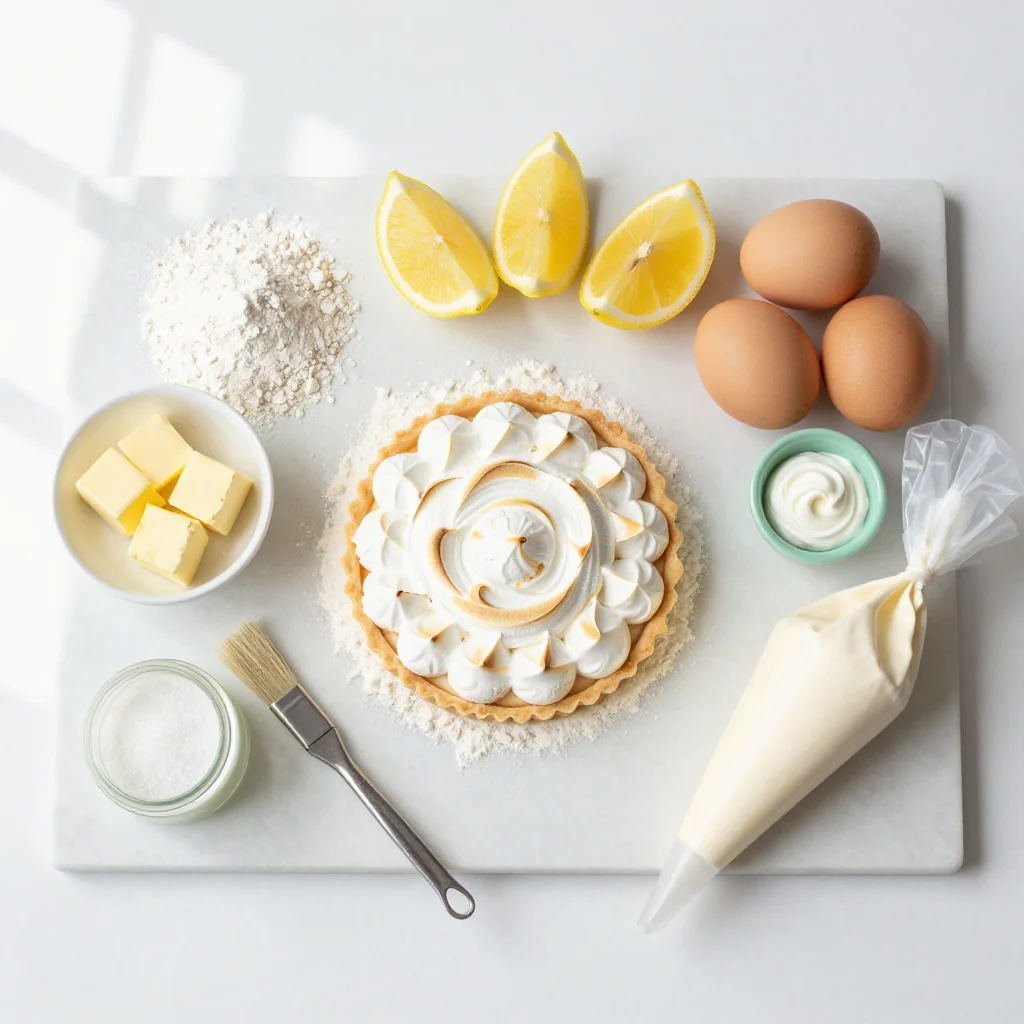
🔍 Focus on Key Ingredients
Unsalted Butter
Butter is the backbone of both the crust and the curd. Its fat content creates a tender crumb in the shortbread while also enriching the lemon curd, giving it a silky mouthfeel. Choose European‑style butter with at least 82% butterfat for a richer taste and better emulsification.
Lemons
Fresh lemons provide the bright acidity that cuts through the sweetness of the meringue. The zest contains essential oils that add aromatic depth, while the juice supplies citric acid that helps the curd set. If lemons are out of season, a mix of Meyer lemons and a splash of orange juice can maintain balance.
Egg Whites
Egg whites are the structural component of the meringue. Their proteins unfold and bond when whisked, trapping air to create volume. Adding cream of tartar stabilizes the foam, allowing the peaks to hold their shape during baking.
🔄 Quick Substitutions
| If you don’t have... | Use instead... |
|---|---|
| Unsalted butter | Salted butter (reduce added salt by ¼ tsp) |
| Fresh lemons | Store‑bought lemon juice + zest from a lemon peel |
| Cream of tartar | 1 tsp lemon juice or white vinegar |
👨🍳 Step‑by‑Step Instructions
Follow these detailed steps to create a flawless tart. Take your time, and remember that patience is key—especially when working with meringue.
📋 Phase 1: Preparation & Mise en Place
Gather and measure all ingredients before you start.
Prepare the Shortbread Crust
In a food processor, pulse the cold butter and sugar until the mixture resembles coarse crumbs. Add the flour and salt, pulse a few more times until the dough just comes together. If you prefer a hands‑on approach, use a pastry cutter to blend the butter into the dry ingredients until pea‑size pieces form.
Press the Crust into the Tart Pan
Lightly grease a 23‑cm (9‑inch) tart pan with removable bottom. Press the dough evenly into the bottom and up the sides, using the back of a spoon to smooth the surface. Prick the base all over with a fork to prevent bubbling.
🔥 Phase 2: Baking & Assembly
Create the lemon curd, blind‑bake the crust, then add meringue.
Blind‑Bake the Crust
Preheat the oven to 180 °C (350 °F). Line the crust with parchment paper and fill with baking beans or rice. Bake for 12‑15 minutes, then remove the beans and paper and bake an additional 5‑7 minutes until lightly golden.
Make the Lemon Curd
In a saucepan, whisk together the eggs, sugar, lemon juice, and zest. Cook over medium‑low heat, stirring constantly, until the mixture thickens and coats the back of a spoon (about 8‑10 minutes). Remove from heat and whisk in the butter pieces until smooth. Strain through a fine mesh to remove any curdled bits, then let cool slightly.
Spread the Curd Over the Crust
Pour the warm lemon curd into the blind‑baked crust, smoothing the surface with a spatula. Set aside while you prepare the meringue.
✨ Phase 3: Finishing & Presentation
Whip the meringue, bake, and serve.
Whip the Meringue
In a clean, dry bowl, begin whisking egg whites on medium speed. When frothy, add cream of tartar and a pinch of salt. Increase speed to high, adding sugar gradually (about 1 tbsp at a time). Continue until stiff, glossy peaks form and the mixture is glossy white.
Top the Tart with Meringue
Spoon or pipe the meringue over the lemon curd, creating swirls or peaks as desired. Ensure the meringue touches the crust all around to seal in the filling and prevent shrinkage.
Bake the Meringue
Reduce oven temperature to 160 °C (320 °F). Bake the tart for 12‑15 minutes, or until the meringue is lightly golden on top. Keep an eye on it; meringue can go from perfect to burnt quickly.
Cool and Serve
Allow the tart to cool completely on a wire rack; this lets the curd set fully. Once cooled, refrigerate for at least 1 hour before slicing. Serve at room temperature for the best texture.
💡 Expert Tips & Tricks
🛒 Choosing the Right Ingredients
Opt for organic, unwaxed lemons; the zest contains essential oils that are volatile and can be lost in non‑organic fruits. When buying butter, look for a label that indicates “cultured” or “European” – the higher butterfat content yields a richer crust. Fresh, free‑range eggs produce more stable whites, making it easier to achieve glossy peaks.
🔪 Preparation Techniques
Keep all butter components cold until they meet the flour; this prevents premature melting and ensures a crumbly texture. When whisking the lemon curd, use a silicone spatula to scrape the sides constantly, avoiding lumps. For the meringue, ensure the bowl is completely free of grease; even a tiny film can inhibit foam formation.
🌡️ Mastering the Cooking Process
Blind‑baking the crust creates a barrier that prevents the lemon curd from soaking into the pastry. Use a kitchen scale for precise measurements; a 1‑gram variance in butter can affect crust texture. When baking the meringue, a lower temperature allows the interior to set without over‑browning the exterior.
🍽️ Presentation & Service
For a polished look, use a pastry brush to lightly brush the meringue peaks with a thin layer of melted butter before the final bake; this adds a subtle sheen. Garnish with candied lemon zest or a dusting of powdered sugar just before serving. Slice with a hot, wet knife to achieve clean cuts without tearing the meringue.
🏆 Pro Tips
Professional pastry chefs rely on subtle science to achieve perfect results every time.
- 🎯 Temperature Control of Butter: Chill the dough for at least 30 minutes before blind‑baking. Cold butter solidifies quickly in the oven, creating steam pockets that produce a tender crumb.
- 🎯 Acid‑Base Balance in Curd: The citric acid from lemons reacts with the proteins in eggs, thickening the curd. Adding a small amount of butter at the end emulsifies the mixture, preventing a grainy texture.
- 🎯 Sugar Crystallization in Meringue: Adding sugar slowly while the whites are already foaming allows each grain to dissolve completely, resulting in a smooth, glossy finish rather than a grainy one.
- 🎯 Preventing Shrinkage: Ensure the meringue completely seals the edge of the crust. Any gap lets steam escape, causing the meringue to contract as it cools.
- 🎯 Baking Time Precision: Use an infrared thermometer to check the crust’s internal temperature; it should read around 95 °C (203 °F) before adding the filling.
- 🎯 Storage Longevity: The tart can be stored refrigerated for up to 3 days. To re‑crisp the crust, briefly warm the tart at 150 °C (300 °F) for 5 minutes before serving.
"A great tart is a marriage of technique and love; the simplest ingredients become extraordinary when treated with respect." — Chef Pierre Gagnaire
🔄 Variations & Adaptations
This recipe is a flexible canvas. Below are ideas to tailor it to dietary needs, flavor cravings, or seasonal twists.
🥬 Vegetarian / Vegan Version
Replace the butter in the crust with a 1:1 ratio of coconut oil or a vegan butter substitute. For the curd, use a blend of silken tofu, lemon juice, and a touch of agar‑agar to set. The meringue can be made with aquafaba (the liquid from canned chickpeas) plus cream of tartar.
- Vegan butter substitutes provide similar fat content while keeping the crust flaky.
- Aquafaba whips up into a stable foam; use 3 tbsp aquafaba per egg white.
🌶️ Flavor Variations
Experiment with complementary flavors to keep the tart exciting.
Spicy Version:
Add ½ tsp finely ground ginger and a pinch of cayenne to the lemon curd for a subtle heat that pairs beautifully with the citrus.
Mediterranean Version:
Mix a tablespoon of finely chopped fresh rosemary into the shortbread dough and drizzle a light honey glaze over the meringue after baking.
Asian Inspired Version:
Incorporate a splash of yuzu juice alongside the lemon, and garnish with toasted sesame seeds on the meringue peaks.
⚠️ Dietary Adaptations
Gluten‑Free:
Substitute all‑purpose flour with a 1:1 gluten‑free flour blend that contains xanthan gum. The crust will remain tender and crumbly.
Lactose‑Free:
Use lactose‑free butter or a blend of dairy‑free margarine. Ensure the margarine is solid at fridge temperature for proper crust formation.
Low‑Calorie:
Reduce sugar in the curd by 30 % and replace half of the butter in the crust with unsweetened applesauce. The tart will be lighter but still satisfyingly rich.
👶 Family / Kids Version
Kids love the sweet meringue. To make it more kid‑friendly, add a thin layer of raspberry jam under the meringue, and sprinkle colorful sprinkles on top after baking. Reduce the lemon intensity by using a blend of lemon and orange juice.
📦 Storage & Reheating
🧊 Conservation
Refrigerator:
- Duration: 3 days
- Container: Airtight glass or ceramic tart dish
- Tip: Cover loosely with parchment to prevent meringue from drying out.
Freezer:
- Duration: 2 months
- Method: Freeze the baked crust and curd separately, then add fresh meringue when ready to serve.
- Defrosting: Transfer to refrigerator overnight, then reheat gently.
💡 For best texture, re‑bake the crust briefly before adding fresh curd and meringue after thawing.
♨️ Reheating
🔥 Oven (Recommended):
- Preheat to 150 °C (300 °F).
- Cover the tart loosely with aluminum foil to protect the meringue.
- Heat for 10‑12 minutes, then remove foil and bake an additional 3‑4 minutes to restore a light golden top.
⚡ Microwave (Quick):
- Place a slice on a microwave‑safe plate.
- Cover with a microwave‑safe lid.
- Heat on medium power for 30‑45 seconds, checking for even warmth.
🍳 Stovetop:
Use a non‑stick skillet over low heat, placing the tart slice cut‑side down for 1‑2 minutes to warm the crust while keeping the meringue intact.
🍷 Perfect Pairings
🥗 Accompaniments
- Fresh Mixed Berries: Their natural tartness echoes the lemon while adding a burst of color.
- Light Arugula Salad with Lemon Vinaigrette: A peppery contrast that cleanses the palate.
- Vanilla‑Infused Whipped Cream: Adds a silky, mellow counterpoint to the bright tart.
🍷 Wine & Beverage Pairings
- Sauvignon Blanc: Its crisp acidity mirrors the lemon, enhancing freshness.
- Prosecco: The light bubbles lift the richness of the butter crust.
- Non‑Alcoholic Option: Sparkling lemonade with a sprig of mint.
🍰 Completing the Meal
Begin with a simple goat cheese and honey crostini, follow with the lemon meringue tart as the centerpiece, and finish with a palate‑cleansing sorbet—perhaps a raspberry or lime flavor—to keep the experience light and refreshing.
❓ Frequently Asked Questions
Q: Can I make the crust ahead of time?
Absolutely. Prepare and blind‑bake the shortbread crust up to 24 hours in advance. Store it in an airtight container at room temperature. When ready, simply add the lemon curd and meringue and finish baking.
Q: How do I know when the lemon curd is thick enough?
The curd is ready when it coats the back of a spoon and forms a smooth ribbon as you draw the spoon through it. A quick test is to drop a small amount onto a chilled plate; it should set within a minute.
Q: My meringue collapsed after baking—what went wrong?
Collapsing can be caused by under‑whipping the egg whites, a sudden temperature change, or not sealing the meringue to the crust. Ensure you whip to stiff peaks, bake at a low temperature, and spread the meringue so it touches the crust all around.
Q: Can I substitute lime for lemon?
Yes, lime juice works well and adds a slightly different aromatic profile. Use the same amount of juice and zest, but be aware that lime is more bitter; you may want to increase the sugar in the curd by 10 % to balance.
Q: How do I store leftovers without the meringue getting soggy?
Keep the tart refrigerated uncovered for the first few hours to let the meringue dry slightly, then cover loosely with parchment. For longer storage, separate the meringue from the curd and store each component individually.
Q: Is it safe to use raw egg whites for the meringue?
Traditional meringue uses raw egg whites, but if you’re concerned about salmonella, use pasteurized egg whites available in most grocery stores. They behave the same way in the recipe.
🎉 To Your Oven!
This Lemon Meringue Tart with Shortbread Crust combines the bright zing of citrus, the buttery depth of a shortbread base, and the airy elegance of a perfectly browned meringue. It’s a dessert that feels both classic and contemporary, suitable for brunches, celebrations, or a quiet afternoon treat. By following the detailed steps and embracing the tips shared, you’ll create a tart that impresses both the eyes and the palate.
I encourage you to experiment with the variations, share your results, and let the community know how you made it your own. Your feedback helps refine the recipe and inspires others to try it.
Have you tried this recipe?
Leave a comment and rating below! Share your photos on Instagram with #LemonMeringueMagic to be featured.
Lemon Meringue Tart with Shortbread Crust
A buttery shortbread base topped with tangy lemon curd and airy meringue.
📝 Ingredients
Shortbread Crust
Lemon Curd
Meringue
👨🍳 Instructions
- 1
Blend butter, sugar, flour, and salt to form a shortbread dough.
- 2
Press dough into a 23 cm tart pan, chill for 15 min.
- 3
Blind‑bake crust at 180 °C for 15 min.
- 4
Cook lemon curd on the stove until thick, then cool slightly.
- 5
Spread curd over the baked crust.
- 6
Whisk egg whites with cream of tartar, add sugar gradually to stiff peaks.
- 7
Pipe or spread meringue over curd, ensuring it reaches the crust edge.
- 8
Bake at 160 °C until meringue is lightly golden, about 12‑15 min.
- 9
Cool completely, then refrigerate for at least 1 hour.
- 10
Slice, serve, and enjoy!
🥗 Nutrition (per serving)
*Nutritional values are estimates.
📚 You Might Also Like
Raspberry Almond Tart
Silky Chocolate Mousse
Blueberry Cheesecake
Pistachio Frangipane Tart
💬 Comments & Reviews
[Comments will appear here]




Leave a Comment