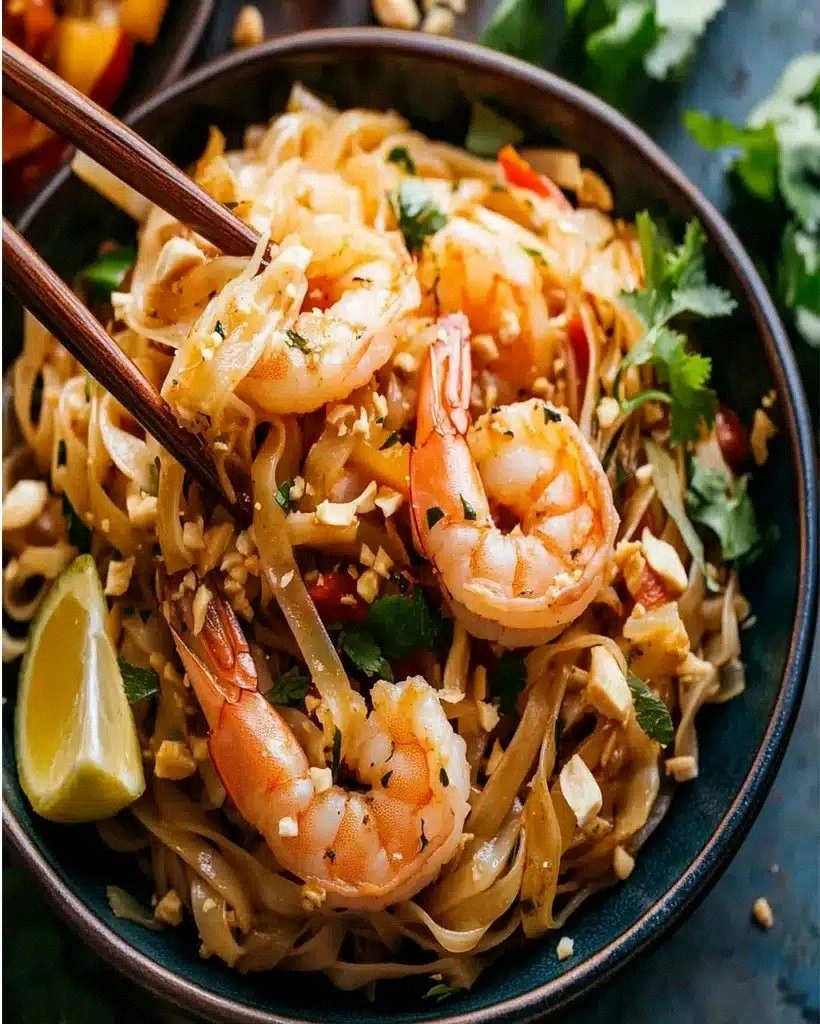
Last Tuesday, the rain was coming down in sheets, my fridge was practically empty except for a half-forgotten bag of shrimp and a sad-looking lime, and I was ready to dial the local Thai place for what would have been the third time that week. Then my competitive streak kicked in: if the delivery guy knew my dog’s name, maybe it was time to reclaim dinner. I melted a knob of butter, tossed in an obscene amount of garlic, and in the time it took the rice noodles to soak, my kitchen smelled like Bangkok after dark—smoky, nutty, buttery, with that electric pop of citrus. The first bite was a curveball: silky noodles wearing a glossy coat of garlic-butter, shrimp that snapped like fresh pasta, peanuts doing a crunchy drumroll, and tamarind singing backup vocals. I stood at the stove, fork in one hand, phone in the other, and deleted the take-out app mid-chew. If you’ve ever thought homemade pad thai can’t rival the cart-on-the-corner version, I dare you to taste this and not go back for seconds—spoiler: impossible.
What puts this recipe in a league of its own is the double-whammy of butter and garlic—two ingredients you rarely see in traditional pad thai, but once they hit that hot wok, they create a nutty, toasty aroma that makes the tamarind taste fruitier, the sugar more caramel, the chili more bright. Picture yourself pulling this out of the pan, the whole kitchen smelling like a garlic-butter cloud with a citrus rim; noodles glistening like they’ve been personally kissed by the sauce gods; shrimp blushing pink and curling like they’re posing for a magazine cover. Most recipes get this completely wrong by drowning everything in a one-note sweet sauce. Here, we build layers: first the garlic butter, then the tangy tamarind, then a whisper of fish sauce for depth, and finally a snowstorm of peanuts and fresh herbs. Stay with me here—this is worth it.
I’ll be honest: I ate half the batch before anyone else got to try it, standing over the sink, rain still tapping the window, noodles sliding around the bowl like they were auditioning for a shampoo commercial. My only regret? Not doubling the recipe. By the time my roommate wandered in, lured by the garlic-butter siren call, there were exactly three shrimp left and a noodle tangle that required chopstick surgery. If you’ve ever struggled with soggy noodles or shrimp that taste like rubber bands, you’re not alone—and I’ve got the fix. Let me walk you through every single step; by the end, you’ll wonder how you ever made it any other way.
What Makes This Version Stand Out
- Garlic-Butter Bomb: Traditional pad thai uses neutral oil; we swap in butter for a nutty richness that hugs every noodle and plays off the tamarind like a jazz duet.
- One-Wok Wonder: No separate pot for sauce, no mystery steps—everything builds in the same vessel, meaning fewer dishes and more flavor sticking to the noodles.
- Shrimp That Snap: A lightning-quick sear in garlicky butter keeps them plump, then they’re pulled out early so they don’t overcook in the steamy noodle party.
- Restaurant-Level Chew: We soak, not boil, the rice noodles; they finish cooking in the sauce, slurping up flavor like thirsty little straws.
- Balanced Sweet-Sour Ratio: Most home versions taste like candy; ours has a 60/40 sour-to-sweet split that makes your tongue tingle, not ache.
- Crunch That Lasts: Peanuts go in twice—some crushed into the sauce for body, some sprinkled at the end so you still get that shatter when you bite.
- Make-Ahead Friendly: Sauce can be pre-mixed, noodles pre-soaked, shrimp pre-peeled; dinner hits the table in under 12 minutes on a Tuesday night.
Alright, let’s break down exactly what goes into this masterpiece, starting with the unsung heroes hiding in your pantry.
Inside the Ingredient List
The Flavor Base
Butter is the velvet curtain on which every other flavor performs. Use unsalted so you can control the seasoning; European-style with higher fat makes the sauce silkier, but everyday sticks work fine. Garlic goes in two stages—minced for sweetness and thinly sliced for texture—so you get both mellow background notes and sharp little bursts. Tamarind concentrate is the tangy soul of pad thai; if you can only find the block, soak a golf-ball-sized chunk in hot water, mash, and strain. Palm sugar brings caramel depth, but dark brown sugar is a respectable understudy. Fish sauce is the umami bomb; if the smell makes you hesitate, remember that anchovies turn Caesar dressing into magic—same principle here.
The Texture Crew
Medium-width rice noodles are the Goldilocks choice: wide enough to grab sauce, slim enough to twirl around chopsticks. Soak them in room-temperature water for 30 minutes; hot water makes them mushy later. Shrimp should be peeled, deveined, and patted aggressively dry—surface moisture is the enemy of that gorgeous sear. Eggs provide pockets of custardy richness; beat them lightly so the whites and yolks ripple separately through the noodles. Bean sprouts add two textures: the crunchy stem and the silky tail. Save some for garnish because hot sprouts wilt fast and you want that just-picked snap.
The Unexpected Star
A teaspoon of Thai sweet soy sauce—thick, almost black, and syrupy—adds a molasses note nobody can identify but everybody raves about. Can’t find it? Substitute with a 50/50 mix of dark soy and honey, but know you’re missing a subtle smoky note. Lime zest goes into the sauce itself; the juice is saved for the final squeeze so you get both the fragrant oils and the bright acid. Chili flakes are optional, but if you’re feeding heat-seekers, toast them in the butter for fifteen seconds and watch the color bloom like a sunset.
The Final Flourish
Roasted peanuts, roughly chopped so you get pea-sized pieces and dust—both cling differently to the noodles. Fresh cilantro stems hold up to heat better than leaves, so stir them in early and save the leaves for confetti at the end. Green onion tops sliced on the bias release oniony perfume without the raw bite. A final kiss of butter—just a teaspoon—glosses the noodles like lip gloss on a movie star.
Everything’s prepped? Good. Let’s get into the real action, starting with the sizzle that makes your neighbors jealous.
The Method — Step by Step
- Place rice noodles in a large bowl and cover with cool tap water. Swirl them like you’re washing silk; you want every strand submerged. Set a timer for 30 minutes—this is the perfect window to prep everything else without over-soaking. When they’re bendy but still slightly firm in the center, drain and leave them in the colander; they’ll finish cooking in the sauce later, soaking up flavor like hungry little sponges.
- Whisk tamarind concentrate, fish sauce, palm sugar, sweet soy, and two tablespoons of warm water in a small jar. Screw the lid on tight and shake like you’re mixing a cocktail; the sugar dissolves faster and you get to feel like a bartender. Taste it—yes, it should punch you in the face with sour, sweet, and salty all at once. Set the sauce near the stove; you’ll need it within arm’s reach once the wok gets roaring.
- Pat shrimp dry with the dedication of a dog shaking off pool water. Season with a pinch of salt and a few cracks of white pepper—black works, but white keeps the seafood aesthetic clean. Heat one tablespoon of butter in a wok over medium-high until it foams and just starts to brown; that nutty aroma is your cue. Add shrimp in a single layer, leave them alone for 90 seconds—no poking, no stirring—then flip when the edges turn coral and the centers are still slightly gray. They’ll finish cooking later, so err on the side of underdone. Scrape them onto a plate, scraping all the garlicky butter with them.
- Lower heat to medium, add another tablespoon of butter, and toss in sliced garlic. Stir constantly for 30 seconds; you want it translucent, not tan. If the wok looks dry, threaten it with a teaspoon of oil, not more butter—too much dairy can scorch. The goal is garlic-infused fat that perfumes the entire dish.
- Crack eggs into a small bowl, add a pinch of salt, and beat with chopsticks until the yolks and whites streak together like marbled paper. Push the garlic to the rim, pour eggs into the center, and let them set for 10 seconds. Then scramble gently, keeping some pieces chunky for texture. Think scrambled eggs at a dim sum joint—curds, not confetti.
- Turn heat to high and add drained noodles. Pour the sauce around the edges so it hits hot metal first and caramelizes slightly. Toss everything with two spatulas or a confident flick of the wrist; noodles should slide, not stick. If they clump, splash in two tablespoons of water—it steams them apart and keeps the sauce silky.
- Add half the peanuts and all the bean sprouts. Keep tossing for 60 seconds; sprouts will wilt just enough to sweeten, peanuts will start to release their oils and thicken the sauce. The noodles should look glossy, not soupy. If the sauce pools at the bottom, crank the heat higher so it reduces and clings.
- Return shrimp plus any resting juices. Add lime zest and a final teaspoon of cold butter. Toss just until shrimp are heated through and butter melts into a mirror-like sheen. Taste a noodle—it should be chewy, saucy, and bright. Adjust with more fish sauce for salt, sugar for sweetness, or lime for tang; your tongue is the final editor.
- Plate immediately onto warm dishes—cold plates steal heat fast. Shower with remaining peanuts, cilantro leaves, and green onion. Serve with lime wedges so everyone can control their own acid level. The first bite should make you close your eyes involuntarily; if that doesn’t happen, adjust next time.
That’s it—you did it. But hold on, I’ve got a few more tricks that’ll take this to another level, starting with the temperature rule nobody follows.
Insider Tricks for Flawless Results
The Temperature Rule Nobody Follows
Shrimp go into medium-high heat, noodles need volcanic heat, and eggs want gentle heat. Treat your wok like a DJ mixing tracks: lower the volume when eggs hit, pump it back up for noodles. Ignoring this leads to rubbery shrimp and scrambled egg confetti glued to chewy noodles. A friend tried skipping this step once—let’s just say it didn’t end well, and her dog still won’t look at leftover pad thai.
Why Your Nose Knows Best
When garlic hits butter, count slowly to ten; if you smell sharp, acrid notes, you’ve crossed into burnt territory and need to start fresh. Good garlic butter smells like you’re swimming in a warm savory cloud with a rosemary-like undertone. Trust your olfactory instincts more than the timer; stoves, pans, and even room temperature vary, but your nose is calibrated to delicious.
The Five-Minute Rest That Changes Everything
After plating, let the dish sit for five minutes. Noodles continue to absorb sauce and the flavors marry like old friends catching up. Cover loosely with foil so steam softens the bean sprouts just enough to remove their raw edge. This pause also drops the temperature to that sweet spot where you can taste nuance instead of just heat.
Shrimp Size = Sauce Ratio
Using petite salad shrimp? Reduce sauce by 20 percent or they’ll drown. Jumbo U-10s? Up the sauce by 10 percent and give them an extra 15 seconds per side. Surface area matters; more shrimp wrinkles mean more nooks for sauce to cling, so adjust accordingly.
Creative Twists and Variations
This recipe is a playground. Here are some of my favorite ways to switch things up:
Spicy Coconut Surf edition
Swap 2 tablespoons of the sauce with thick coconut milk and add ½ teaspoon of Thai chili paste. The result is creamy, fiery, and tastes like you’re beachside in Phuket. Finish with Thai basil instead of cilantro for an anise note that makes the coconut pop.
Chicken-Peanut Party
Replace shrimp with thin strips of chicken thigh marinated in fish sauce and white pepper. Because chicken needs longer cooking, sear it first until golden, set aside, then carry on as written. The fat rendered from thigh meat mingles with garlic butter and creates a richer, almost satay-like vibe.
Tofu Crunch Cruiser
Use extra-firm tofu pressed under a cast-iron skillet for 20 minutes, then cube and pan-fry until the edges shatter like thin ice. They soak up sauce like edible sponges and give vegetarians a seat at the pad thai table. Add a spoon of miso to the sauce for extra umami lost from skipping seafood.
Lime-Pepper Shrimp Lite
Cut palm sugar in half and finish with a snowfall of lime zest and cracked pink peppercorns. It’s bright, zingy, and perfect for hot summer evenings when heavy sweetness feels like a weighted blanket. Serve inside lettuce cups for a no-noodle, low-carb twist.
Breakfast Pad Thai
Add a runny sunny-side-up egg on top instead of scrambled within. When you pierce the yolk, it cascades into buttery noodles like liquid gold. Add a side of Sriracha for a morning kick that beats any breakfast taco.
Smoky Bacon Escape
Render two strips of bacon until crisp, use the fat plus butter for the garlic base. Crumble bacon over the finish for a porky crunch that plays surprisingly well with tamarind. If you’ve ever struggled with wanting breakfast-for-dinner but craving Thai, this fusion will end the debate.
Storing and Bringing It Back to Life
Fridge Storage
Cool noodles completely, then pack into airtight glass containers; plastic traps odors and you’ll get eau de fridge. They’ll keep 3 days, though shrimp quality peaks at 48 hours. Line the top with a paper towel to absorb condensation so peanuts stay crunchy.
Freezer Friendly
Freeze sauce-coated noodles (minus shrimp and sprouts) in zip-top bags pressed flat; they thaw in 15 minutes under warm tap water. Add freshly seared shrimp and fresh sprouts after reheating for just-as-good results. Frozen pad thai keeps 2 months—any longer and tamarind starts to taste like flat cola.
Best Reheating Method
Steam in a covered skillet with two tablespoons of water over medium heat for 4 minutes, tossing once. Microwaves turn noodles gummy; steaming revives chewiness. Add a tiny splash of water before reheating—it steams back to perfection. Finish with a pat of cold butter and a squeeze of lime to wake everything up.