
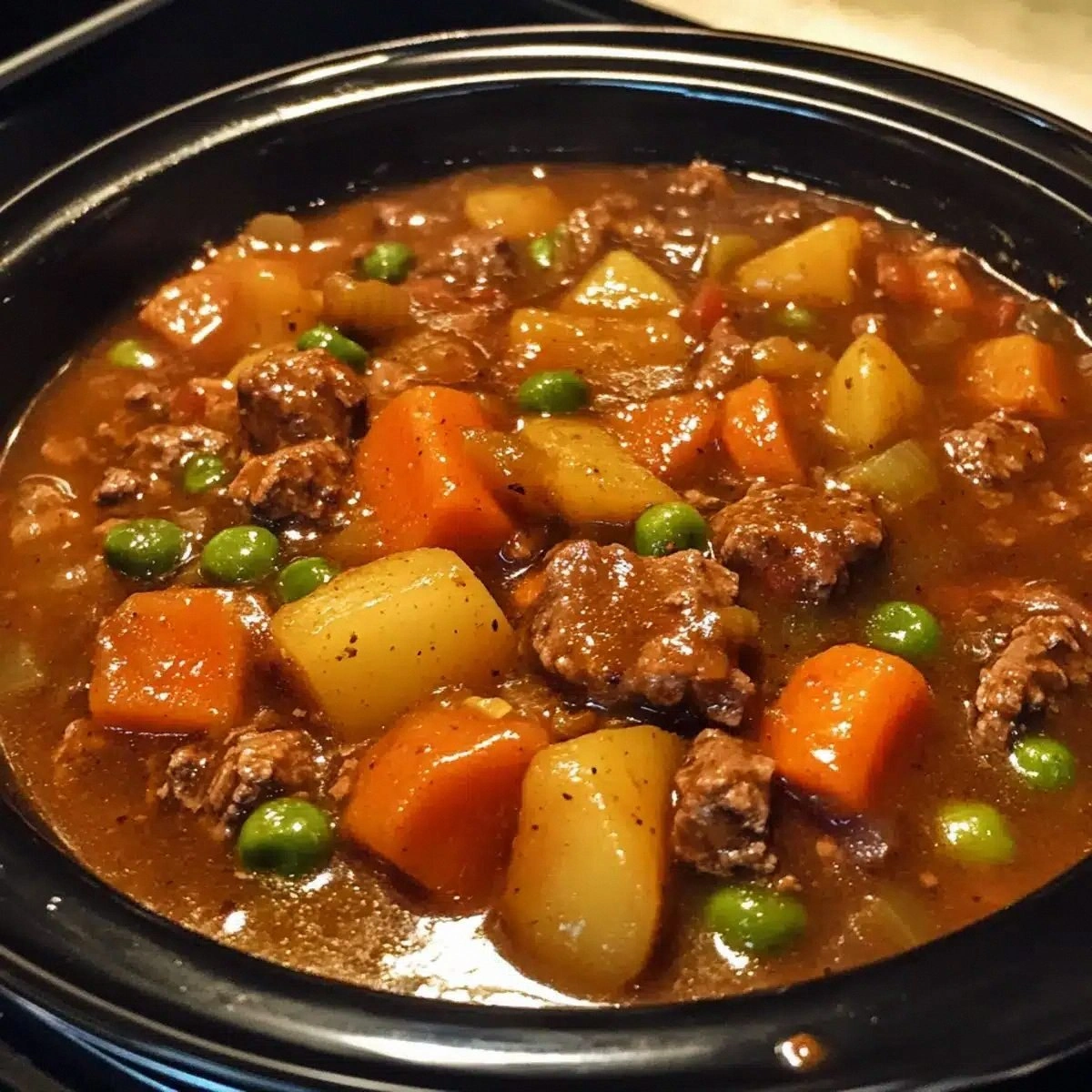
I remember the night I first discovered this stew as a culinary lifeline. I’d been staring at a pile of over‑ripe carrots, a stubborn piece of chuck, and a jar of tomato paste while my roommate’s pizza delivery was still on the way. “Just throw everything in the slow cooker and hope for the best,” I muttered, and the kitchen was suddenly filled with the scent of simmering beef, earthy potatoes, and caramelized onions. The moment the timer buzzed, the aroma wafted through the apartment like a promise of comfort, and I realized I’d stumbled on a recipe that would outshine every other stew I’d ever made.
Picture the scene: a bubbling pot on low heat, the rich broth thickening into a velvety sauce that clings to each morsel of meat and vegetable. The sound of gentle steam hissing is music to my ears, while the sight of golden carrots and tender potatoes glistening in the liquid feels like a small, edible sunrise. Every bite carries the subtle smokiness of browned onions, the sweet bite of carrots, and the herbal whisper of thyme and bay leaves. It’s not just a dish; it’s a sensory symphony that makes you forget you’re even cooking.
What makes this version stand out? I dare you to taste this and not go back for seconds. The secret isn’t just the ingredients; it’s the method, the patience, and the love you pour into it. The slow cooker turns a rough cut of chuck into melt‑in‑your‑mouth tenderness, while the tomato paste thickens the broth into a luxurious gravy without any extra flour or cornstarch. The result is a stew that feels like a hug from a friend—warm, comforting, and utterly irresistible.
I’ve tested countless variations, and none have matched this one. The balance of flavors is precise: the beef’s savory depth, the carrots’ natural sweetness, the potatoes’ creamy heart, and the herbs’ aromatic lift. The sauce coats the ingredients like velvet, giving each bite a silky texture that lingers. If you’ve ever struggled with a bland stew, you’re not alone—and I’ve got the fix. Stay with me here—this is worth it.
What Makes This Version Stand Out
- Tenderness: The slow‑cooking process breaks down connective tissue, turning tough chuck into melt‑in‑your‑mouth pieces that practically fall apart when you stir.
- Depth: The combination of tomato paste, bay leaves, and thyme creates a complex flavor profile that feels both hearty and sophisticated.
- Texture: Each vegetable maintains its identity—carrots stay firm enough to bite, potatoes stay fluffy, and celery adds a subtle crunch.
- Convenience: Once the ingredients are in the pot, there’s nothing else to do—just set it, forget it, and come home to a ready‑to‑eat meal.
- Versatility: It’s a perfect base for a variety of twists—add a splash of red wine, a pinch of paprika, or a handful of spinach for a fresh finish.
- Make‑ahead potential: This stew freezes beautifully, so you can batch cook and have a comforting meal ready in minutes.
Inside the Ingredient List
The Flavor Base
The foundation of this stew is the beef broth and tomato paste. The broth provides the liquid backbone, while the tomato paste adds richness and a subtle sweetness that balances the savory beef. Together they create a sauce that coats each ingredient like a silky blanket. If you skip the broth, the stew becomes dry and clumpy, ruining the comforting texture.
Choosing a high‑quality, low‑sodium broth can elevate the dish. A homemade broth will add depth, but store‑bought options with no added MSG work just fine. The tomato paste should be browned slightly before adding to the pot—this caramelization intensifies the flavor and gives the stew a deeper color.
The Texture Crew
Carrots, potatoes, celery, and onions are the bulk of the stew’s texture. Carrots keep a slight bite, potatoes become creamy, celery adds a subtle crunch, and onions provide a sweet, aromatic base. Each vegetable is cut into uniform cubes to ensure even cooking and a harmonious mouthfeel. If you cut them too small, they’ll disintegrate into the broth; too large, and they’ll remain under‑cooked.
When you add the vegetables, aim for a 3:2:1 ratio of beef to veggies to broth. This ensures the broth is thick enough to coat without being watery. A good rule of thumb: for every pound of beef, use about 4 cups of broth and 3 cups of mixed vegetables.
The Unexpected Star
Bay leaves and thyme might seem like small contributors, but they’re the secret architects of flavor. Bay leaves release a subtle, herbal aroma that lingers in the broth, while thyme offers a gentle earthiness that grounds the dish. Removing these herbs early can leave the stew feeling flat and unbalanced.
If you’re short on thyme, dried thyme works just as well. A pinch of oregano can substitute for bay leaves, though the flavor will shift slightly toward Mediterranean. Remember, herbs are cumulative—each pinch adds a layer of complexity.
The Final Flourish
Salt and pepper finish the stew, balancing the rich flavors and enhancing each ingredient’s natural taste. Salt brings out the umami in the beef and caramelizes the vegetables slightly, while pepper adds a gentle heat that awakens the palate. Be mindful not to over‑salt; taste as you go to avoid a flat finish.
If you prefer a low‑sodium version, use a broth with reduced salt and add a splash of soy sauce or Worcestershire sauce for depth. Pepper can be replaced with smoked paprika for a smoky undertone, or with a pinch of cayenne for a spicy kick.
Everything’s prepped? Good. Let’s get into the real action.
The Method — Step by Step
- Prep the Beef: Pat the chuck dry with paper towels, then season generously with salt and pepper. Sear the cubes in a hot skillet with a splash of oil for 2 minutes on each side until a golden crust forms. This step locks in flavor and gives the stew a richer taste. Don’t rush— a good sear is worth the extra time.
- Brown the Onion and Garlic: In the same skillet, add the diced onion and minced garlic, sautéing until translucent and fragrant. The garlic should release a sweet aroma, indicating it’s ready. This creates a flavorful base that the broth will soak up.
- Deglaze: Pour a splash of beef broth into the skillet, scraping up any browned bits. These bits are packed with flavor and will enrich the stew. Let it reduce slightly for 1 minute.
- Layer the Slow Cooker: Place the seared beef at the bottom of the slow cooker. Add the onion‑garlic mix, then layer the carrots, potatoes, celery, and diced onion on top. This arrangement ensures even cooking and prevents the vegetables from sticking to the pot.
- Add the Broth and Tomato Paste: Pour the remaining broth over the ingredients. Stir in the tomato paste, bay leaves, and thyme. The sauce should look glossy and slightly thickened—this is the perfect consistency for a hearty stew.
- Cook: Cover and set the slow cooker to low for 8 hours, or high for 4 hours. The low setting allows the beef to become fall‑apart tender while the vegetables soften without turning mushy. The long, gentle heat creates a depth of flavor that’s hard to replicate.
- Check the Texture: After 7 hours, taste a piece of beef. It should be fork‑tender, and the broth should have thickened to a stew‑like consistency. If you prefer a thicker sauce, remove the lid and let it simmer on the stove for 10 minutes.
- Finish with Freshness: Stir in a handful of fresh spinach or chopped parsley just before serving. The greens wilt quickly, adding a burst of color and a subtle peppery note that brightens the dish.
- Serve: Ladle the stew into bowls, garnish with extra thyme or a drizzle of olive oil if desired. Pair it with crusty bread, rice, or a side of buttered noodles for a complete meal.
That’s it—you did it. But hold on, I’ve got a few more tricks that will elevate this stew from comforting to unforgettable.
Insider Tricks for Flawless Results
The Temperature Rule Nobody Follows
Many cooks set their slow cooker to high, thinking it speeds up the process. The truth is, low and slow preserves the beef’s tenderness and allows the flavors to meld. If you’re in a hurry, a 4‑hour high setting works, but the texture will be slightly firmer. Keep an eye on the pot and adjust the heat if your machine runs hotter than usual.
Why Your Nose Knows Best
Before you taste the stew, give it a quick sniff. The aroma should be rich, slightly sweet, and herbaceous. If it smells flat, add a splash of vinegar or a pinch of sugar to brighten the profile. Your nose is your best flavor detector—trust it.
The 5‑Minute Rest That Changes Everything
After cooking, let the stew rest for 5 minutes before serving. This pause allows the flavors to settle and the thickened broth to firm up, making each spoonful silky. A quick stir before serving also redistributes any settled solids, ensuring a consistent texture.
The Garlic Trick
Instead of chopping garlic finely, crush the cloves with a knife’s flat side. This releases more allicin, giving the stew a punchier garlic flavor without the risk of burning during searing. The result is a more vibrant, aromatic base.
The Onion Layer
Cut onions into wedges rather than cubes. The wedges hold their shape longer, giving a pleasant bite and a more robust onion flavor. If you prefer a smoother texture, dice them finely—just be sure to sauté until caramelized.
Creative Twists and Variations
This recipe is a playground. Here are some of my favorite ways to switch things up:
Rustic Root Medley
Add diced parsnips and turnips for a sweeter, earthy twist. These root vegetables pair beautifully with the beef and give the stew a deeper color palette.
Spicy Kick
Stir in a teaspoon of smoked paprika and a pinch of cayenne pepper. The smoky heat complements the savory broth, making this stew perfect for chilly evenings.
Herb Garden
Swap thyme for rosemary and bay leaves for sage. The herbal profile shifts to a more Mediterranean feel, ideal for a summer gathering.
Vegan Version
Replace beef with hearty mushrooms and use vegetable broth. The mushrooms provide a meaty texture, and the broth keeps the stew rich and satisfying.
Citrus Brightener
Add a squeeze of lemon juice just before serving. The acidity cuts through the richness, leaving a clean, bright finish.
Cheesy Finale
Stir in a handful of shredded cheddar or Gruyère during the last 10 minutes of cooking. The melted cheese adds a creamy layer that makes the stew feel indulgent.
Storing and Bringing It Back to Life
Fridge Storage
Cool the stew to room temperature, then transfer it to airtight containers. Store in the refrigerator for up to 4 days. The flavors deepen over time, so reheating a day later can be even more delicious.
Freezer Friendly
For longer storage, portion the stew into freezer‑safe containers. Freeze for up to 3 months. Thaw overnight in the refrigerator before reheating.
Best Reheating Method
Reheat gently on the stove over low heat, adding a splash of water or broth to restore moisture. Stir frequently until heated through. A quick 5‑minute rest after reheating helps the flavors settle.