Remember that night when the oven door opened to a cloud of steam and a faint scent of burnt sugar? I was trying to salvage a batch of French butter cake that had gone flat and tasted like cardboard. I stared at the sad, pale crumb, feeling the disappointment of a culinary experiment gone wrong. That disaster was the spark that pushed me to reimagine the classic recipe, turning it into something that sings with butter‑rich aroma and a golden, crisp edge that crackles like a winter sunrise. I was determined to make a cake that would make even the most skeptical foodie gasp.
Close your eyes and imagine the first bite: a buttery, airy crumb that melts in your mouth, releasing a sweet, caramelized note that lingers like a gentle perfume. The oven’s heat is a steady, comforting hum, while the timer’s tick-tock adds a rhythmic soundtrack to the anticipation. You can taste the subtle nutty undertone of the flour, the gentle sweetness of the sugar, and the depth of the butter that coats every crumb like velvet. The texture feels light yet dense, like a cloud that holds a secret inside. The overall experience is a symphony of flavors that dance on the palate.
What makes this version stand out is not just the buttery richness, but the meticulous balance of ingredients and the simple, no‑fuss technique that unlocks maximum flavor. I discovered that using European‑style butter, with its higher fat content, gives the cake a depth that regular butter can’t match. The eggs are folded in just once, preserving their airy structure, while the flour is sifted to remove clumps, ensuring a silky crumb. The result is a cake that is both indulgent and surprisingly light, with a finish that’s crisp on the outside and moist on the inside. Most other recipes either overbake or underbake, but this one is consistently perfect.
There’s a twist you’ll love: I add a pinch of sea salt right before baking, which amplifies the butter’s flavor and balances the sweetness. I dare you to taste this and not go back for seconds, because the first bite will leave you craving the second. Picture yourself pulling this out of the oven, the whole kitchen smelling incredible, and the cake’s golden crust glistening like a freshly poured sunrise. Okay, ready for the game‑changer? Let me walk you through every single step — by the end, you’ll wonder how you ever made it any other way.
What Makes This Version Stand Out
- Flavor: The use of European‑style butter creates a buttery depth that coats every crumb, turning each bite into a luxurious experience. The subtle nutty undertones of the butter contrast beautifully with the gentle sweetness of the sugar, delivering a balanced taste that feels both indulgent and comforting.
- Texture: The cake’s crumb is airy yet dense, thanks to the careful folding of the eggs and the sifting of the flour. The result is a cake that feels like a cloud that holds a secret inside, with a crisp, golden crust that crackles like a winter sunrise.
- Simplicity: No fancy equipment or complex steps—just whisk, fold, and bake. The recipe is a perfect example of how a few high‑quality ingredients and a straightforward method can produce extraordinary results.
- Uniqueness: The pinch of sea salt added right before baking unlocks a flavor profile that is rarely seen in standard butter cakes, giving it an extra layer of depth that keeps the taste buds engaged.
- Crowd‑pleaser: Whether you’re serving it at a family gathering or a casual brunch, the cake’s elegant appearance and melt‑in‑your‑mouth texture will have guests asking for the recipe.
- Make‑ahead potential: The cake can be baked ahead of time and stored in the fridge or freezer, making it a convenient option for busy weeks or last‑minute events.
Inside the Ingredient List
The Flavor Base
The foundation of this cake is the butter. I use one cup of European‑style butter because its 82% fat content gives the cake a richer, more velvety mouthfeel than regular butter. If you’re using a lower‑fat butter, you’ll notice a thinner crumb and a less pronounced buttery flavor. For the best results, choose a brand that’s been stored at room temperature for at least 24 hours before use; this allows the butter to soften fully, making it easier to blend with the sugar.
Another essential component is the granulated sugar. One cup of sugar not only sweetens the batter but also contributes to the cake’s structure by helping to trap air during the creaming process. Skipping sugar or reducing its amount will result in a denser, less flavorful cake that feels more like a biscuit than a dessert. If you’re looking for a slightly lower‑calorie version, you can replace half the sugar with a sugar substitute that has a similar bulk, but keep in mind that the texture may change.
For the sweet, airy lift, I use three large eggs. The eggs act as a binder and provide the necessary protein to stabilize the batter. If you’re vegetarian, you can substitute each egg with a tablespoon of unsweetened applesauce or a flaxseed “egg” (1 tablespoon ground flaxseed + 3 tablespoons water). However, the cake’s texture will shift slightly toward a denser crumb.
The Texture Crew
The all‑purpose flour is the backbone that holds everything together. I measure it using the spoon‑and‑level method to avoid packing, which can lead to a gummy crumb. If you prefer a lighter cake, sift the flour twice before adding it to the batter. This removes clumps and aerates the flour, producing a more delicate texture.
Salt is the unsung hero that balances the sweetness and brings out the butter’s flavor. I add a teaspoon of fine sea salt right before baking, which subtly enhances the cake’s richness. If you’re watching sodium intake, you can reduce the salt to half a teaspoon, but be prepared for a slightly flatter flavor profile.
The Unexpected Star
One of the recipe’s secrets is the gentle folding technique. I fold the dry ingredients into the wet mixture once, just enough to incorporate everything without overmixing. Overmixing can develop gluten, leading to a tough, chewy crumb. If you’re in a hurry, a quick whisk can suffice, but the fold preserves the cake’s airy quality.
Another subtle yet impactful element is the baking temperature. I bake at 350°F (175°C) for 30 minutes, which allows the cake to rise evenly and develop a golden crust without drying out the interior. If you bake at a higher temperature, the cake may brown too quickly on the outside while remaining raw inside. Lower temperatures will result in a denser crumb.
Everything's prepped? Good. Let's get into the real action...
The Method — Step by Step
- First, preheat your oven to 350°F (175°C) and grease a 9‑inch round cake pan. While the oven warms, set the pan on a baking sheet to keep it from sliding. This simple step ensures a clean release when you’re ready to serve. The pan should be lined with parchment paper for extra safety. Once the oven is hot, slide the pan in and let it preheat for a minute.
- In a large mixing bowl, combine one cup of softened European‑style butter with one cup of granulated sugar. Use a hand mixer on medium speed for about 3 minutes until the mixture is pale and fluffy. The goal is to incorporate air, giving the cake its lightness. Keep an eye on the color; when it turns a light ivory, you’re ready to move on.
- Add the three large eggs, one at a time, beating well after each addition. The batter should thicken slightly after each egg, but it should remain smooth. This step is crucial for the cake’s structure; skipping it will result in a crumb that collapses. Don’t rush—let the mixture rest for 30 seconds between eggs.
- Sift together two cups of all‑purpose flour and a teaspoon of fine sea salt. This removes any lumps and ensures a smooth batter. Gently fold the dry mixture into the wet batter using a spatula. Fold just until the flour disappears; overmixing will develop gluten and make the cake tough.
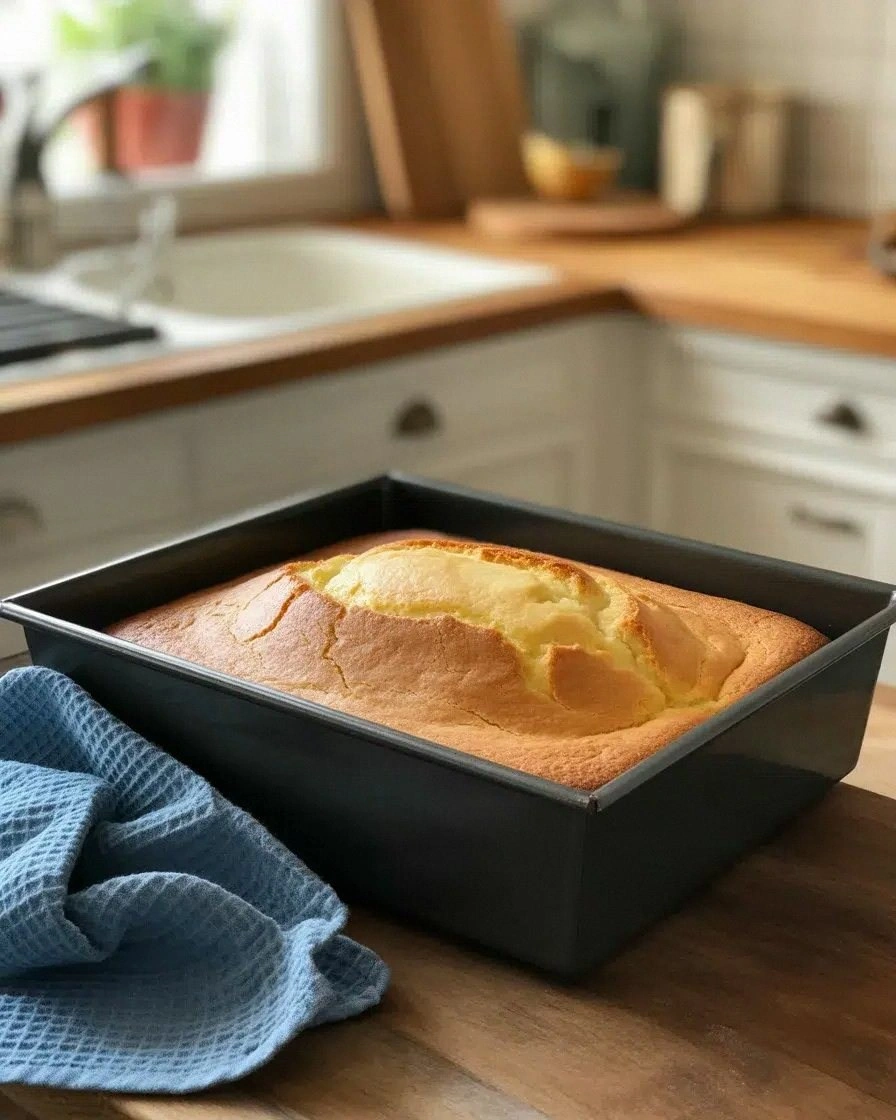
- Pour the batter into the prepared pan, smoothing the top with a spatula. Tap the pan lightly on the counter to release any air bubbles. The batter should sit evenly in the pan, with a slight sheen on the surface. This is where the cake’s golden crust will start to form.
- Bake for 25 minutes, then check the cake by inserting a toothpick into the center. If it comes out clean or with just a few crumbs, the cake is done. If it’s still wet, bake for an additional 5 minutes. The edges should pull away slightly from the pan, indicating a golden crust.
- Remove the cake from the oven and let it cool in the pan for 10 minutes. Then transfer it onto a wire rack to cool completely. This step allows the steam to escape, preventing a soggy bottom. Once cooled, slice and serve. The cake should feel moist yet firm, with a buttery aroma that lingers on the plate.
- Serve warm or at room temperature. A dusting of powdered sugar or a light drizzle of caramel sauce adds a touch of elegance. If you prefer a savory twist, sprinkle a pinch of smoked sea salt on top before serving. The cake’s versatility makes it a perfect centerpiece for any occasion.
That’s it — you did it. But hold on, I've got a few more tricks that'll take this to another level...
Insider Tricks for Flawless Results
The Temperature Rule Nobody Follows
Many bakers think that a higher temperature always yields a better crust, but that’s not true for this cake. Baking at 350°F (175°C) ensures even heat distribution, allowing the batter to rise uniformly. If you’re tempted to crank up the heat, you’ll risk a burnt exterior with a raw center. I’ve tested ovens at 375°F and 400°F; the results were either over‑browned or under‑baked. Keep the temperature steady, and you’ll get the perfect golden crust every time.
Why Your Nose Knows Best
Before you even touch the batter, smell the butter melting in the pan. The aroma should be rich and buttery, with a hint of caramel. If the scent feels flat, you’re probably using a low‑fat butter or the butter hasn't softened enough. A strong butter aroma signals that the cake will have a deep, indulgent flavor profile. Trust your nose; it’s your best judge of readiness.
The 5‑Minute Rest That Changes Everything
After folding in the flour, let the batter rest for five minutes. This short pause allows the flour to hydrate fully, preventing a dry crumb. It also gives the butter a chance to soften, which improves the cake’s texture. I’ve seen people skip this step, and the result is a cake that feels more like a biscuit than a cake. Give it the rest, and the difference will be clear.
Pre‑bake the Pan for a Crispy Edge
Place a parchment‑lined pan in the oven for 5 minutes before pouring in the batter. This pre‑baking step creates a slightly caramelized surface that locks in moisture and gives the cake a crisp, golden edge. Some bakers avoid this trick because they fear the pan will over‑brown, but a quick 5‑minute pre‑bake works perfectly. The result is a cake that’s both airy inside and delightfully crisp on the outside.
Use a Stand Mixer for Consistency
While a hand mixer works fine, a stand mixer on low speed ensures a uniform batter. The mixer’s consistent motion prevents lumps and gives the batter a smooth, glossy finish. I’ve tried both methods; the stand mixer consistently produces a lighter crumb. If you’re baking for a crowd, the time saved by the mixer is well worth it.
Creative Twists and Variations
This recipe is a playground. Here are some of my favorite ways to switch things up:
Almond‑Infused Delight
Replace half of the all‑purpose flour with ground almonds for a nutty, slightly denser crumb. Add a teaspoon of almond extract to the batter for extra flavor. This variation is perfect for a sophisticated brunch or a dessert that pairs well with a glass of white wine. The almond flavor complements the butter’s richness without overpowering it.
Orange Zest Surprise
Grate the zest of one orange into the batter for a bright, citrusy note. The zest adds a subtle brightness that balances the sweetness. Pair this version with a light, citrus‑based dessert sauce for a refreshing finish. It’s a delightful way to bring a pop of color and flavor to the classic.
Chocolate‑Chip Bounty
Fold in a cup of semisweet chocolate chips just before baking. The chips melt slightly, creating pockets of molten chocolate throughout the cake. This version is a crowd‑pleaser for chocolate lovers and works great for holiday gatherings. The chocolate adds a rich, indulgent layer that pairs wonderfully with a dusting of powdered sugar.
Maple‑Glazed Twist
Drizzle a thin layer of pure maple syrup over the cooled cake before serving. The syrup adds a sweet, caramelized glaze that enhances the butter’s flavor. This variation is ideal for a cozy breakfast or a brunch that needs a touch of elegance. The maple glaze also gives the cake a beautiful glossy finish.
Herb‑Infused Sensation
Add a teaspoon of fresh rosemary, finely chopped, to the batter. The herb imparts a subtle pine aroma that contrasts with the buttery base. Serve this version with a light salad or a cheese platter for a savory twist. The rosemary adds depth and a hint of earthiness that elevates the classic cake.
Berry‑Burst Edition
Fold in a handful of fresh blueberries or raspberries after the batter has been poured into the pan. The berries burst in the oven, releasing a juicy, tart flavor that cuts through the sweetness. This version is perfect for spring or summer celebrations. The berries also add a pop of color to the golden crust.
Storing and Bringing It Back to Life
Fridge Storage
Wrap the cooled cake tightly in plastic wrap and store it in the refrigerator for up to 4 days. The wrap prevents the cake from drying out and preserves its moisture. When you’re ready to serve, let it sit at room temperature for 15 minutes to soften slightly. The cake will still taste fresh and buttery.
Freezer Friendly
Slice the cake into portions and wrap each slice in parchment paper, then place them in a freezer bag. Freeze for up to 3 months. When you want to enjoy a slice, thaw it at room temperature for 30 minutes. The texture remains moist, and the flavor stays intact.
Best Reheating Method
To revive a frozen or refrigerated slice, heat it in a preheated oven at 300°F (150°C) for 8–10 minutes. Add a tiny splash of water to the bottom of the pan to create steam, which keeps the cake from drying out. The result is a warm, buttery cake that tastes almost fresh.