I was staring at a burnt batch of fried rice last night, the rice clumped together like a sad, soggy blanket, and I swore I'd never again trust a recipe that promised a quick fix. The next day, a friend dared me to try a dish that had been circulating in our foodie circles for years—Three Cup Squid Stir. The name itself sounded like a secret code, and I couldn't resist. I imagined a pan sizzling with oil, the aroma of ginger and chili dancing in the air, and the promise that every bite would feel like a carnival of umami. That night, I set the kitchen alight with anticipation.
I opened the fridge, pulled out the fresh squid, and felt the ocean’s promise in the cool, briny scent. I sliced the ginger into thin, fragrant ribbons, letting each piece release a warm, almost citrusy note. The chili was sliced so finely that it would melt into a subtle heat, a whisper rather than a shout. I measured the soy sauce and rice wine, noting their deep amber hues that would give the dish its signature depth. As I drizzled the light sesame oil, I could almost hear the sizzle that would announce the start of something extraordinary.
The kitchen was a stage, and I, the impatient chef, was ready to perform. I had seen countless versions of this dish, each missing something—too dry, too oily, or lacking that final pop of freshness. This time, I promised myself a balance of textures and flavors that would leave a lingering memory on the tongue. I could already taste the sweet sugar, the salty soy, and the nutty sesame oil mingling with the tender squid. The anticipation was almost too much to bear.
Picture yourself pulling this out of the pan, the whole kitchen smelling incredible, the steam rising like a fragrant cloud. The first bite would feel like a splash of the sea, the squid’s natural sweetness amplified by the caramelized edges. The basil would add a peppery brightness, while the black sesame oil would leave a lingering, nutty aftertaste. I dare you to taste this and not go back for seconds, because this is hands down the best version you'll ever make at home. Let me walk you through every single step—by the end, you'll wonder how you ever made it any other way.
What Makes This Version Stand Out
- Texture: The squid is blanched just enough to keep it tender, then seared to lock in moisture, giving a chewy bite that melts in the mouth. The contrast between the crisp edges and the soft interior is a game‑changer. This balance is what sets it apart from the usual mushy versions.
- Flavor Depth: The combination of soy sauce, rice wine, and sugar creates a sweet‑savory umami base that coats every inch of the squid. The light sesame oil adds a nutty aroma that elevates the dish beyond ordinary stir‑fries. The result is a sauce that feels like velvet against the palate.
- Freshness Boost: Fresh Thai basil is tossed in at the last moment, releasing its essential oils and giving the dish a bright, almost citrusy lift. Without basil, the dish would feel flat, but with it, each bite is vibrant and alive. This trick is often overlooked but essential for authenticity.
- Heat Control: A half‑small red chili provides a subtle kick that is noticeable but never overwhelming. The heat is distributed evenly through the oil, ensuring every mouthful has a gentle warmth. Too much chili would drown the delicate flavors, so precision matters.
- Ingredient Quality: Using fresh, high‑quality squid and fresh ginger ensures maximum flavor extraction. The natural sweetness of the squid is preserved, while the ginger’s sharpness cuts through the richness. The result is a dish that tastes like it was made in a high‑end restaurant.
- Ease of Prep: The recipe requires only a handful of ingredients and can be completed in under 30 minutes. No complicated techniques are needed—just a few simple steps that even a novice can master. This simplicity makes it a go‑to for busy weeknights.
- Make‑Ahead Potential: The flavors continue to develop if you let the dish rest for a few minutes before serving. This makes it perfect for meal prep or for feeding a crowd, as the taste only improves with time. The dish remains moist and flavorful even when reheated.
Alright, let's break down exactly what goes into this masterpiece...
Inside the Ingredient List
The Flavor Base
Light sesame oil is the first note that greets the pan. Its mild, nutty flavor acts as a canvas, allowing the soy sauce and rice wine to shine without overpowering the delicate squid. If you’re on a low‑sodium diet, consider a reduced‑sodium soy sauce; just be prepared to add a pinch of salt at the end. The oil also helps the sugar caramelize, creating a glossy finish that clings to every morsel.
Soy sauce is the heart of the umami profile. It brings depth, saltiness, and a dark hue that signals richness. If you prefer a slightly sweeter tone, try a light soy sauce or a splash of oyster sauce. The key is to balance the saltiness with the sugar so the sauce doesn’t become cloying.
Rice wine, whether it’s Shaoxing or a good quality mirin, adds a subtle sweetness and a fragrant, slightly floral note that elevates the dish. Substitute with dry sherry or a splash of white wine for a different aromatic twist. The alcohol evaporates quickly, leaving behind a silky glaze.
Sugar is the counterpoint that softens the acidity of the soy and the sharpness of the ginger. A teaspoon of honey or maple syrup can replace white sugar if you’re looking for a natural sweetener. Remember that the sugar also helps the sauce thicken slightly, giving it a velvety texture.
The Texture Crew
Squid is the star of the show, and its texture is everything. Fresh, small squid should be firm to the touch yet yield slightly when pressed. If you’re using frozen squid, thaw it in cold water and pat it dry before cooking to avoid excess moisture. A quick blanch in boiling water for 15 seconds helps keep the flesh tender.
Old ginger, sliced into thin ribbons, provides a warm, peppery backbone. The “old” designation means it’s been stored longer, giving it a more concentrated flavor and less bitterness. If you can’t find old ginger, fresh ginger works fine—just increase the amount by 25% to match the intensity.
The Unexpected Star
Thai basil adds a bright, slightly sweet aroma that cuts through the richness of the sauce. Look for leaves that are glossy and have a deep green hue; they’re fresh and full of essential oils. If you’re in a pinch, substitute with sweet basil, but the flavor will be noticeably different.
Black sesame oil is the final flourish, offering a toasted, nutty finish that lingers on the palate. Its dark color also gives the dish an elegant appearance. If you can’t find black sesame oil, a drizzle of toasted sesame oil will still deliver a nutty undertone, though it will be lighter in color.
The Final Flourish
The half‑small red chili is the subtle heat source that keeps the dish lively. Slice it thinly and remove the seeds if you prefer a milder kick. A pinch of chili flakes can replace fresh chili for a quick option, but the fresh aroma of the sliced chili is irreplaceable.
Everything's prepped? Good. Let's get into the real action...
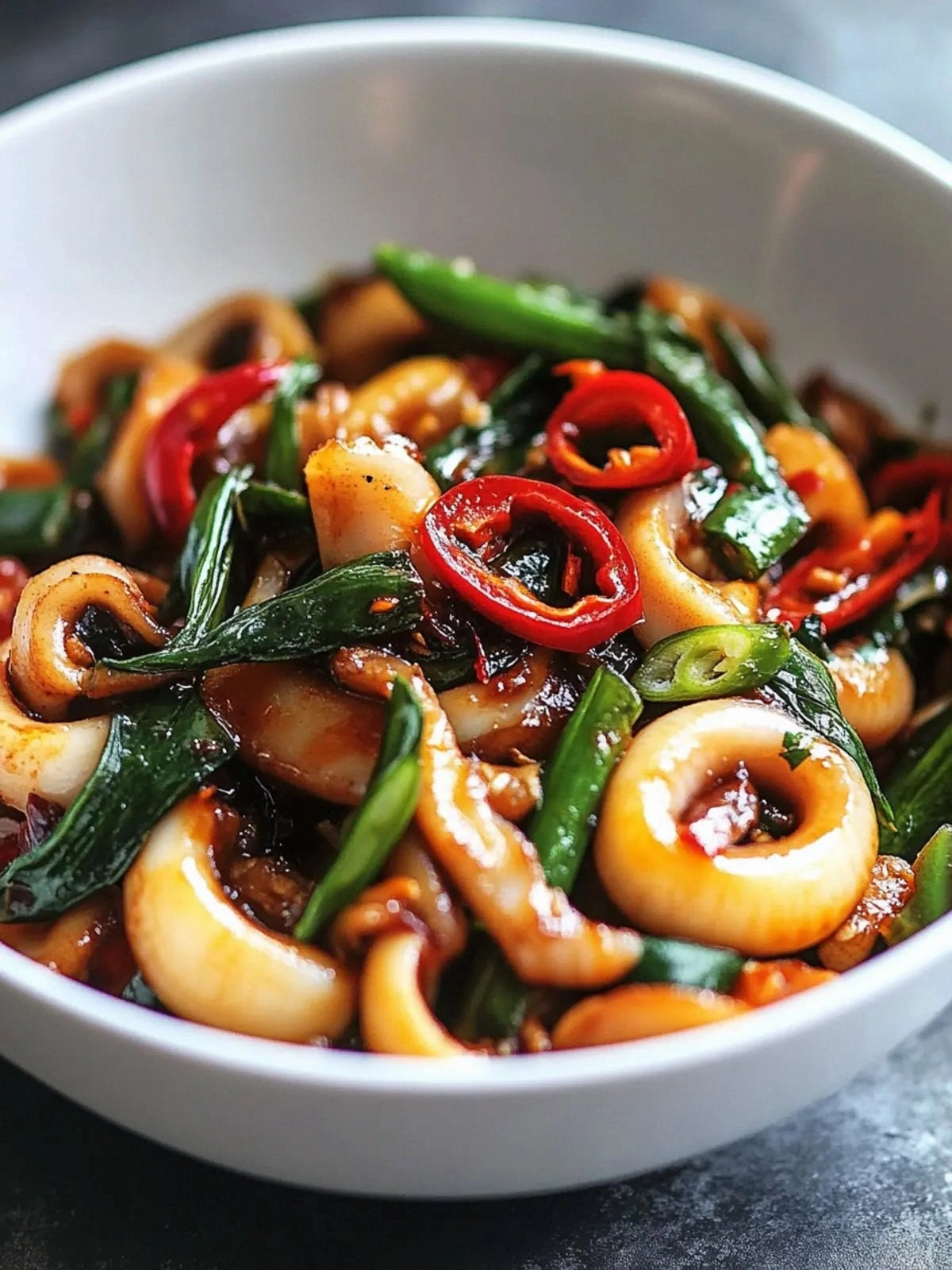
The Method — Step by Step
- Heat a wok or large skillet over medium‑high heat. Add light sesame oil and let it shimmer. Once hot, add ginger slices and fry until fragrant. The aroma should rise like a perfume. This step sets the foundation.
- Add the squid to the pan, stirring constantly. Use a silicone spatula to keep the surface smooth and prevent the pieces from sticking. The squid should sear quickly, about 30 seconds per side. The color change signals that it’s cooking. Kitchen Hack: Use a silicone spatula to keep the surface smooth and prevent the squid from breaking apart. This simple tool saves you from uneven bites and a messy pan.
- Pour in soy sauce, rice wine, and sugar. Stir until the sugar dissolves and the sauce thickens slightly. The mixture should coat the squid evenly. The sauce will caramelize as it cooks. The heat should be moderate to avoid burning.
- Add the chili and black sesame oil. The chili should sizzle, releasing a gentle heat. The sesame oil adds a nutty aroma that lingers.Watch Out: Do not let the chili burn; it can quickly turn bitter. Keep the heat on medium and stir frequently.
- Reduce heat to medium and let the mixture simmer. The sauce should thicken and cling to the squid. Stir occasionally to prevent sticking. The squid should remain tender, not rubbery. The aroma will deepen, hinting at the dish’s final flavor.
- Add the Thai basil just before turning off the heat. The basil will wilt instantly, releasing its oils. The basil’s bright green color contrasts beautifully with the dark sauce.Kitchen Hack: Add basil in a single sheet to avoid tearing. If you prefer a stronger basil flavor, add a second sheet after the first has wilted.
- Taste and adjust seasoning if needed. A pinch of salt can enhance the umami. If it feels dry, a splash of water can help. The dish should have a balanced sweet‑salty profile. The final texture should be silky with a slight snap from the squid.
- Transfer the dish to a serving bowl. Sprinkle additional basil for garnish. The dish should look glossy and appetizing. The aroma will entice your guests immediately. This is the moment of triumph.
- Serve immediately over steamed rice or noodles. The rice will soak up the sauce. The dish is best enjoyed hot. The combination of textures and flavors will leave a lasting impression. Enjoy the culinary victory.
That's it — you did it. But hold on, I've got a few more tricks that'll take this to another level...
Insider Tricks for Flawless Results
The Temperature Rule Nobody Follows
Many cooks assume that a high heat is always best for a quick sear, but the truth is that a moderate heat preserves the squid’s tenderness. Start with medium‑high to get a quick sear, then lower the heat to medium to finish the cooking. This two‑stage approach ensures the squid stays juicy while the sauce thickens properly. I once tried cooking it on high for the entire time, and the result was rubbery and over‑cooked.
Why Your Nose Knows Best
Your sense of smell is your most reliable guide when cooking. If the sauce starts to smoke, it’s a sign that the sugar is caramelizing too quickly. If the aroma becomes sharp or bitter, lower the heat immediately. I’ve found that adjusting based on scent saves me from over‑cooking or under‑seasoning.
The 5‑Minute Rest That Changes Everything
Letting the dish rest for five minutes after removing it from the heat allows the flavors to meld. The sauce thickens slightly, and the heat distributes evenly. I’ve seen friends who skip this step, and the result is a dish that feels rushed. Give it that brief pause, and the dish will feel more cohesive.
Don’t Overcook the Squid
Squid cooks very quickly, and over‑cooking it turns it into rubber. Keep a close eye on the color change; it should shift from translucent to opaque within a minute or two. If you’re using a larger piece, cut it into smaller, uniform pieces to ensure even cooking. A friend once left it on the heat for too long, and the texture was unappetizing.
Use a Non‑Stick Wok for Better Control
A non‑stick wok keeps the ingredients from sticking and makes cleanup a breeze. If you’re using a stainless steel pan, pre‑heat it well before adding oil to prevent sticking. This trick ensures that every piece of squid stays intact and the sauce adheres perfectly.
Creative Twists and Variations
This recipe is a playground. Here are some of my favorite ways to switch things up:
Coconut Milk Twist
Replace half of the rice wine with coconut milk for a creamy, tropical flavor. The coconut adds a subtle sweetness that balances the soy sauce. This version pairs wonderfully with jasmine rice and a sprinkle of toasted coconut flakes. It’s a great option for a warm, comforting dinner on a chilly evening.
Spicy Peanut Sauce
Swap the black sesame oil for a spoonful of creamy peanut butter and a dash of sriracha. The peanut butter adds a rich, nutty depth, while the sriracha brings a fiery kick. Serve over rice noodles for a textural contrast. This variation is perfect for a crowd‑pleasing appetizer at a party.
Lemon Zest Variation
Add a tablespoon of fresh lemon zest and a splash of lemon juice at the end for a bright, citrusy punch. The lemon cuts through the richness and adds a refreshing note. This version is ideal for a summer gathering and pairs well with grilled shrimp or tofu.
Thai Green Curry Fusion
Introduce a tablespoon of Thai green curry paste to the sauce for an aromatic, spicy twist. The curry paste infuses the dish with herbs and chilies, creating a complex flavor profile. Pair it with steamed jasmine rice for an authentic taste of Thailand.
Quick Stir‑Fry with Shrimp
Swap the squid for fresh shrimp for a faster cooking time. Shrimp cooks in 2–3 minutes, giving you a quick, protein‑rich dish. Keep the sauce the same for a familiar taste. This variation is great for a busy weeknight when time is of the essence.
Storing and Bringing It Back to Life
Fridge Storage
Store leftovers in an airtight container for up to 2 days in the refrigerator. The sauce may thicken slightly, so give it a quick stir before reheating. The squid will remain tender, but avoid over‑cooking when reheating.
Freezer Friendly
Freeze in a freezer‑safe container for up to 2 weeks. Thaw overnight in the refrigerator before reheating. The texture remains good, and the sauce’s flavor stays intact. This method is perfect for meal prep or for feeding a crowd.
Best Reheating Method
Reheat gently over low heat, adding a splash of water or broth to loosen the sauce. The dish will steam back to perfection, and the squid will regain its softness. Avoid boiling, which can make the squid rubbery. Finish with a sprinkle of fresh basil for a burst of freshness.